


Log cabin maintenance is the first worry for a lot of buyers: will solid wood rot, and how much work is it to keep up? The short answer is that a well-built cabin needs less than most people expect, as long as water never gets a chance to sit and soak in.
We build log cabins in Fair Play, Missouri, so everything below is how we build ours and what we tell our own buyers. For the full picture of buying a cabin, start with our log cabin tiny home buying guide.
What maintenance does a log cabin need?
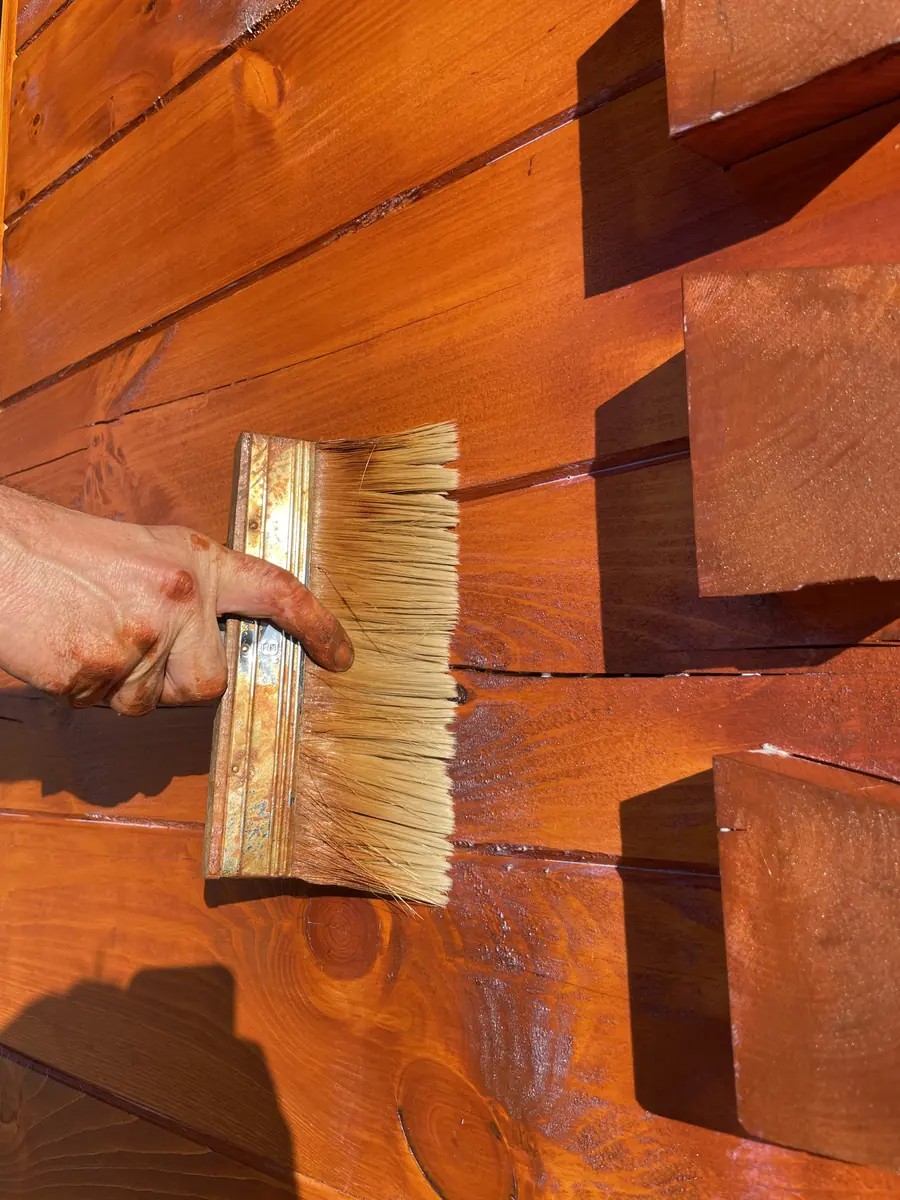
Mostly two things: keep the stain and topcoat in good shape, and check once a year that no water is sitting against the logs. Restain every 3 to 5 years, depending on your climate. Between coats, look over the log ends, corners, splices and the caulk around windows and doors.
The inside needs no more care than any other home. The logs are the finished wall, so there is no drywall to patch or paint. Everything else, from the metal roof to the mini-split, is ordinary upkeep.
Do log cabins rot?
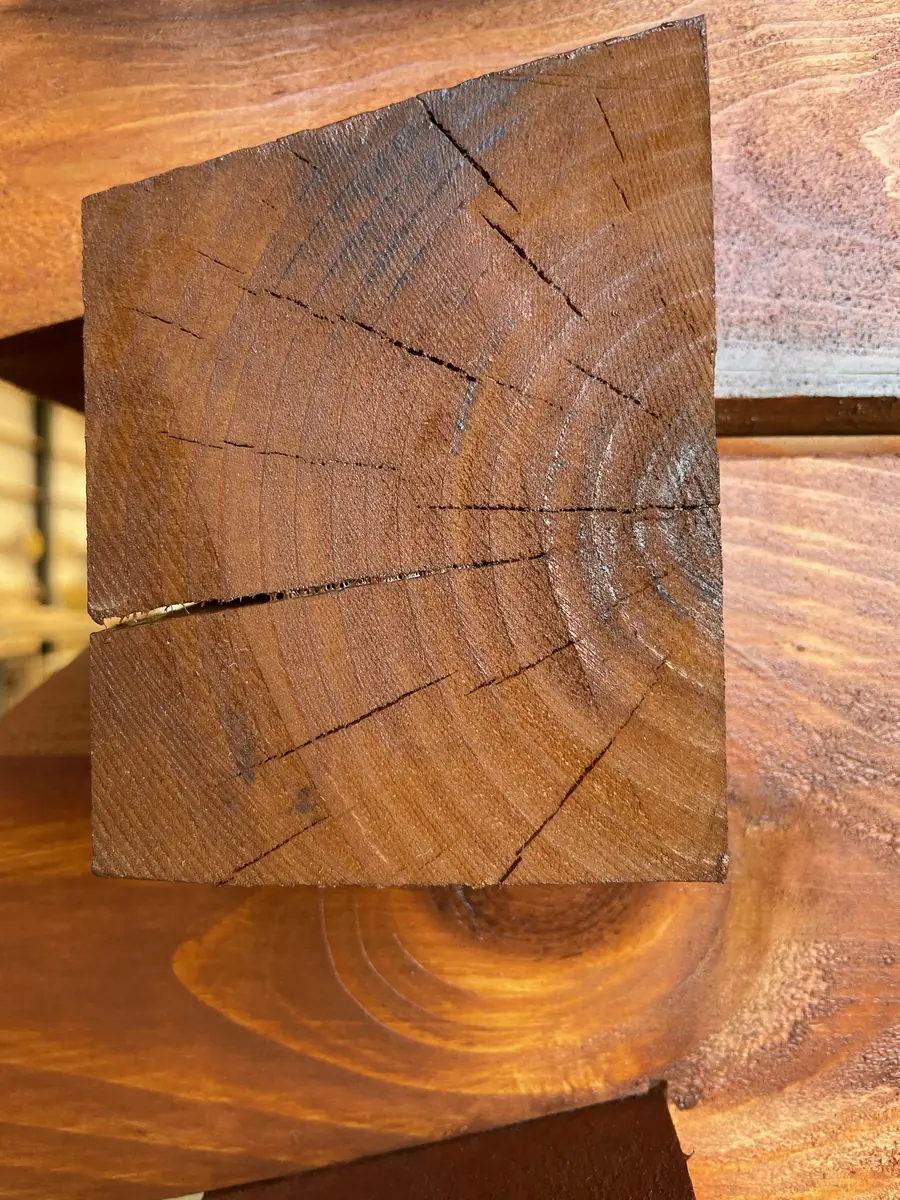
Not when they’re kept dry. Rot needs wet wood: fungi only start to grow when wood is soaked past about 30% moisture. A sealed, stained log that sheds rain stays far below that. Problems start where water sits and soaks in, like an unsealed gap or a log end that stays wet.
That 30% figure is the fiber saturation point. The USDA Forest Products Laboratory puts it simply: keeping wood dry prevents decay. That is why everything about how we build, from the roof to the corners, is about getting water off the logs quickly.
Early rot can be hard to spot. Watch for dark streaks on the wood or a spot that feels soft when you press on it. Check the log ends first; they soak up water fastest.
“Pine tends to be fairly soft when we first get it, but after being stained and sitting outside in the weather it tends to become harder and much more resistant. Basically wood tightens and hardens over time as long as there’s no moisture soaking into it.” — the Premium Structures team
Our logs are kiln-dried Eastern White Pine, so they start out dry and go into the wall already well below the point where rot can begin.
How is a log cabin built to keep water out?
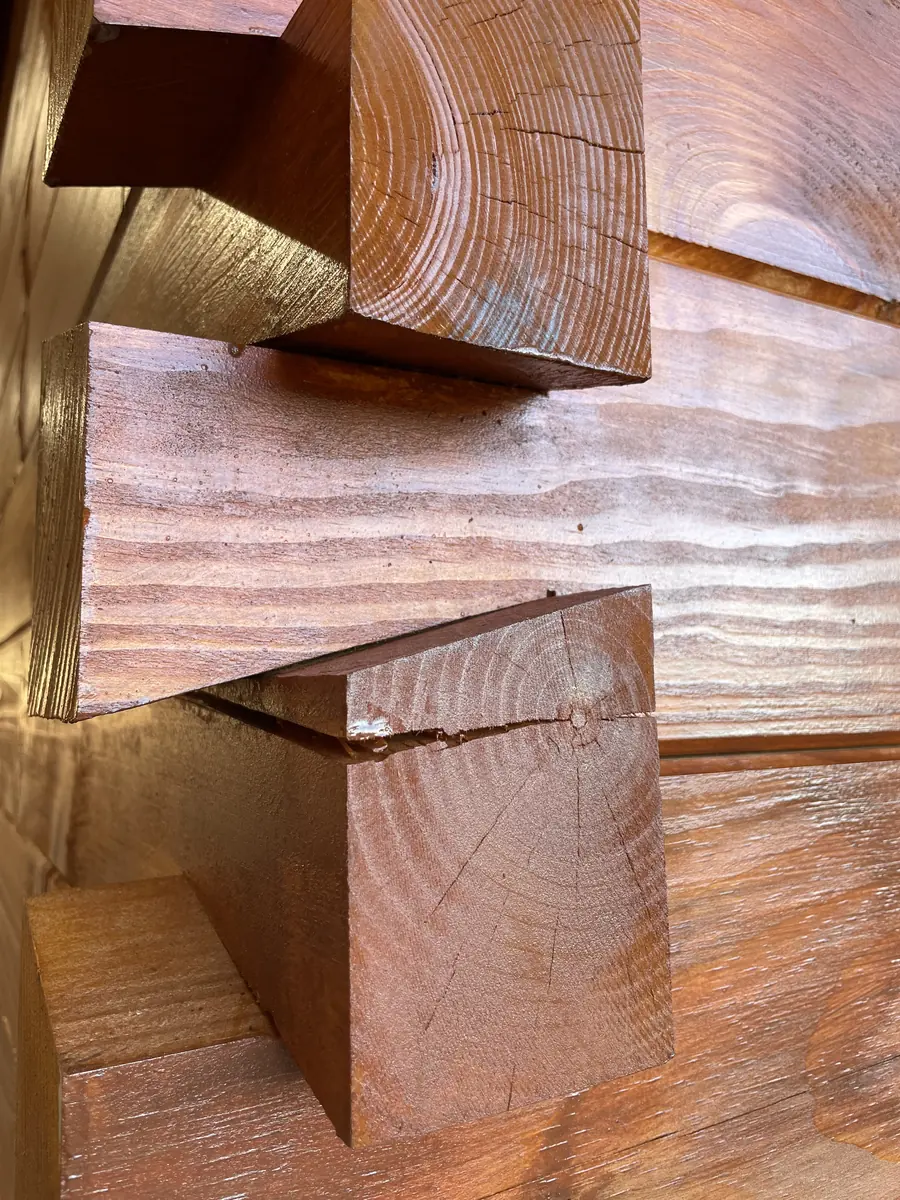
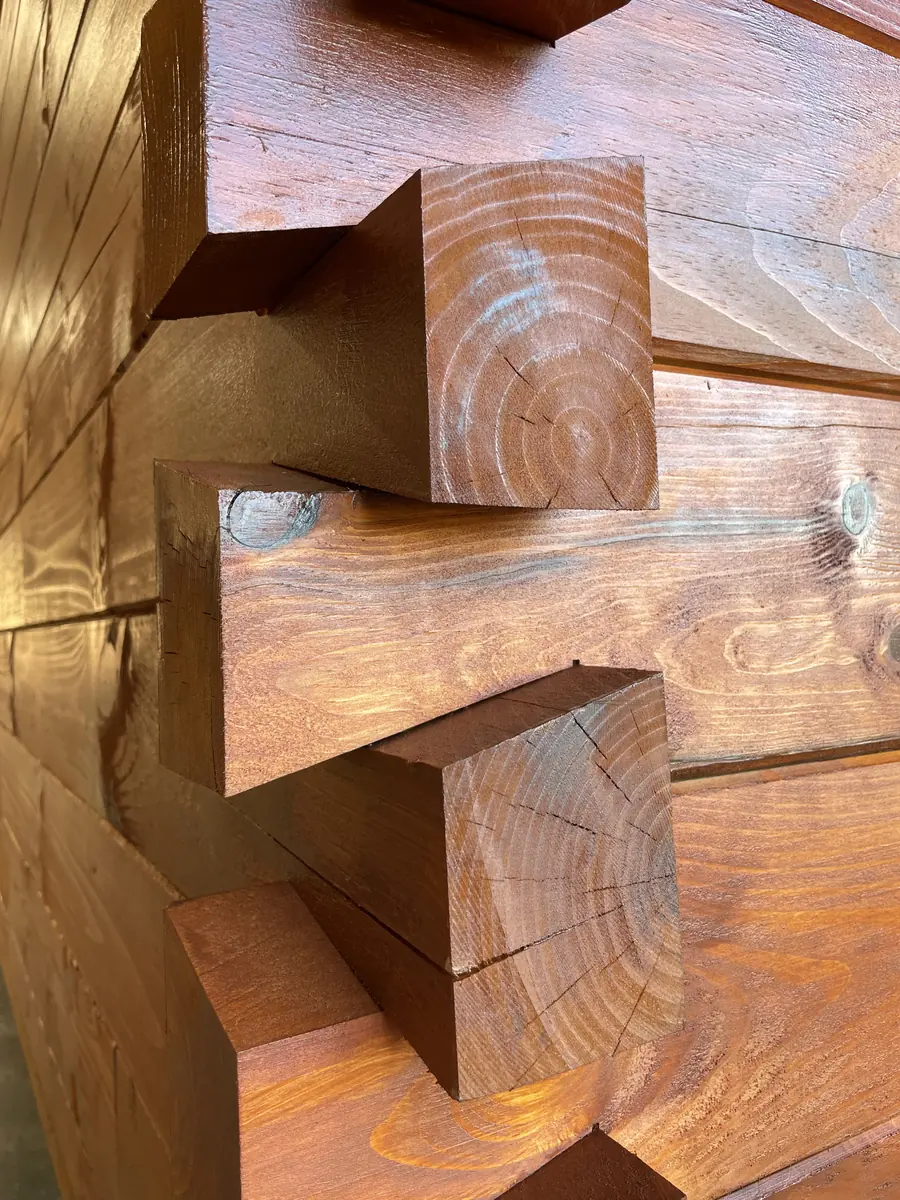
By making sure water runs off instead of sitting. Our cabins have 6-inch roof overhangs, dovetail corners cut to slope away from the walls, every splice and gap sealed, and caulk all the way around each window. Rain on the logs isn’t the problem; water that pools and soaks in is.
- Overhangs: 6 inches past the walls on every side, so roof runoff drips clear of the logs.
- Sloped corners: each dovetailed log end is cut to slope down and away, so water can’t collect on top.
- Sealed splices and gaps: where two logs meet, the joint is sealed so water can’t wick into the end grain.
- Caulked windows: sealed all the way around, the most common place for water to get behind wood on any building.
How high should a log cabin sit off the ground?
High enough that splashing rain and wet ground never reach the logs. On our park models the lowest log is 3 feet off the ground, on the steel chassis. Cabins built on skids sit 10 inches up. Keep the ground beneath sloped away and free of piled leaves or firewood against the walls.
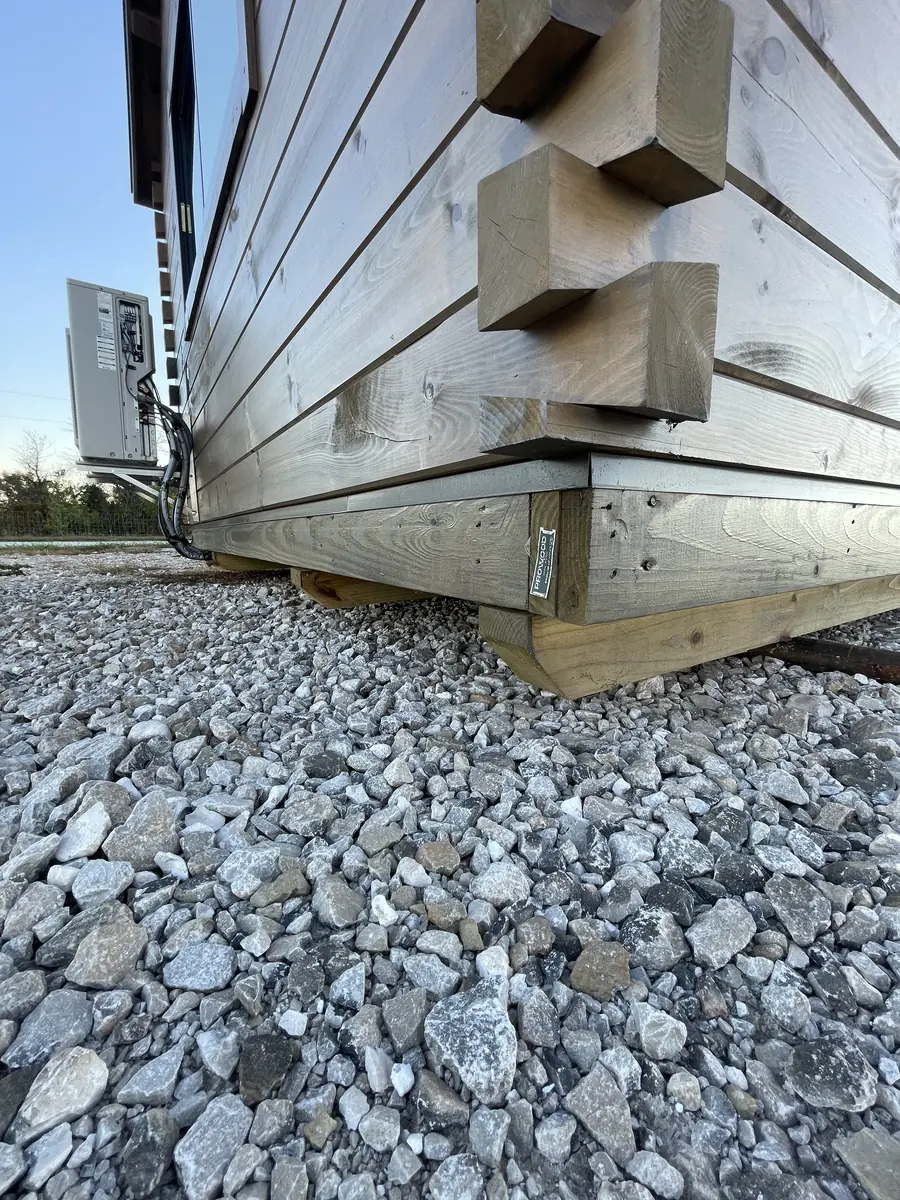
A gravel pad helps here too: it drains fast and doesn’t splash mud onto the bottom logs the way bare dirt does. See what goes into a good pad in how much a tiny home costs.
How often should you stain a log cabin?
Every 3 to 5 years is the usual range, but climate makes a big difference. Hot sun, heavy rain and the side of the cabin that faces the weather wear stain faster. Check the finish every year, and restain when it starts to look dry or faded rather than waiting for a set date.
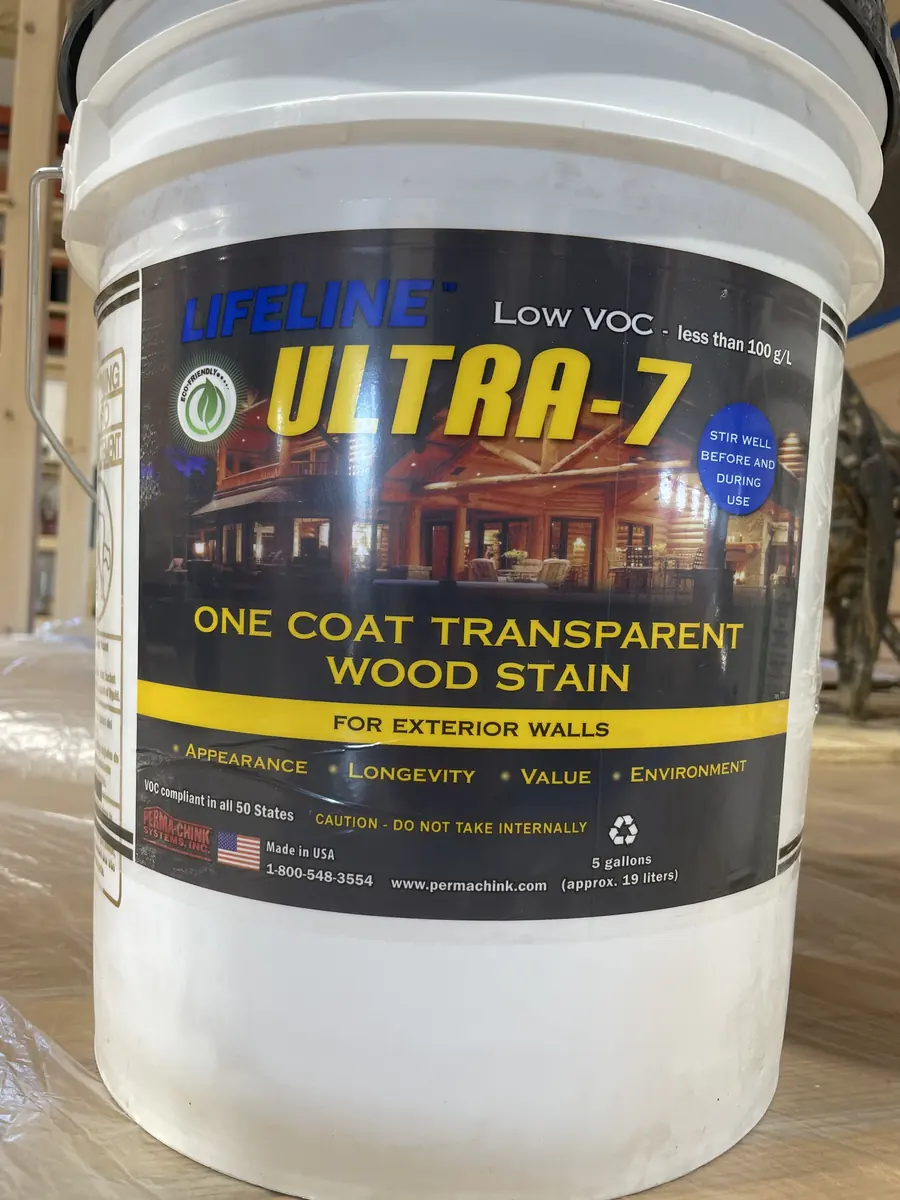
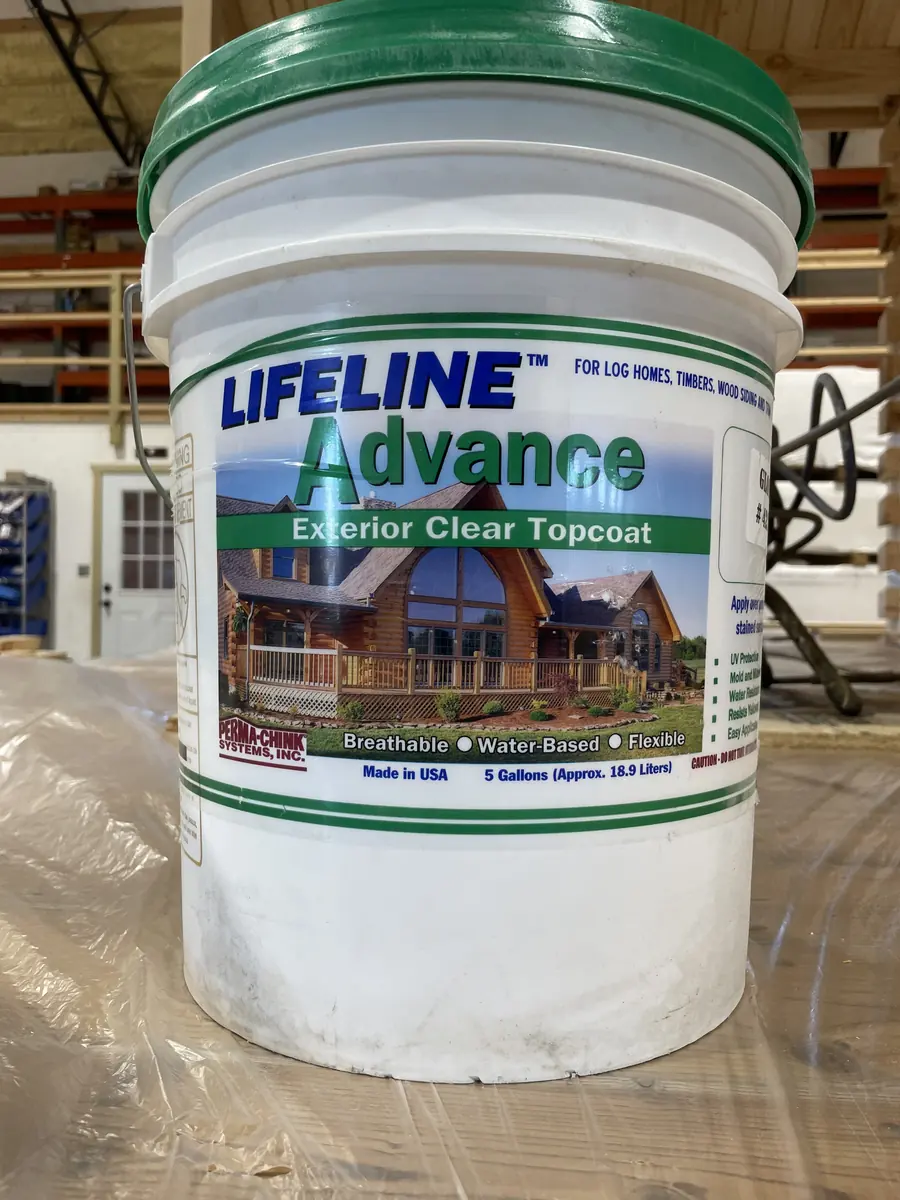
We finish our cabins with Perma-Chink Lifeline Ultra-7, a water-based exterior stain, topped with Lifeline Advance clear topcoat. Perma-Chink’s own guidance is to reapply as needed, depending on exposure, and to always put the topcoat over the stain.
Use the same products when you restain. Our warranty asks that the exterior be refinished with an approved stain every 3 to 5 years, and matching the original finish keeps the new coat bonding properly.
How much does log cabin maintenance cost?
The main cost is restaining. Materials run about $700 for a Cub and about $950 for a Kodiak, for stain and topcoat. If you do the work yourself, that is most of the bill every 3 to 5 years. If you hire it out, add a painter’s labor, which varies by area.
Compare that with siding, gutters and exterior paint on a typical house and it is a modest number, which we break down further in log cabin vs. house cost.
Many owners add a storage shed for the ladder, brushes and stain. The size cabin buyers pick most for extra storage is 10 by 16 feet, and we can stain it to match the cabin. If your cabin is a small one on skids, the shed can ride on the same truck, which cuts shipping almost in half. See our storage sheds.
What should you check on a log cabin every year?
Walk around the outside once a year, ideally in spring. Look at the log ends, the corners and the bottom logs first, then the splices, the caulk around windows and doors, and the finish on the side that gets the most weather. Fix any gap or worn spot right away.
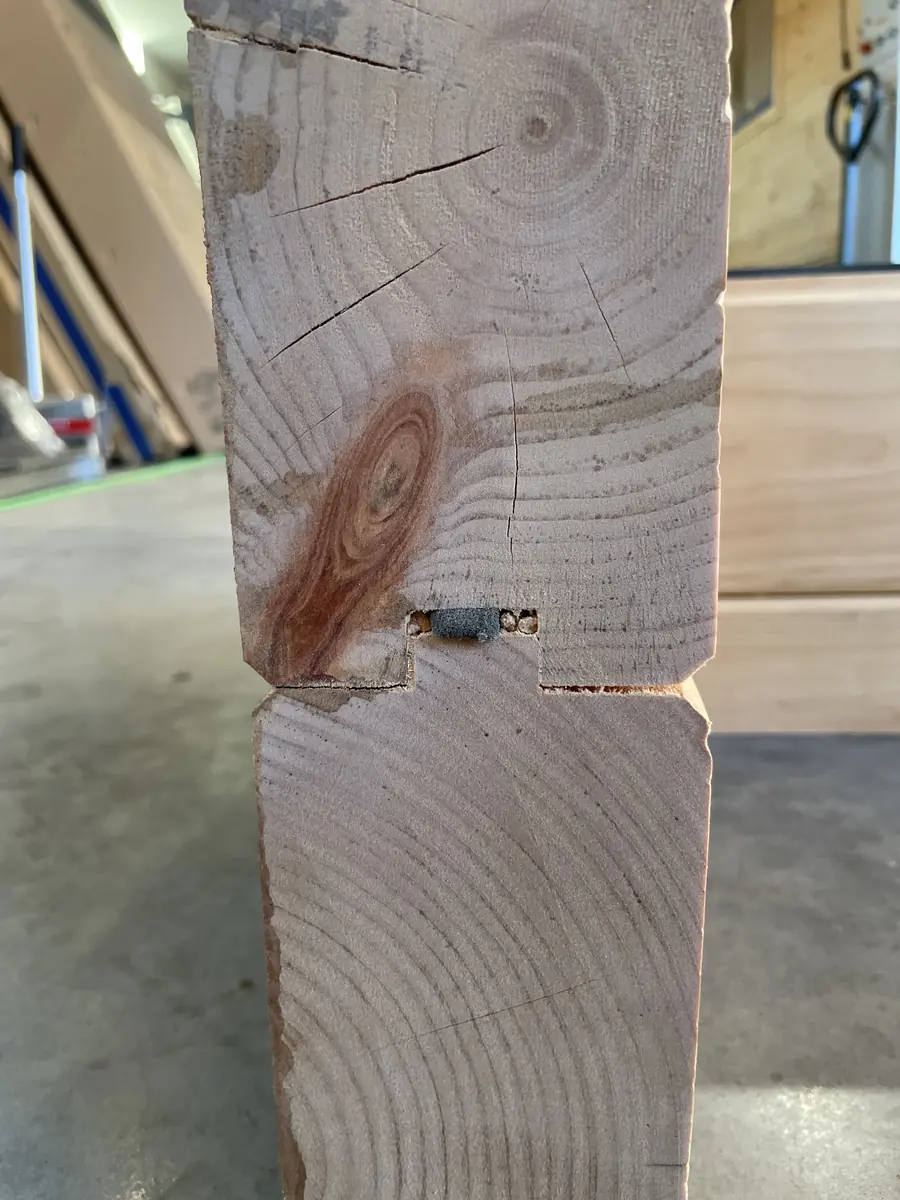
- Log ends and corners: no dark streaks, no soft spots.
- Bottom logs: dry, with nothing stacked against them.
- Splices and gaps: still sealed.
- Windows and doors: caulk unbroken all the way around.
- The finish: water still beads up on the logs. If it soaks in, it’s time to restain.
- Roof and runoff: water dripping clear of the walls and draining away from the cabin.
Ten minutes a year catches small problems while they are still small. See every material in the cabin on our log cabin materials page.
Quick summary
- Log cabin maintenance comes down to keeping the stain healthy and keeping water from sitting on the logs.
- Rot only starts in wet wood, above about 30% moisture; sealed, stained logs that shed water stay dry.
- Our cabins use 6-inch overhangs, sloped dovetail corners, sealed splices and caulked windows.
- Restain every 3 to 5 years; materials run about $700 for a Cub and $950 for a Kodiak.
- Walk around the cabin once a year and fix any gap or worn spot right away.