


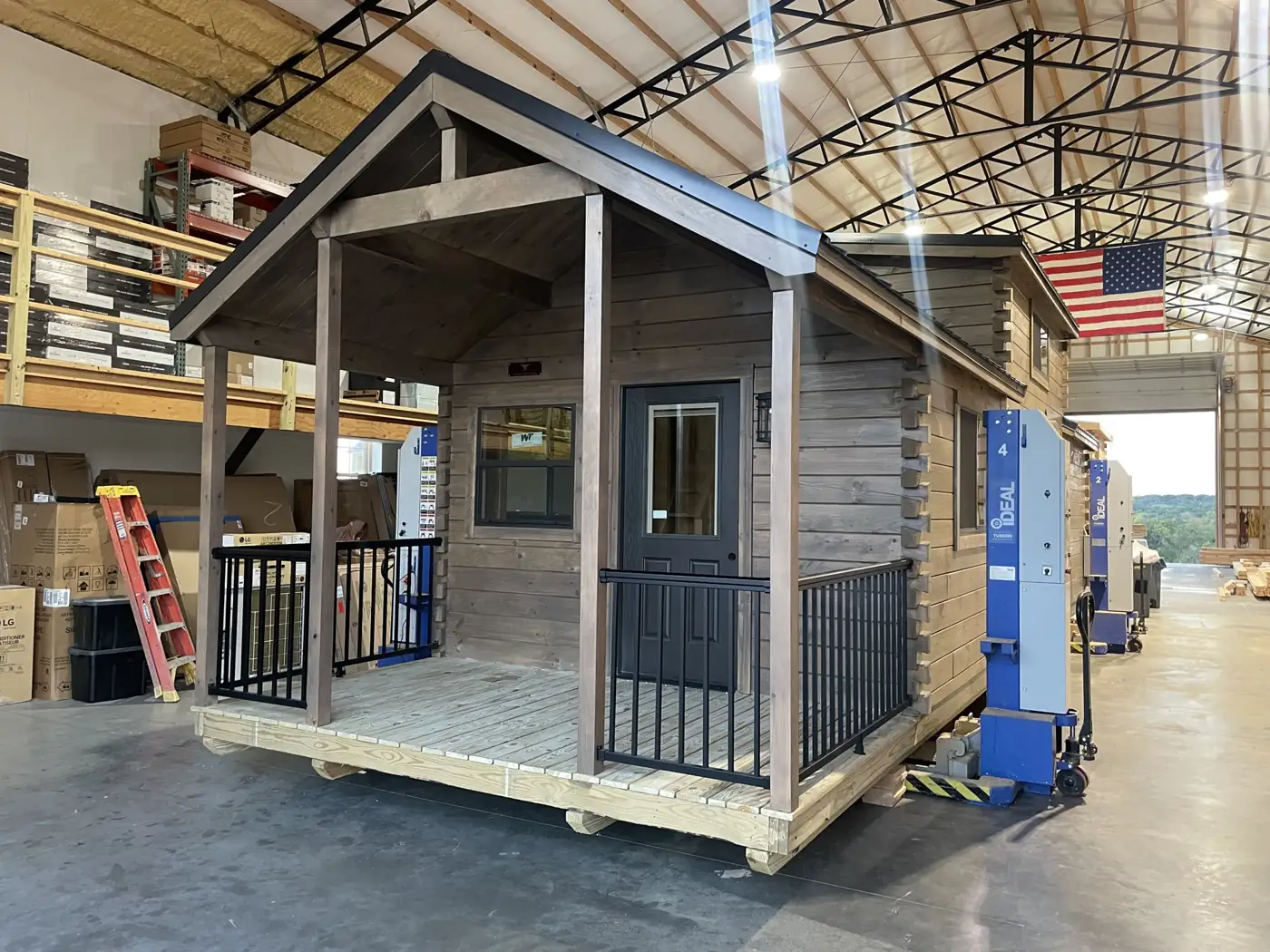
If you’re handy, building your own cabin is tempting. You skip the builder’s labor and get exactly what you want. But should you buy or build a tiny home? The answer depends on more than the cost of lumber.
We build log cabins for a living, so we’ll be upfront about where building your own makes sense too. For everything else about buying, see our tiny home buying guide.
Is it cheaper to buy or build a tiny home?
Building can cost less in cash if you do all the labor yourself. But it costs time, tools, a place to build and the price of any mistakes. Buying costs more up front, and you get a known price, a finished cabin, a warranty and delivery to your land.
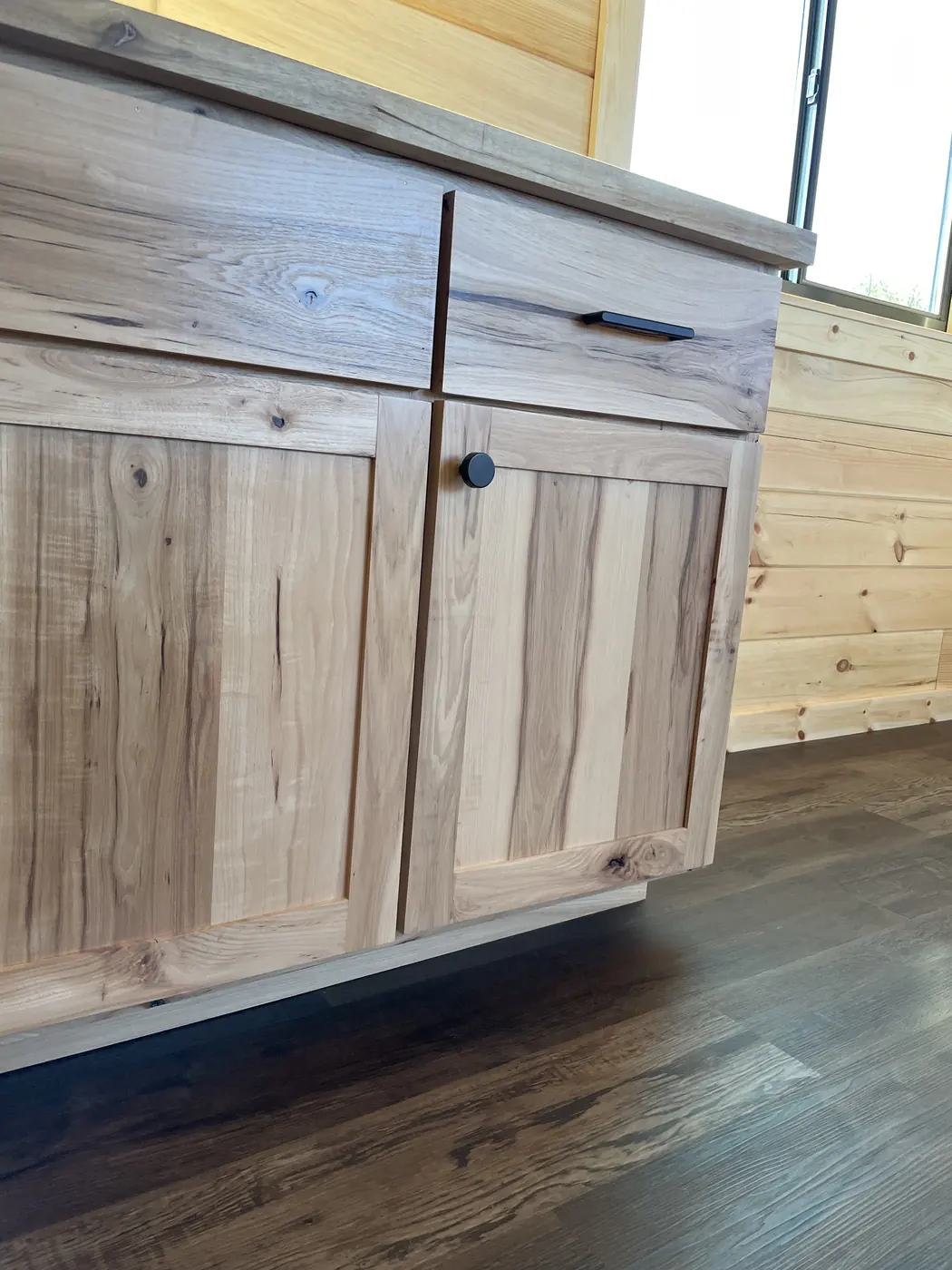
The materials list for a real log cabin is long. Ours runs from the steel chassis to the pine roof beams, and you can see every line on our cabin materials page. Pricing that list yourself is a good first step before you decide.
Then compare it with a finished price. One of our cabins is $35,250 for The Cub or $78,900 for The Kodiak. Our post on what a tiny home costs covers the rest of the bill, and log cabin vs. house cost shows how both compare with a new house.
How long does it take to build a tiny home yourself?
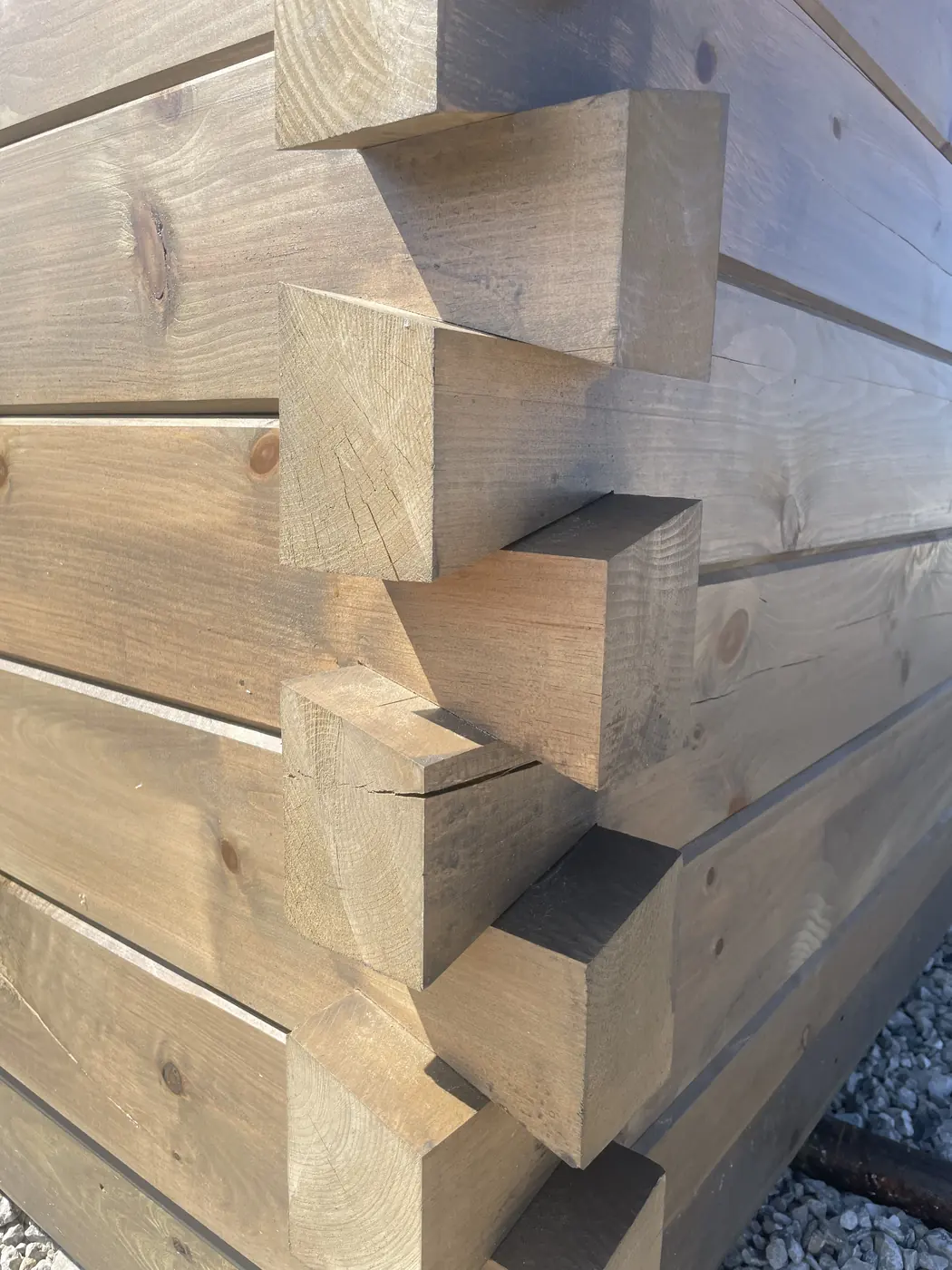
Usually months, not weeks, and longer if you only work weekends. A log cabin adds heavy, exact work: square logs cut and dovetailed at every corner. Weather, waiting on materials and inspections can stretch it further. When you buy, we give you a firm timeline in writing with your quote.
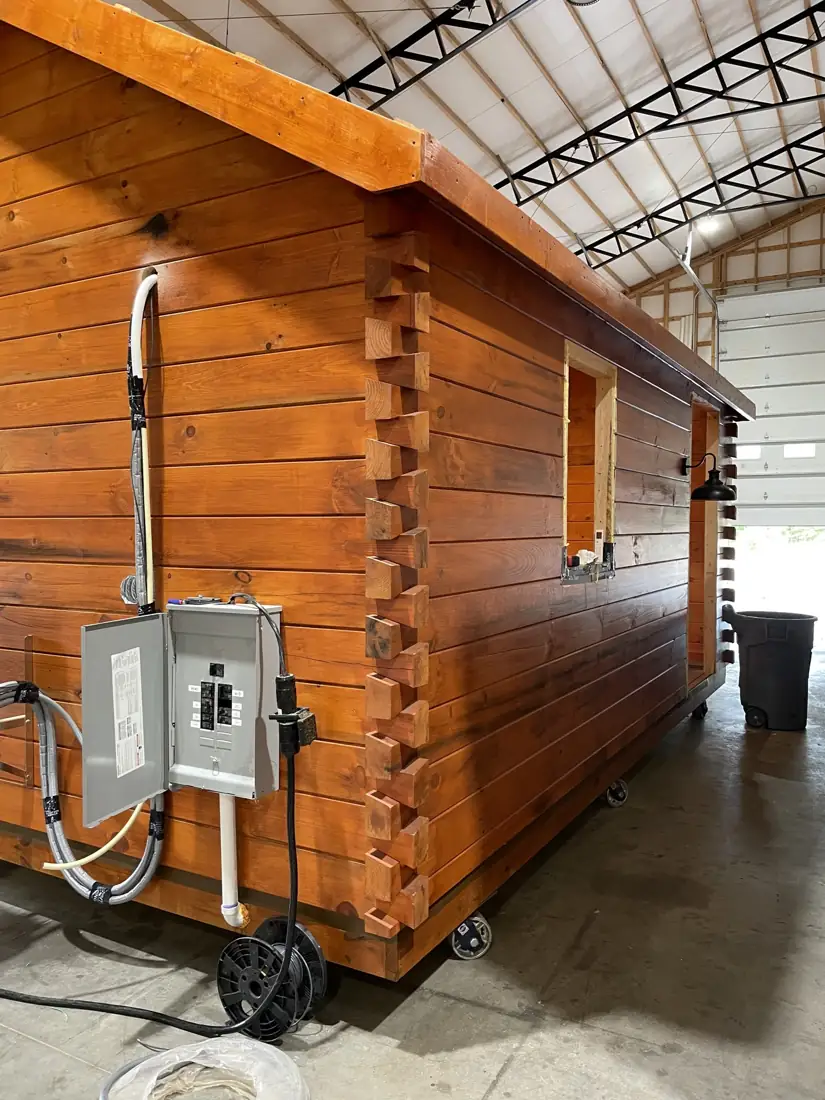
Our cabins are built under roof in our shop, so rain doesn’t stop the work and the lumber stays dry.
What skills does building a log cabin tiny home take?
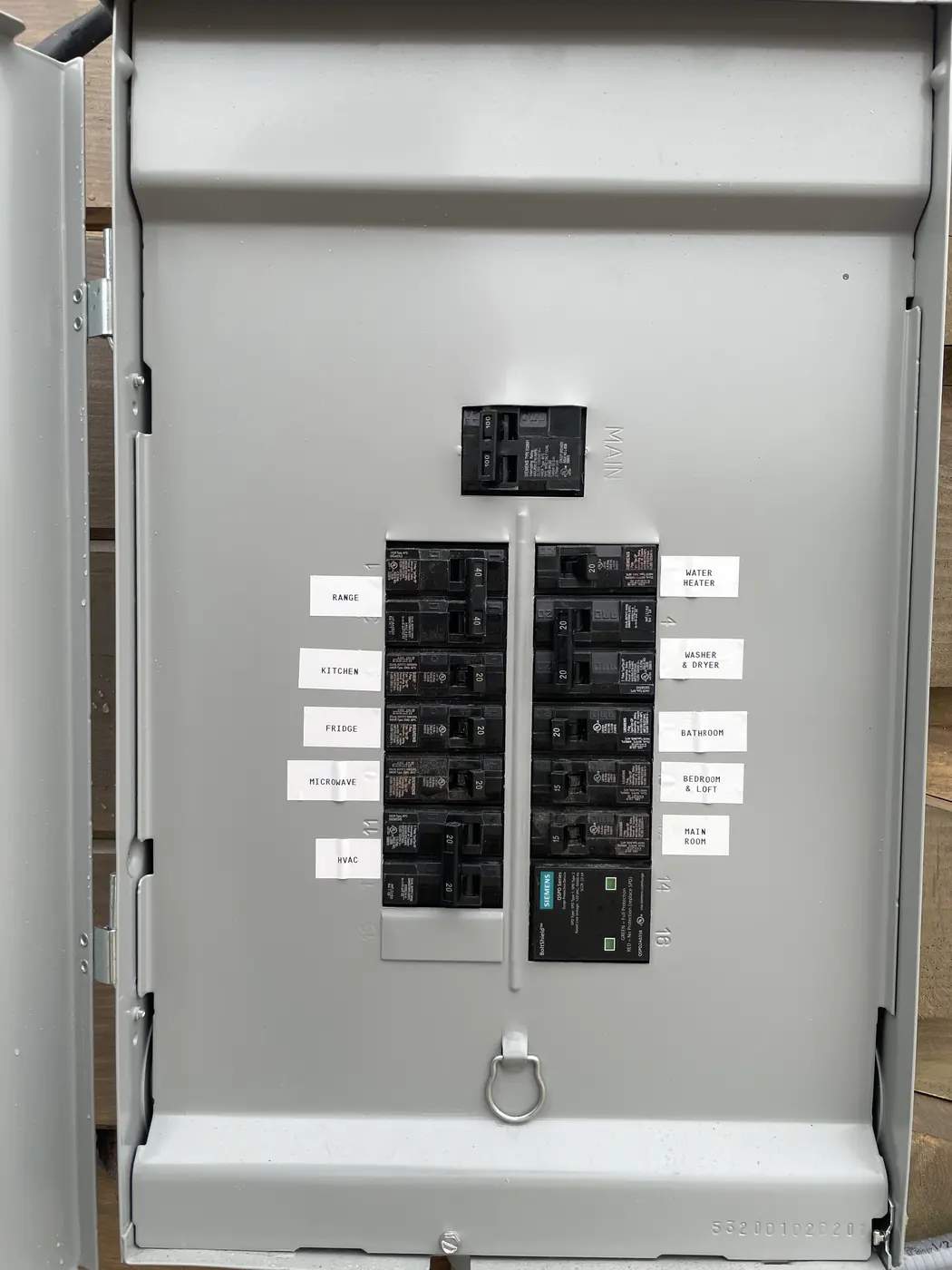
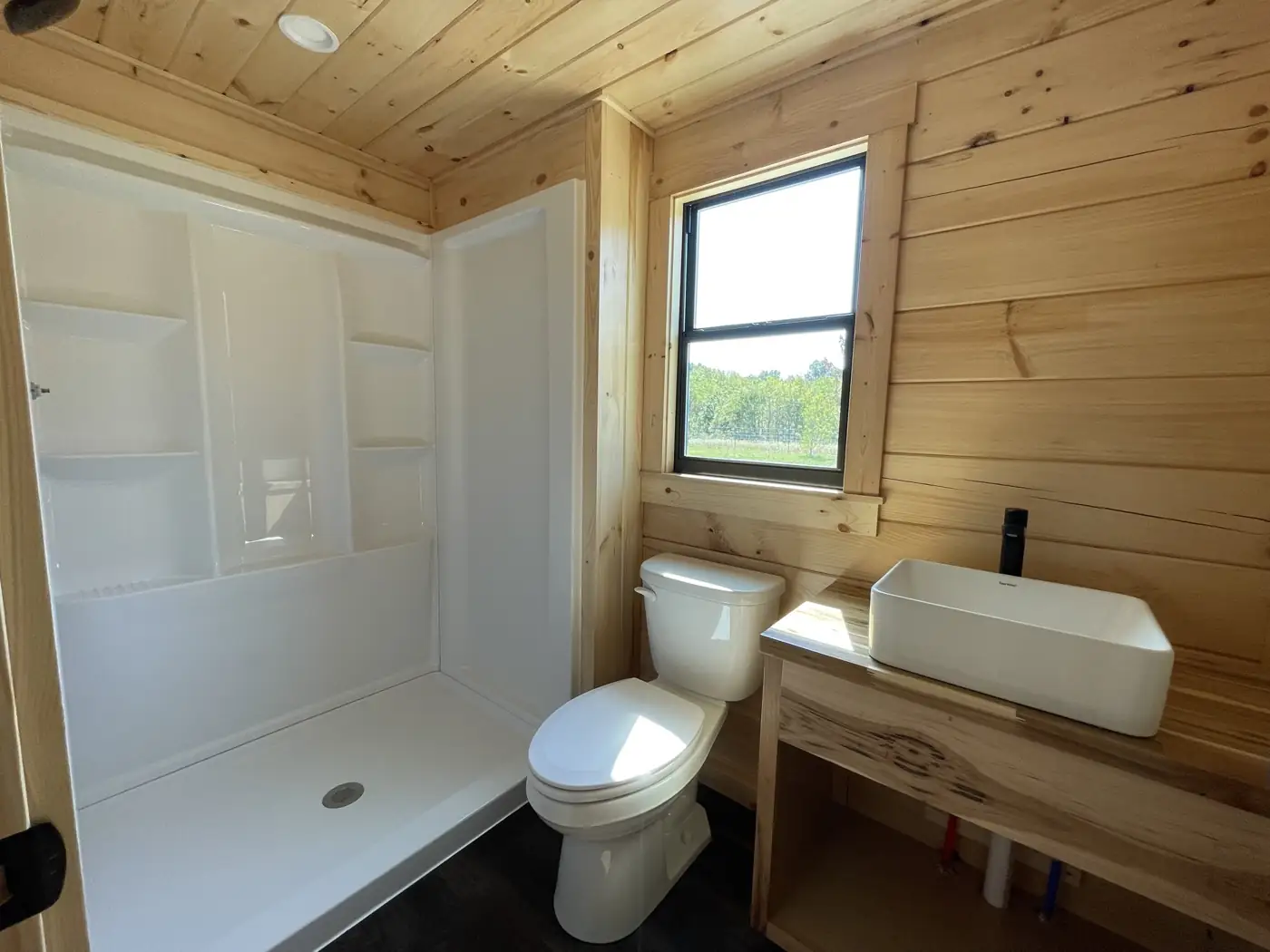
More than carpentry. A finished cabin like The Kodiak needs log joinery for dovetailed corners, roofing, a 100-amp electrical service, plumbing for a water heater, shower and kitchen, and a mini-split heating and cooling system. You also need a covered place to build and a way to move it.
- Log work: square pine logs cut and dovetailed so the corners lock tight.
- Electrical: panel, circuits, outlets and a 240V laundry hookup.
- Plumbing: supply lines, drains and a water heater.
- Heating and cooling: a mini-split, mounted and charged.
- Finish work: floors, cabinets, trim and a stain that protects the logs.
What can’t you do yourself when you build a tiny home?
You can’t give a home-built cabin an RVIA park model seal. That certification comes from the manufacturer building to the ANSI A119.5 standard under the RV Industry Association’s program. Without it, your cabin may be treated as a house under local building code, or not allowed where park models are.
Under the RVIA’s definition, a park model is certified by its manufacturer as meeting ANSI A119.5. A house built on a foundation falls under local building codes instead, and a tiny-house appendix to those codes only applies where a county or city adopts it, as the International Code Council explains. We explain what the seal itself checks in RVIA certified tiny homes.
There is also the move. The Kodiak rides on a 10-inch I-beam frame with four 6,000 lb axles. Hauling a finished cabin is an oversize load with permits, not a weekend trailer trip.
What do you get when you buy a tiny home instead?
A finished cabin built in a shop, a set price, an RVIA-certified park model if you choose one, a warranty and delivery. With our cabins, that means a 2-year warranty that extends to 10 years with the right base, and a crew that sets and levels the cabin on your pad.
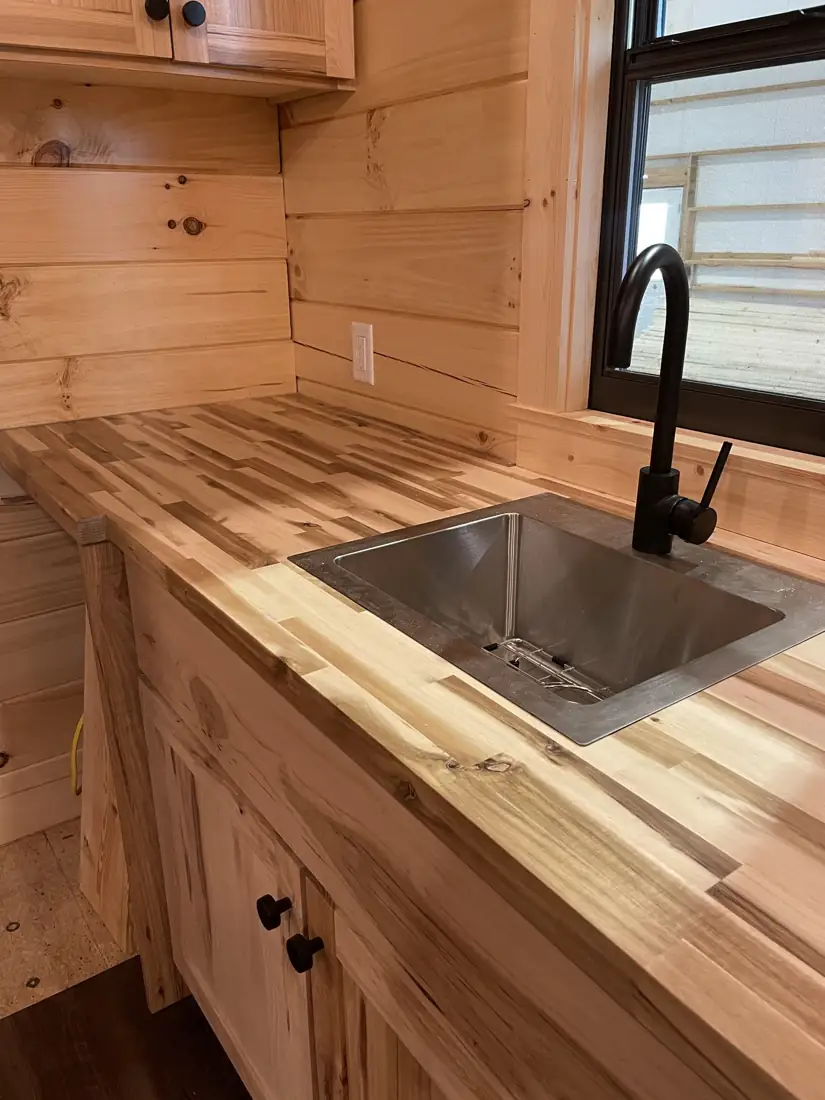
You also get to see it before you buy. You can visit our shop in Fair Play or stay a night in our Cub on Airbnb in Stockton, Missouri. See both models on our log cabin tiny homes page.
Buy vs. build a tiny home: side by side
Building wins on cash cost and custom layouts if you have the skills and time. Buying wins on speed, certainty, certification and warranty. The table below lines up the trade-offs so you can weigh what matters most to you.
| Build it yourself | Buy a finished cabin | |
|---|---|---|
| Cash cost | Lower if you do all the labor | Higher, but set in a written quote |
| Time | Months of your own work | A firm timeline from the builder |
| Skills and tools | Carpentry, electrical, plumbing, log work | None needed |
| Park model seal | Not available | Available (The Kodiak, or The Cub as a park model) |
| Layout | Anything you want | A set line of models |
| Warranty | None | 2 years, up to 10 with the right base |
| Delivery | Yours to arrange | Hauled, set and leveled for you |
When does building your own tiny home make sense?
When you have real building skills, plenty of time, a site and county that allow a small house on a foundation, and you want a layout no builder offers. If you need a custom floor plan, that’s worth knowing: we build a set line of models, not custom designs.
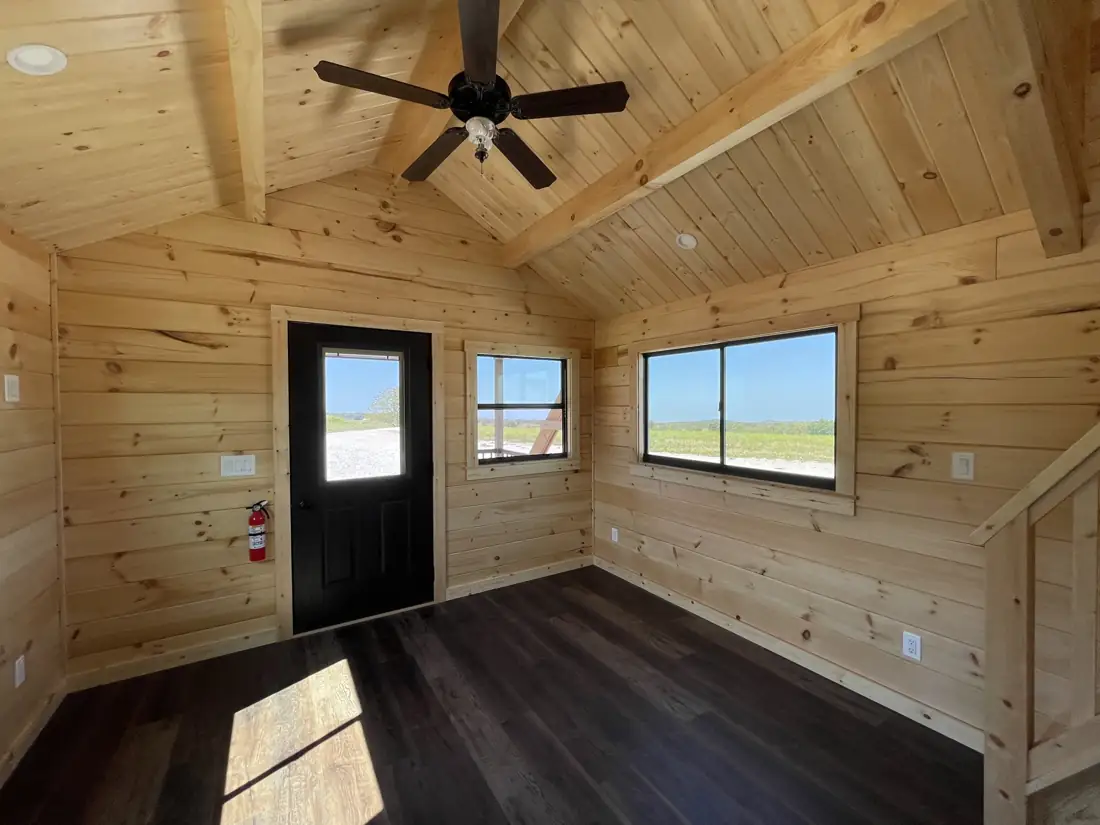
If that’s you, check your county’s rules for small houses first. In Missouri, those rules are local; see Missouri tiny home laws. And if you want the cabin to be a park model, compare your plan with what a park model home is.
Quick summary
- Building can cost less in cash, but it costs months of work and carries the risk of mistakes.
- A home-built cabin can’t carry an RVIA park model seal, which can limit where it’s allowed.
- Buying gets you a set price, a warranty, a firm timeline and delivery.
- Build your own if you have the skills, the time and want a custom layout.