


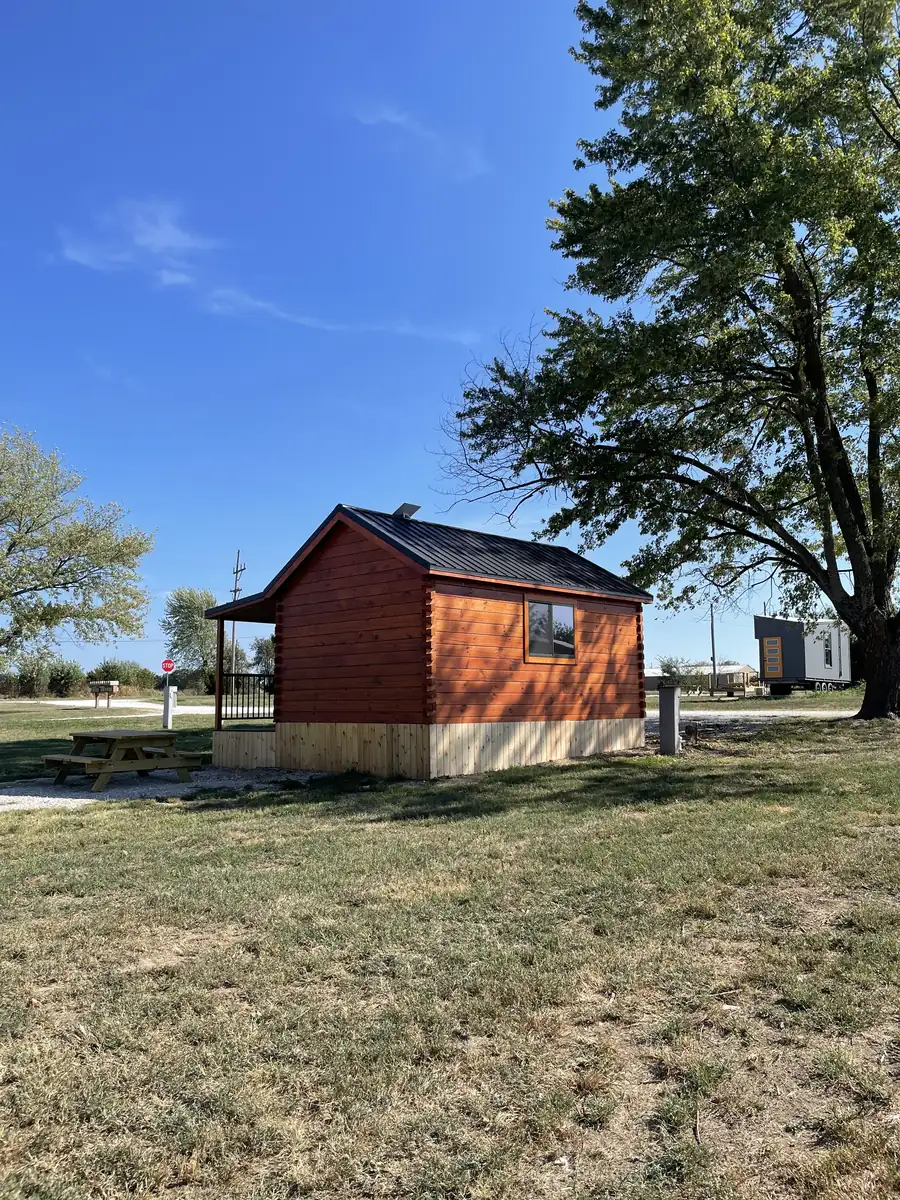
Search “tiny home cost” and you’ll see numbers from a few thousand dollars to six figures. That spread makes it hard to plan. The problem is that most prices leave out what it takes to get the home onto your land and hooked up.
This post breaks a tiny home’s cost into every piece, using our own log cabin prices as the example. For the bigger picture, from park model rules to delivery day, start with our tiny home buying guide.
What does a tiny home cost in 2026?
For one cabin, our log cabin tiny homes are $35,250 for The Cub and $78,900 for The Kodiak, built in our Missouri shop. Your total cost on your land adds delivery, a gravel or concrete pad, utility connections and skirt board. Plan for all of them before you set a budget.
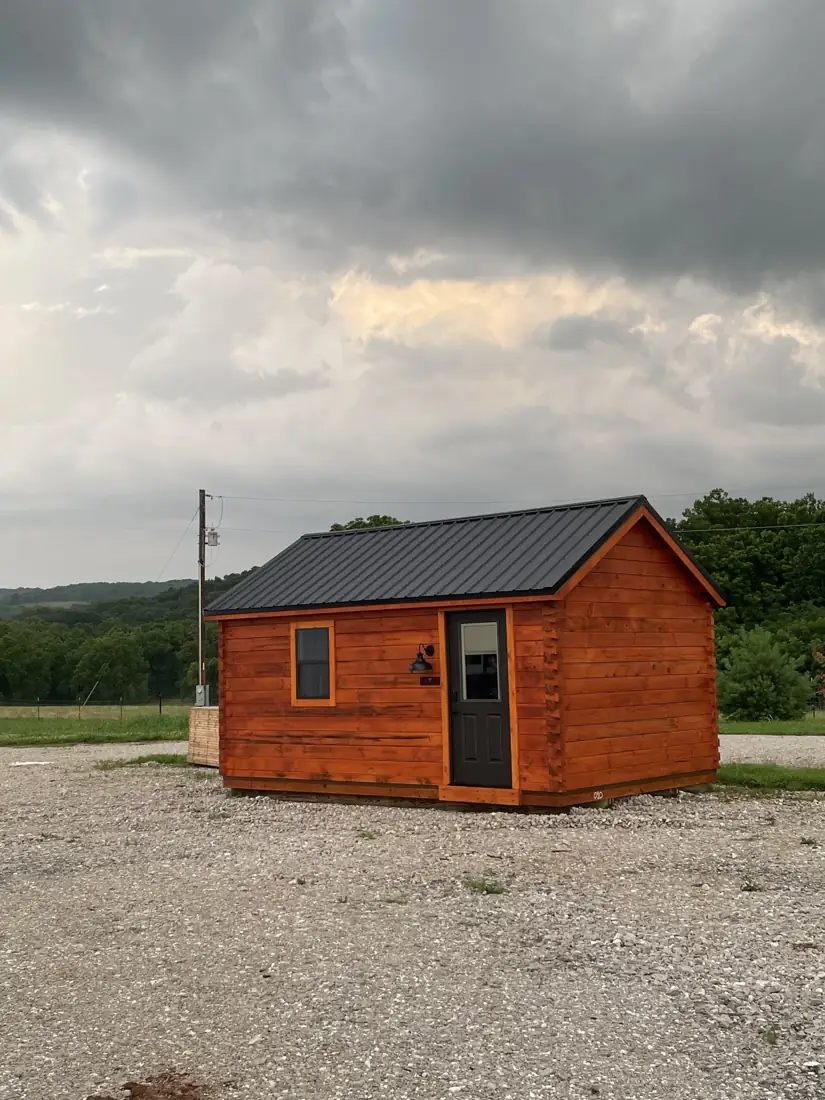
Those are retail prices from our current price list. Commercial pricing applies when you buy 5 or more cabins at once, for example a campground adding several rental units as an investment: $33,600 for The Cub and $75,800 for The Kodiak, each. See park model cabins for campgrounds.
You can pick a model and a stain color on our log cabin tiny homes page to see the price for that exact cabin.
What’s included in the price of a log cabin tiny home?
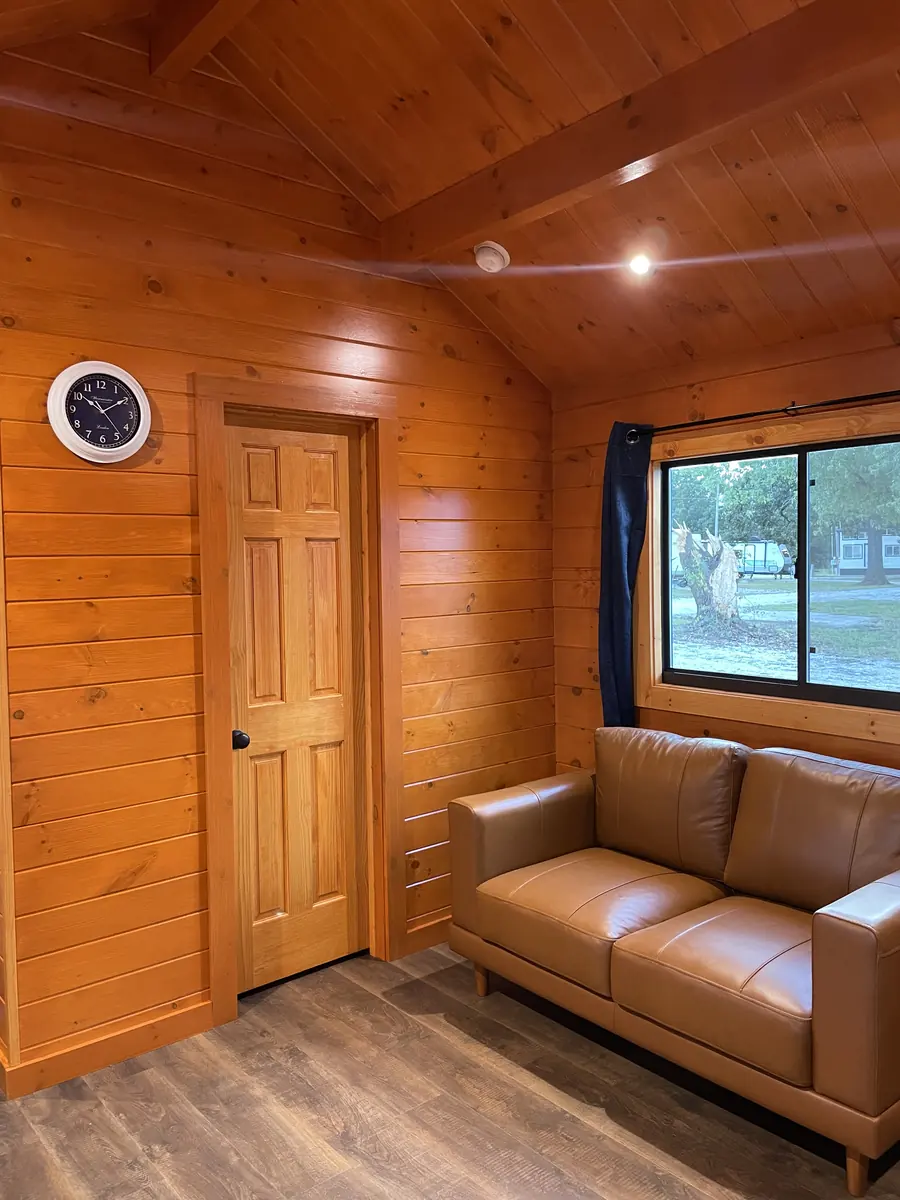
The price covers the finished cabin, built under roof in our shop. On The Kodiak that means log walls, a metal roof, a full kitchen, a full bath, laundry hookups, an LG mini-split for heating and cooling, a water heater, 100-amp electrical service and the steel chassis it rides on.
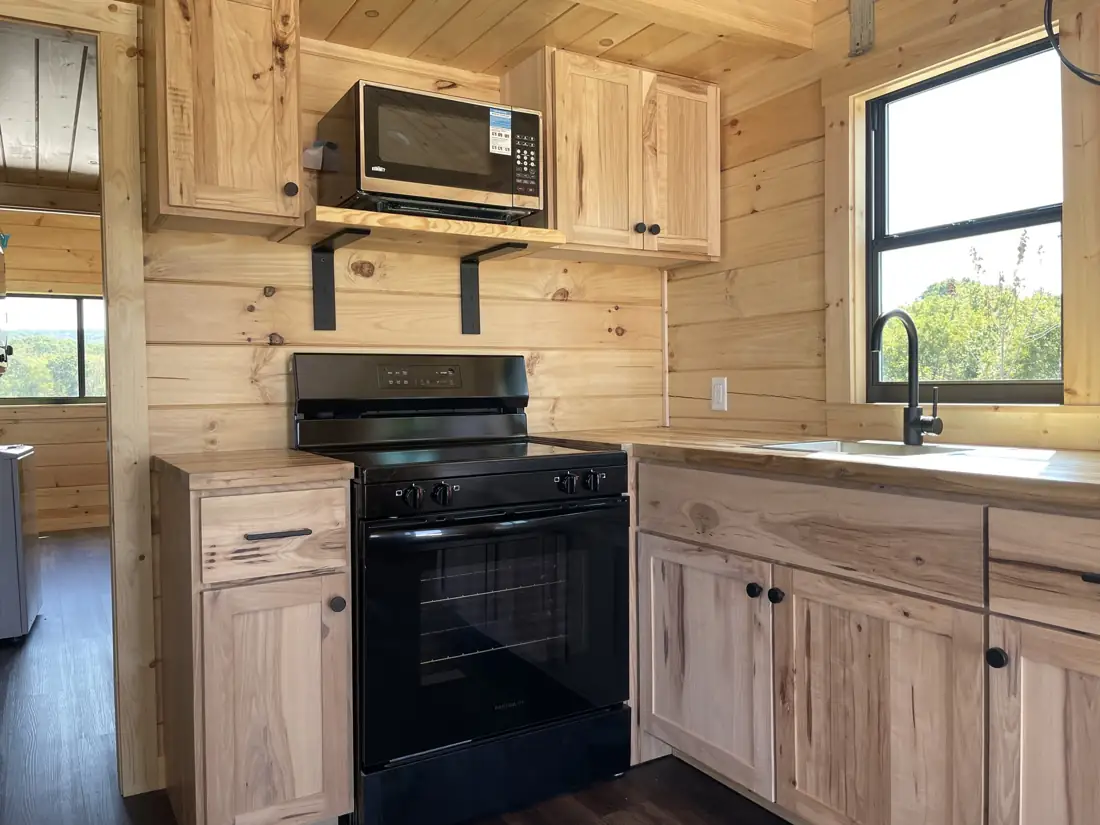
Here is what comes with The Kodiak, straight from its spec sheet:
- 3½-inch solid square pine log walls with dovetailed corners
- Full kitchen with hickory cabinets, butcher-block counters and GE appliances
- Full bath with a Delta shower, vessel sink and hickory vanity
- Stackable laundry with a 240V hookup
- LG 18,000 BTU dual-zone mini-split, a 19-gallon water heater and 100A service
- A 10-inch I-beam frame on four 6,000 lb axles
Every brand and part is listed on our log cabin materials page.
What does a tiny home cost to set up on your land?
Setup costs depend on your property. Delivery is quoted for your address. You’ll need a level gravel or concrete pad, RV-style hookups for electric, water and sewer, and possibly tree trimming or a wider gate. Connecting utilities and adding skirt board are extra costs.
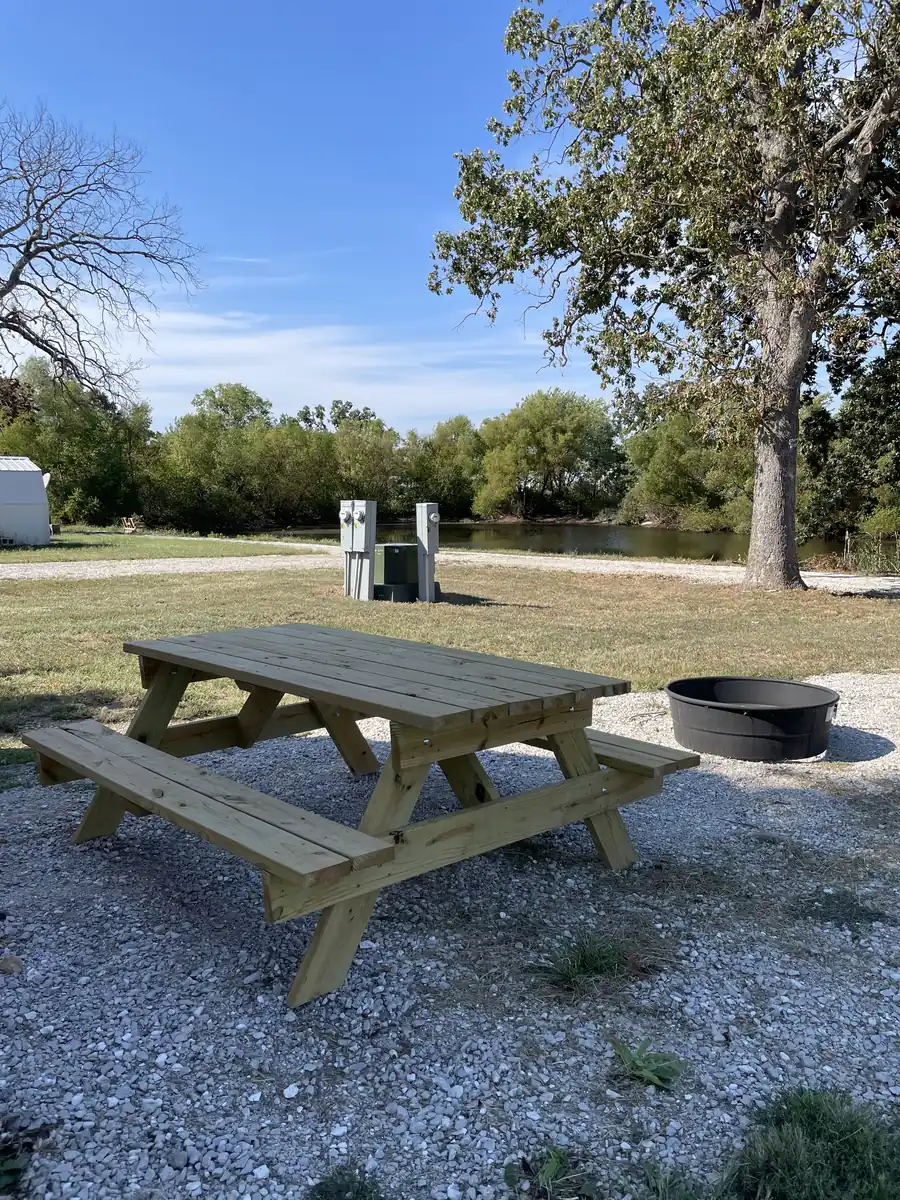
Here is every line item to plan for. We quote our part in writing; the rest depends on your site and your local contractors.
| Cost | What it covers | Who prices it |
|---|---|---|
| The cabin | The finished log cabin from our price list | Us: $35,250 (Cub) or $78,900 (Kodiak); less each for 5 or more |
| Delivery and setup | Oversize haul to your land, set and leveled on your pad | Us: quoted for your address |
| Utility connections | Hooking the cabin to power, water and sewer | Us, as an extra, if you want it |
| Skirt board | Closing in the base of the cabin | Us, as an extra, if you want it |
| Site pad | A level gravel or concrete pad | A local contractor (we can connect you with crews we trust) |
| Hookups at the site | Running electric, water and sewer to the pad | Your electrician, plumber or utility |
| Access | Trimming trees, widening gates | You or your contractor |
| Permits | Whatever your county or city requires | Your local planning office |
Why do tiny home prices online vary so much?
Because “tiny home” covers very different things: empty shells, kits, do-it-yourself builds, tiny houses on trailers, park model RVs and small houses on foundations. A low price often means no interior, no appliances or no delivery. Compare finished cabins to finished cabins.
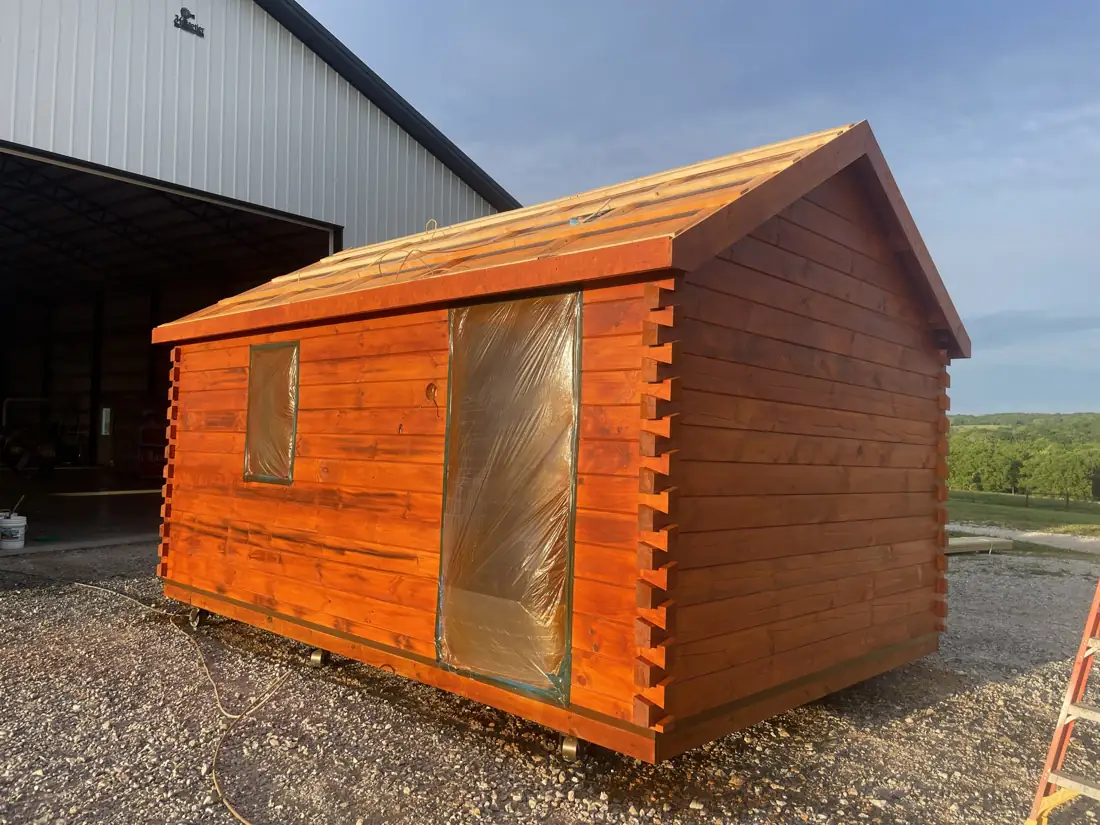
When you compare prices, ask these four questions:
- Is it finished inside? A shell can cost a fraction of a finished cabin, but you pay for the rest later.
- What is it built to? An RVIA-certified park model, a recreational building and a house on a foundation are all different. See what a park model home is.
- Is delivery included? Hauling a cabin is an oversize load, not a pickup-truck job.
- Who built it? If you’re weighing a DIY build, read buy or build a tiny home first.
How can you save money on a tiny home?
Pick the size you’ll really use, line up a local contractor for the pad, clear trees and widen gates before delivery day, and decide early between a park model on a pad and a recreational building on a foundation. A full concrete foundation is a bigger job than a gravel pad.
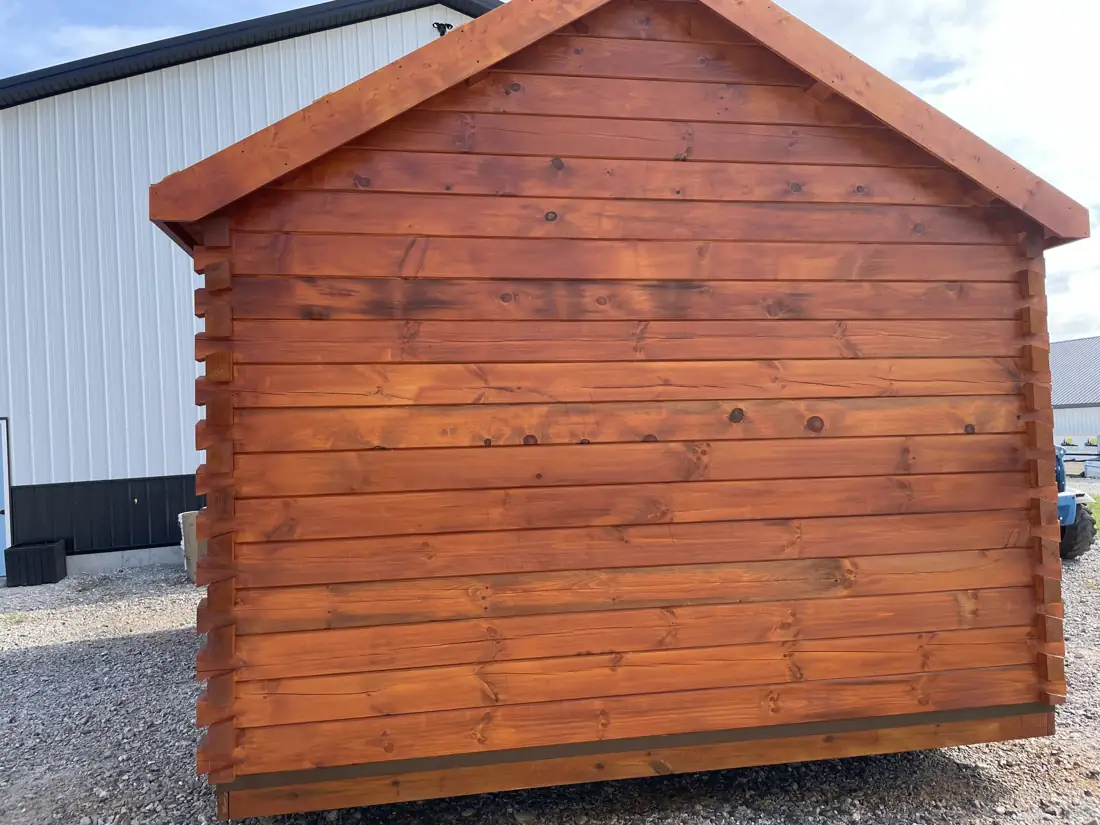
- Right-size it. The Cub, at 12 by 18 feet, is built for a guest cabin, backyard retreat or rental. If you don’t need a full kitchen, bath and laundry, it costs far less than The Kodiak.
- Prepare the site early. A pad that’s level and ready, and a clear route in, keep delivery day simple.
- Get one quote for everything we do. Ask for delivery, setup, utility connections and skirt board together, so nothing is a surprise later.
Is a tiny home cheaper than a manufactured home?
Often, but they aren’t the same thing. The average new single-section manufactured home sold for $82,200 in May 2026, according to the U.S. Census Bureau. A manufactured home is built as a full-time house. A park model is an RV built for recreational use, so compare them by how you’ll use them.
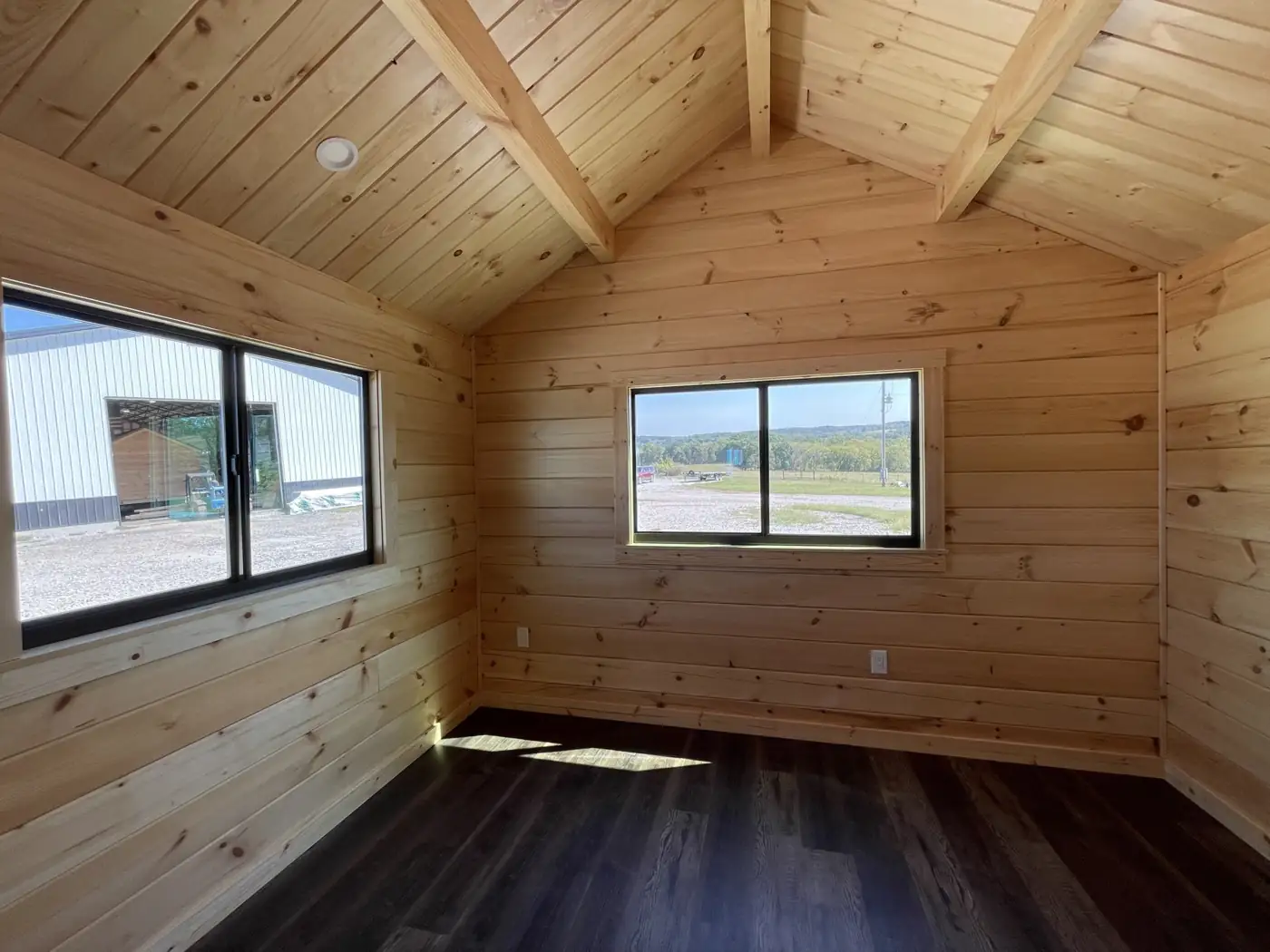
The Census figure comes from its Manufactured Housing Survey, published on FRED by the St. Louis Fed. Manufactured homes are built to the federal HUD code for year-round living. Park models are built to an RV standard and are exempt from the HUD code, so the right choice depends on whether you want a getaway or a primary home. For the same comparison against a new site-built house, read log cabin vs. house cost.
What ongoing costs should you plan for?
Plan for restaining the logs every 3 to 5 years, winterizing the plumbing if the cabin sits empty through a freeze, your utility bills, and insurance. If the cabin goes in an RV park or campground instead of on your own land, add the lot rent.
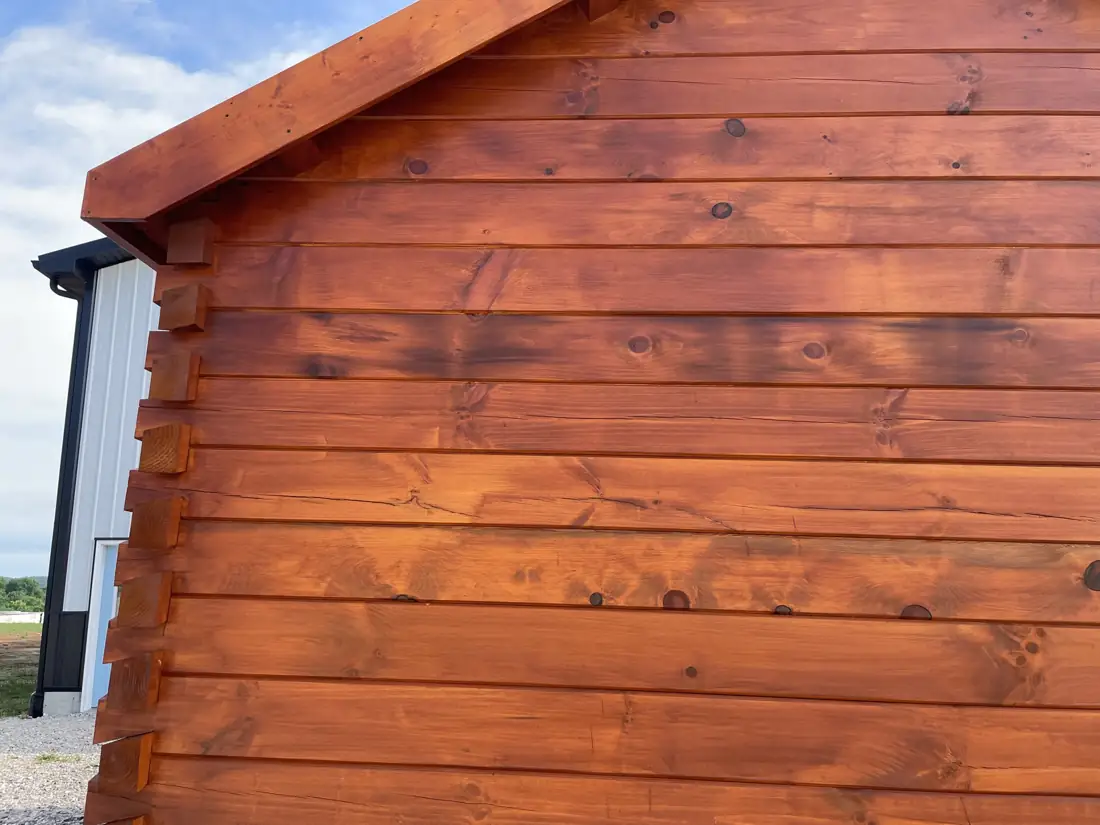
Restaining is part of keeping a real log cabin looking right, and our warranty depends on it. Call your insurance agent before delivery and ask how they cover a park model or recreational building.
How do you pay for a tiny home?
When you buy one of our cabins outright, a 50% deposit starts the build and the balance is due on delivery. The deposit is non-refundable because it buys your materials. Ask us about financing on your call.
Our rent-to-own option is for buildings under $25,000, so it doesn’t apply to our cabins.
Quick summary
- One of our log cabins is $35,250 (The Cub) or $78,900 (The Kodiak); 5 or more at once get commercial pricing.
- Budget for delivery, a gravel or concrete pad, RV-style hookups and skirt board on top of the cabin price.
- Online prices vary because many leave out the interior, the delivery or the setup.
- Plan for restaining every 3 to 5 years, winterizing and insurance.
- A 50% deposit starts the build; the rest is due on delivery.