


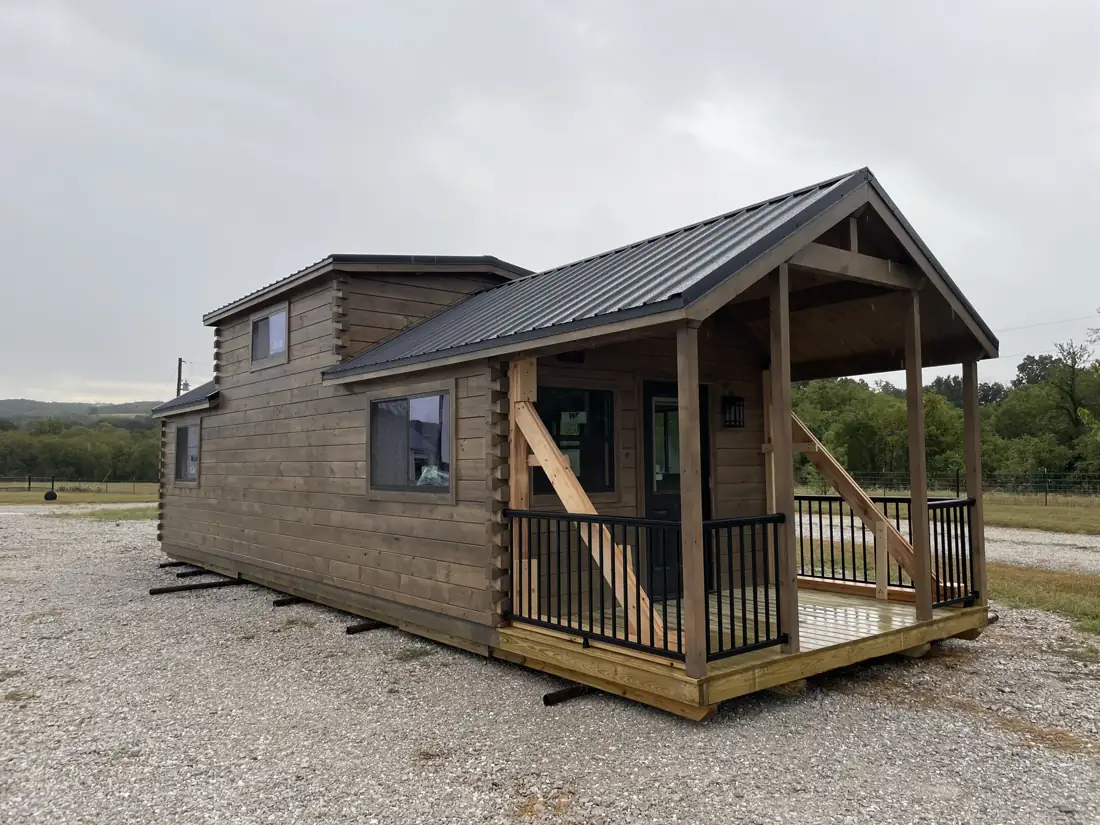
If you’re weighing a log cabin vs. a house, the cost gap looks huge at first glance. A new house runs hundreds of thousands of dollars; a finished log cabin tiny home can cost less than a new pickup. The real question is what you give up and what you still have to pay for.
We build log cabin tiny homes in Fair Play, Missouri, so the cabin numbers below are our own prices. The house numbers come from the U.S. Census Bureau and the National Association of Home Builders. For everything else about buying a cabin, see our log cabin tiny home buying guide.
How much does a log cabin cost compared with a house?
Far less in total. The median new house sold in the U.S. in August 2026 went for $393,700, according to the Census Bureau. One of our finished log cabins is $35,250 for The Cub or $78,900 for The Kodiak. The cabin price leaves out land, delivery and site work, which a house price usually includes.
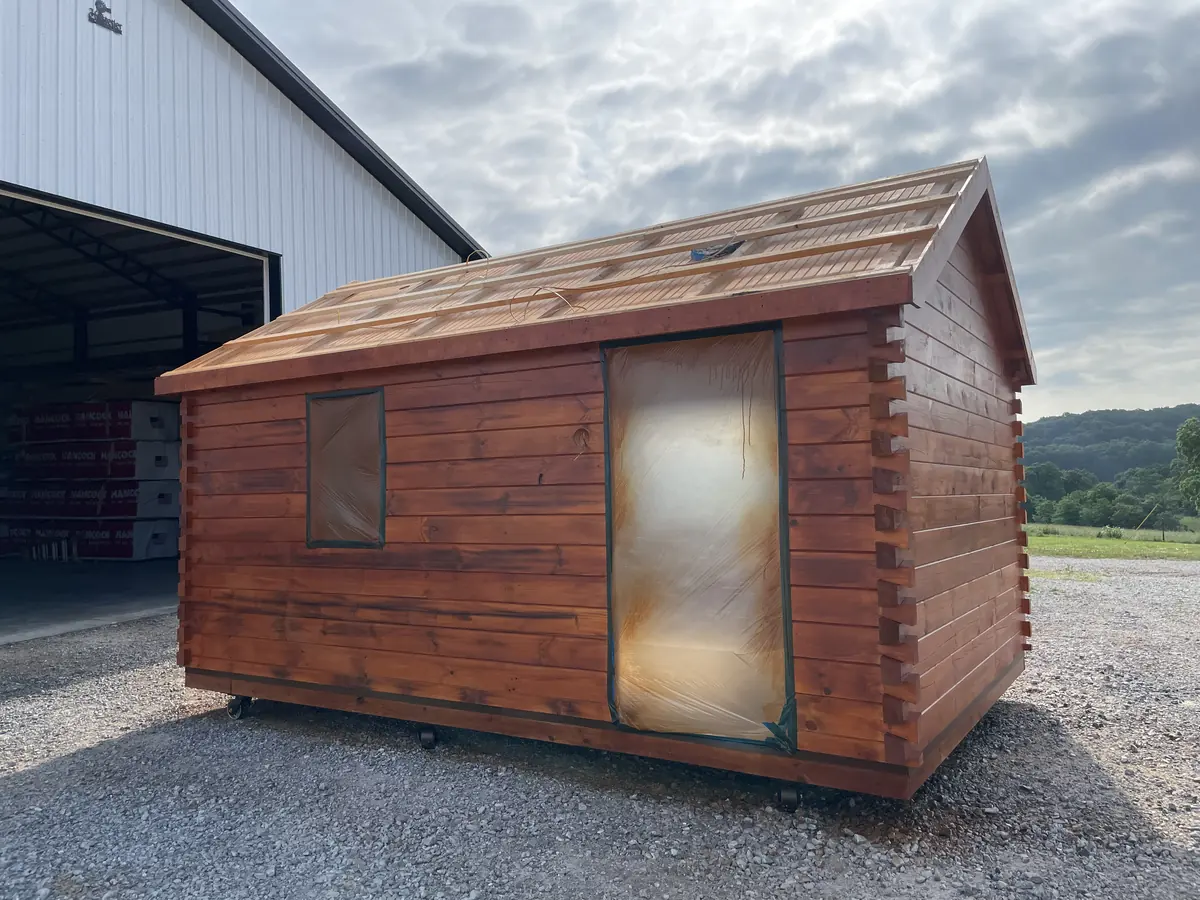
That figure is from the Census Bureau’s monthly new residential sales report. A new house’s sale price normally includes the lot it sits on. Our prices are for the cabin itself, built and finished in our shop. So for a fair comparison, add the cost of your land, delivery to your address, a gravel or concrete pad and utility hookups to the cabin side.
Even with all of that added, a Kodiak on land you already own usually comes in well under the price of a new house. Walk through every line item in how much a tiny home costs.
Buying several at once lowers the cabin price further. Commercial pricing for 5 or more cabins, for example a campground adding rentals, is $33,600 for The Cub and $75,800 for The Kodiak, each.
Log cabin vs. house cost per square foot: which is cheaper?
Not really. The Cub works out to about $163 per square foot and The Kodiak to about $197 on its 400-square-foot main floor. New houses built for sale ran a median $153 per square foot in 2024, not counting the lot. A cabin saves money mainly because it is much smaller.
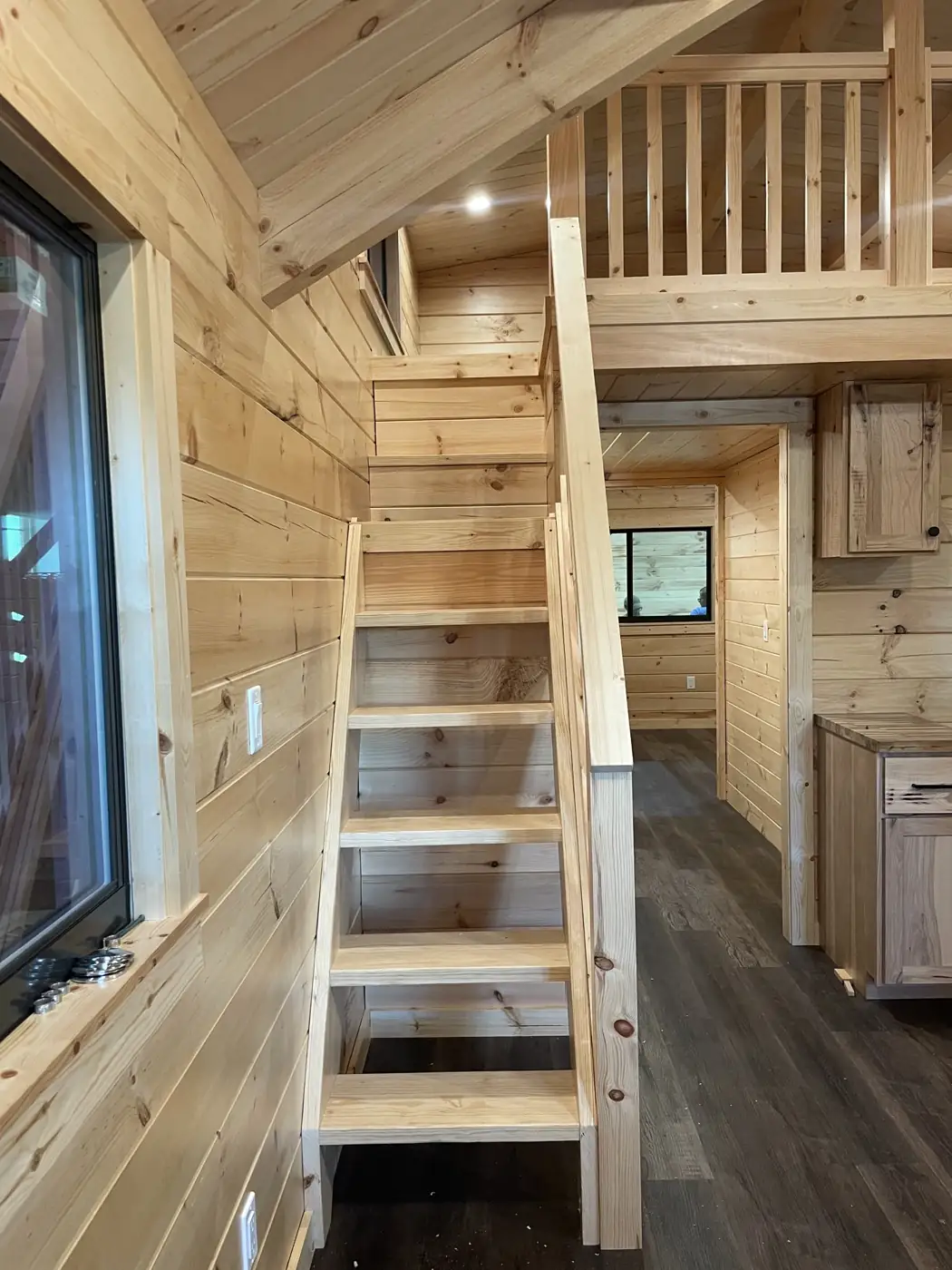
The house figures come from NAHB’s analysis of Census data: $153 per square foot for homes built for sale and $166 for homes a contractor built on the owner’s land. Count the Kodiak’s 120-square-foot sleeping loft and its cost drops to about $152 per square foot of living space.
Size is where the gap opens up. The median new single-family home finished in 2025 was 2,142 square feet, according to the Census Bureau. The Kodiak is under a fifth of that, and The Cub, at 12 by 18 feet, about a tenth. You pay for less house, so you pay less.
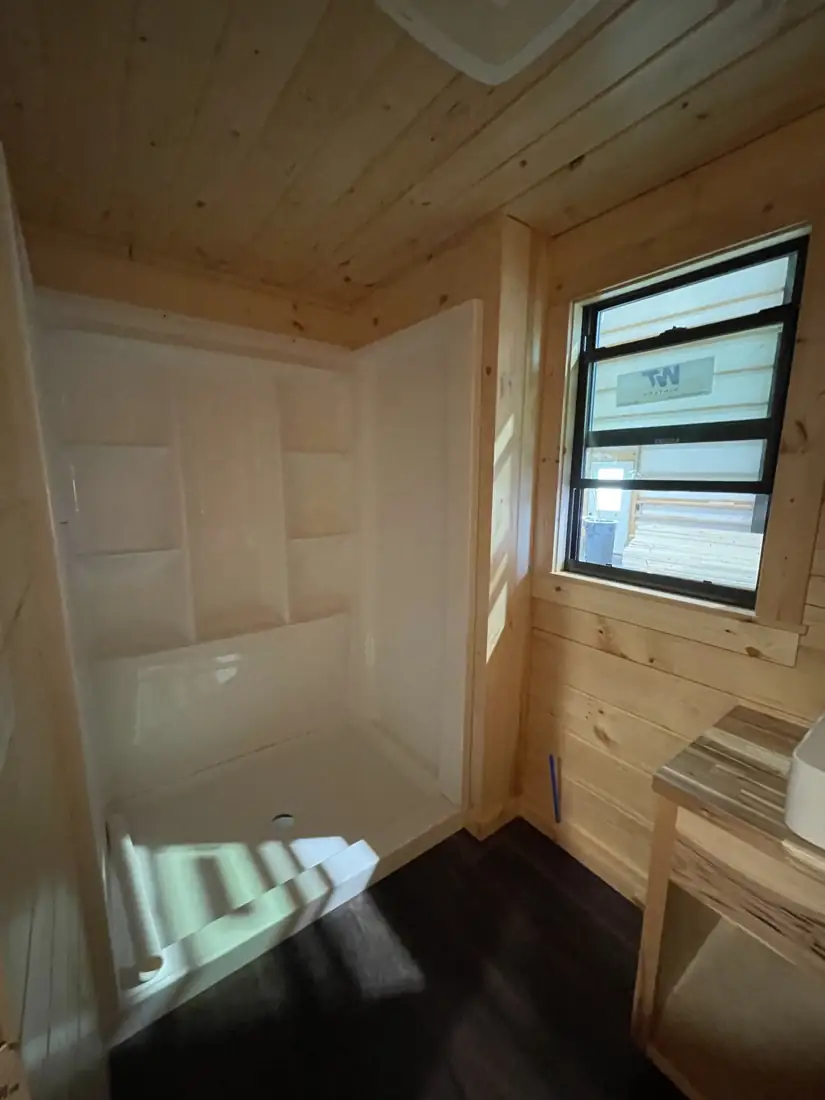
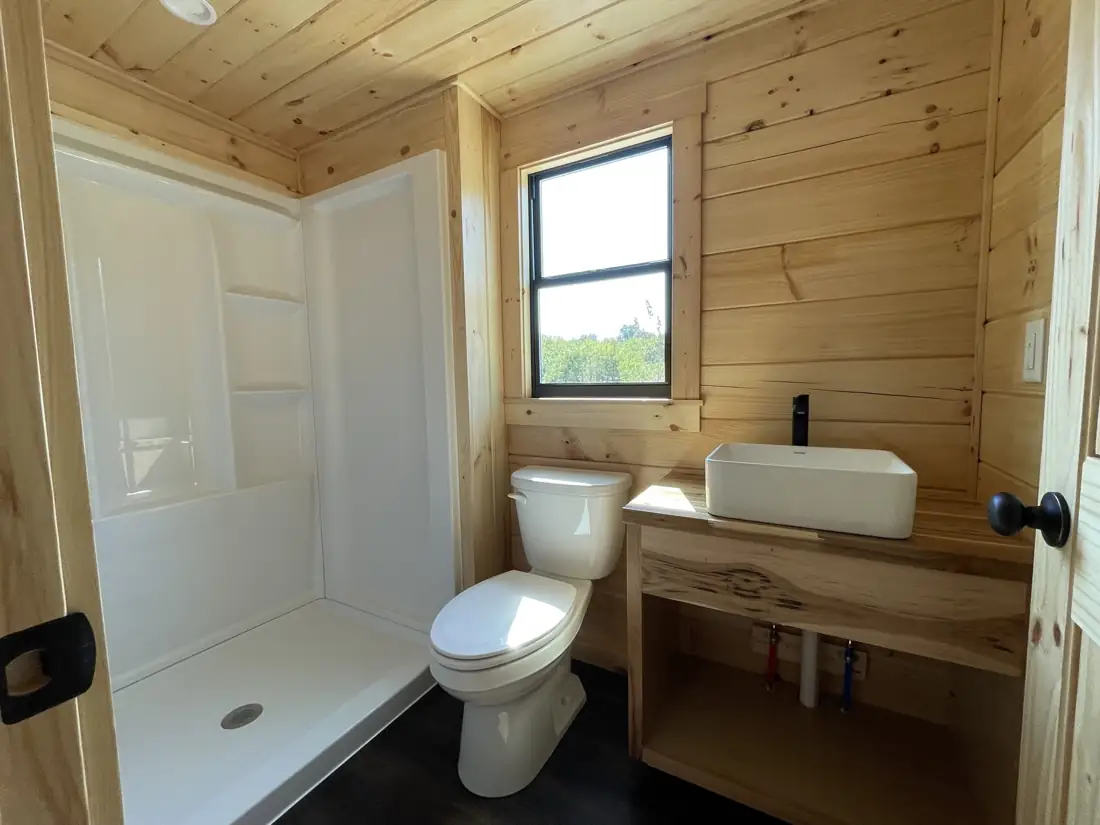
Compare finished to finished. Our prices include the log walls, metal roof, windows, wiring, plumbing, heating and cooling, and on The Kodiak a full kitchen, full bath and laundry hookups. A cabin shell or kit can look cheaper per square foot, but you pay for the inside later. We compare those routes in buy or build a tiny home.
| The Cub | The Kodiak | Median new house | |
|---|---|---|---|
| Price | $35,250 | $78,900 | $393,700 (Aug 2026, with lot) |
| Size | 216 sq ft | 400 sq ft + 120 sq ft loft | 2,142 sq ft (2025) |
| Cost per sq ft | About $163 | About $197 (main floor) | $153 built for sale, no lot (2024) |
| Land, delivery and site work | Extra | Extra | Usually in the price |
What costs come with a log cabin that a house price already covers?
Land, delivery, a pad and utility connections. A house is sold on its lot with water, sewer or septic and power already run. With a cabin, you supply the land, we deliver and set it, and a local contractor builds the pad and connects electric, water and sewer. Skirt board is extra too.
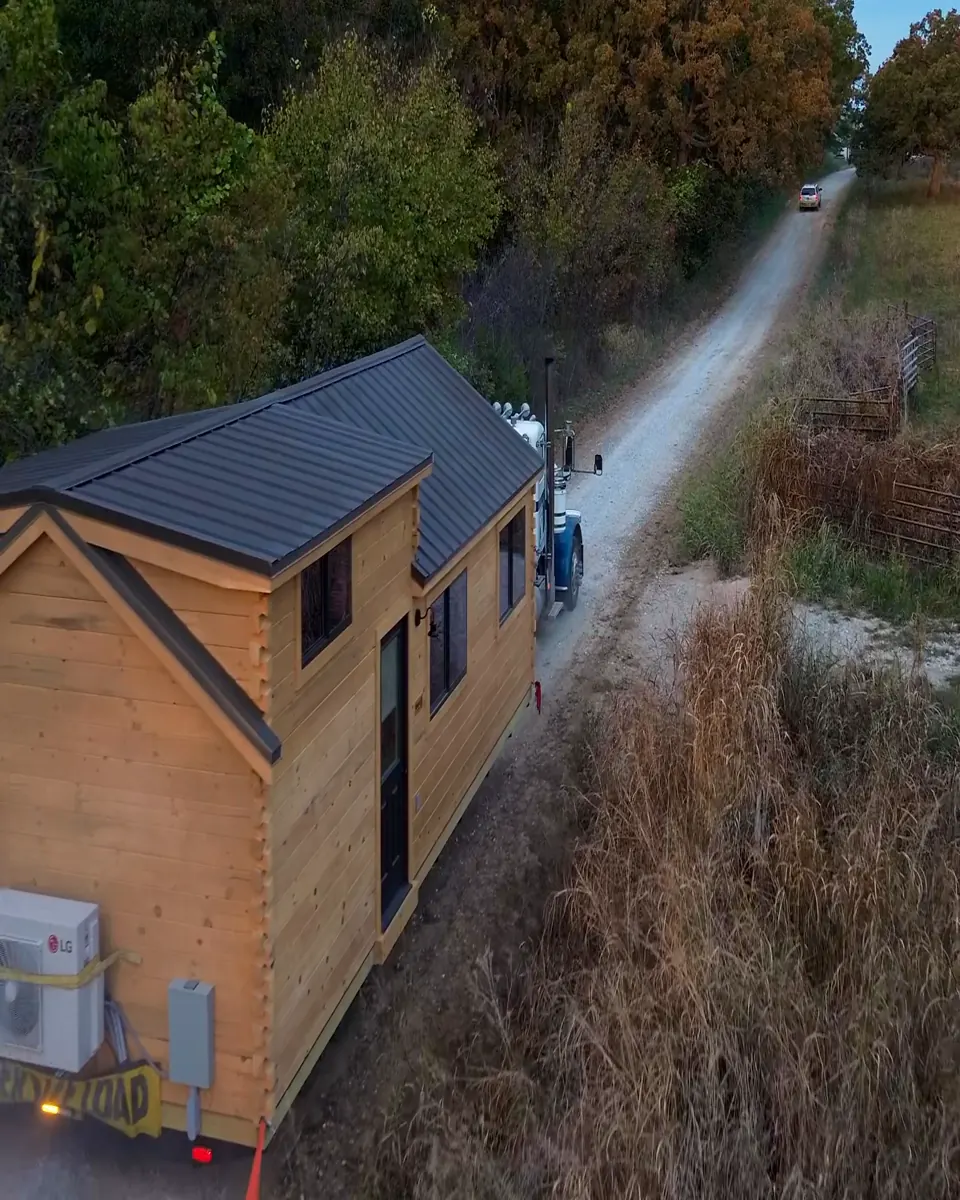
Setup is included when we deliver: we set the cabin and level it on your pad. Before that day, plan for:
- Land. Your own property, a lot you buy, or a rented site in an RV park or campground.
- The pad. Level gravel or concrete. We recommend a local contractor and can connect you with crews we trust.
- Utilities. RV-style hookups for electric, water and sewer, or a septic system if there’s no sewer.
- Delivery. Quoted for your address. Tree trimming or a wider gate may be needed so the truck can get in.
If your land has no well, septic or power yet, those can be the biggest line items, so get local quotes early. Our Missouri delivery page covers what delivery day looks like.
How long does a log cabin take compared with building a house?
Much less. A new single-family house took 8.8 months from start to finish on average in 2025, according to NAHB’s reading of Census data. Each of our cabins takes about two weeks to build in our shop, under roof, before delivery. Site prep can happen while we build.
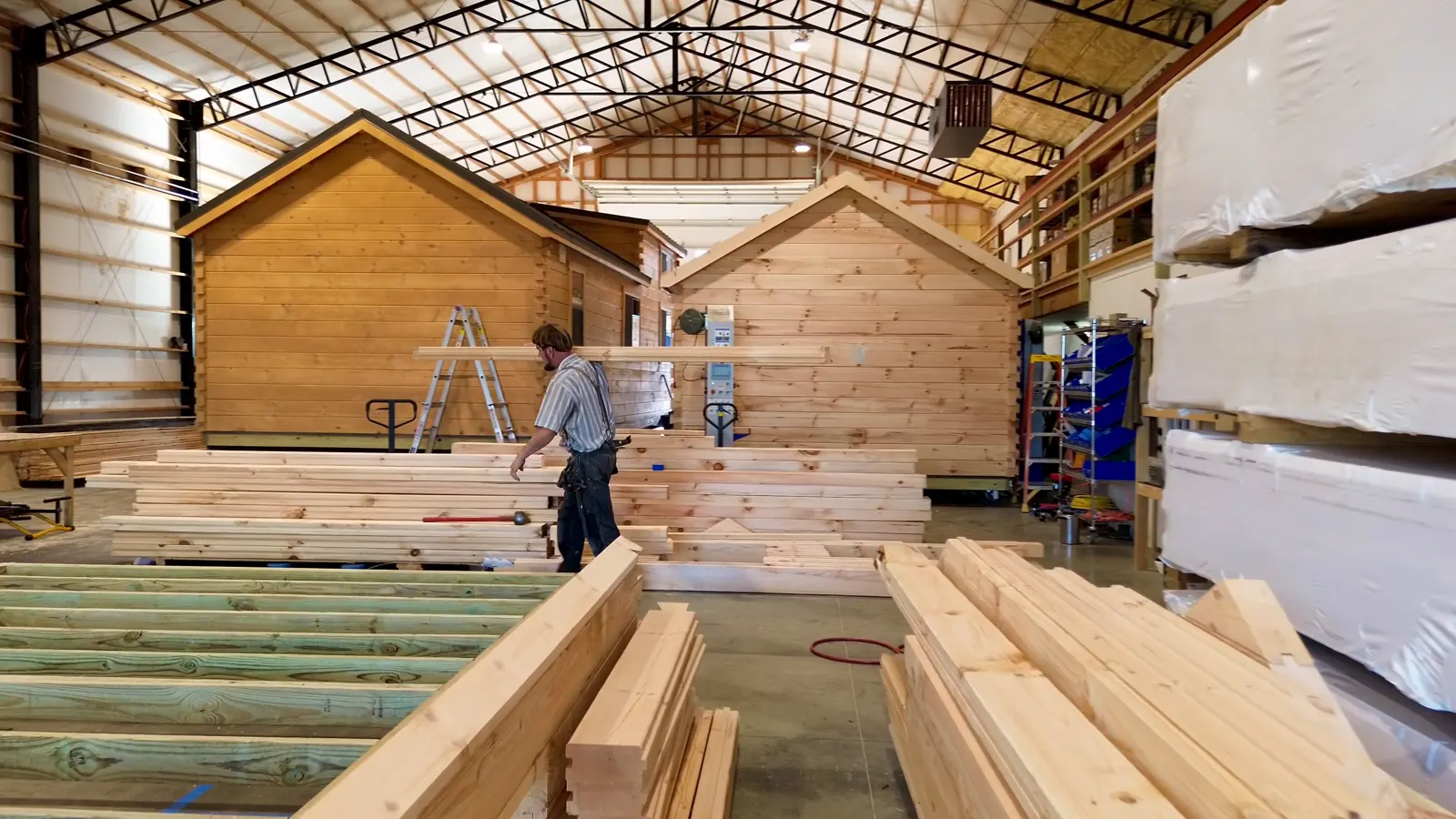
Custom houses take longer still: NAHB reports about 14 months from permit to completion for houses the owner builds, and close to 12 when a contractor builds on the owner’s land. Our start date depends on how busy the shop is, so ask for our next opening when you call.
Does a log cabin cost more to maintain than a house?
Some upkeep is different, not necessarily more. Real log walls need fresh stain every 3 to 5 years to stay sealed, and our warranty depends on it. A small cabin also has less roof, fewer rooms and smaller systems to heat, cool and repair than a full-size house.
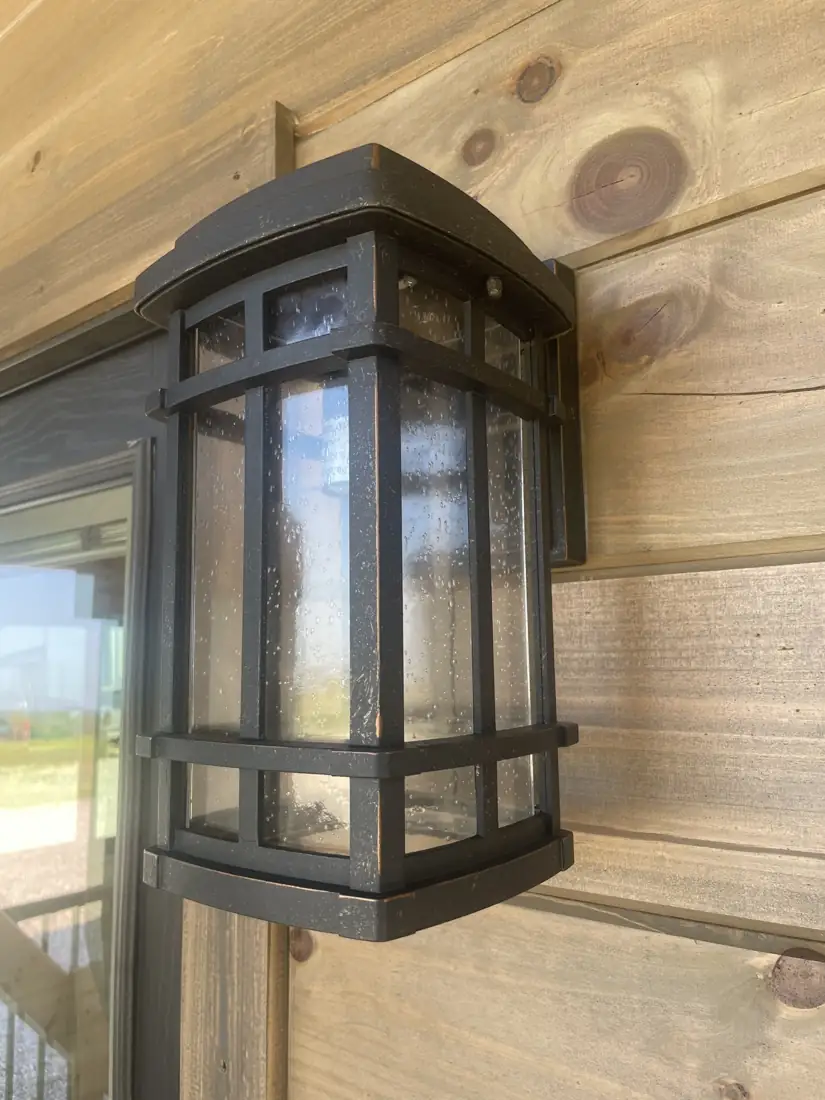
Our cabins have metal roofs, double-pane windows and an LG mini-split for heating and cooling. Solid wood walls hold heat well, and the mini-split is more than enough for a cabin this size. If the cabin will sit empty through a freeze, winterize the plumbing. See every material and brand we use on our log cabin materials page.
Our park model warranty covers defects in our work for 10 years from the purchase date: a roof that starts leaking or plumbing that comes apart, for example. It doesn’t cover damage from outside causes, like water lines that burst in a freeze or mice chewing wires. Read the details on our warranty page.
Can you finance a log cabin like a house?
Usually not with a regular home mortgage, because a park model cabin is an RV, not real estate. Buyers pay cash, finance through Acorn Finance, which we offer, or use a local bank. When you buy outright, a 50% deposit starts the build and the balance is due at delivery.
Taxes work differently too. Missouri counties assess recreational vehicles and trailers as personal property, so a park model can be taxed more like an RV than a house. Ask your county assessor how they handle a cabin on your land before you buy. Ask your insurance agent the same question.
Log cabin vs. house: can a cabin replace a house?
For some buyers, yes. People who pick one of our cabins over a house usually do it because of local restrictions, or because a cabin arrives turn-key with far less to coordinate. Our park models are built for recreational use, so ask your county whether you can live in one full time.
“Buyers typically choose one of our cabins over a house because of local restrictions and also because they are completely turn-key. Some people just don’t have the time to coordinate a full house build, and our setup is much less stressful. You prep the site, purchase the cabin, hook it up, furnish it and add your own touches, and then move in.” — the Premium Structures team
Other buyers keep their house and add a cabin: a getaway on land they own, a guest cabin out back, or a rental that helps pay for itself. Read what Missouri allows in Missouri tiny home laws, and what a park model is in what is a park model home.
A house is usually the better buy when:
- It will be your only home and you need bedrooms for a family.
- You want a regular mortgage and the equity that comes with owning real estate.
- Your county won’t allow a park model or small cabin as a full-time residence.
A cabin is usually the better buy when you already have land or a site, want a place to get away or host guests, or want a rental without the cost of a second house.
Quick summary
- A new house sold for a median $393,700 in August 2026; our cabins are $35,250 and $78,900.
- Per square foot, a cabin costs about what a house does; the savings come from building smaller.
- Add land, delivery, a pad and utility hookups to the cabin price for a fair comparison.
- Each cabin takes about two weeks to build, against months for a house.
- A park model is financed and taxed more like an RV than a house, so call your lender and county assessor first.