


Ask about log cabin insulation and you’ll often hear one number: R-value. By that number alone, a log wall looks weak. But people who live in log cabins rarely say they’re cold, and that gap between the number and real life is what this post explains.
We build log cabins in Fair Play, Missouri, and these are the real figures for our cabins. For everything else about buying one, see our tiny home buying guide.
What is the R-value of a log cabin?
Low on paper. Softwood insulates at about R-1.4 per inch, so our 3.5-inch solid pine walls come to roughly R-4. The floor gets 2-inch insulation board at about R-7, and the solid wood ceiling has a layer of insulation for about R-4. A framed wall full of insulation rates higher.
The per-inch figure comes from Perma-Chink’s guide to the thermal efficiency of log walls, which puts most softwoods at R-1.41 per inch. R-value measures how well a material slows heat passing straight through it in a lab. It doesn’t measure what a solid wall does over a full day and night.
| What it is | About | |
|---|---|---|
| Walls | 3.5-inch solid Eastern White Pine logs | R-4, plus thermal mass |
| Floor | 2-inch foam insulation board | R-7 |
| Ceiling | Solid wood with a layer of insulation | R-4 |
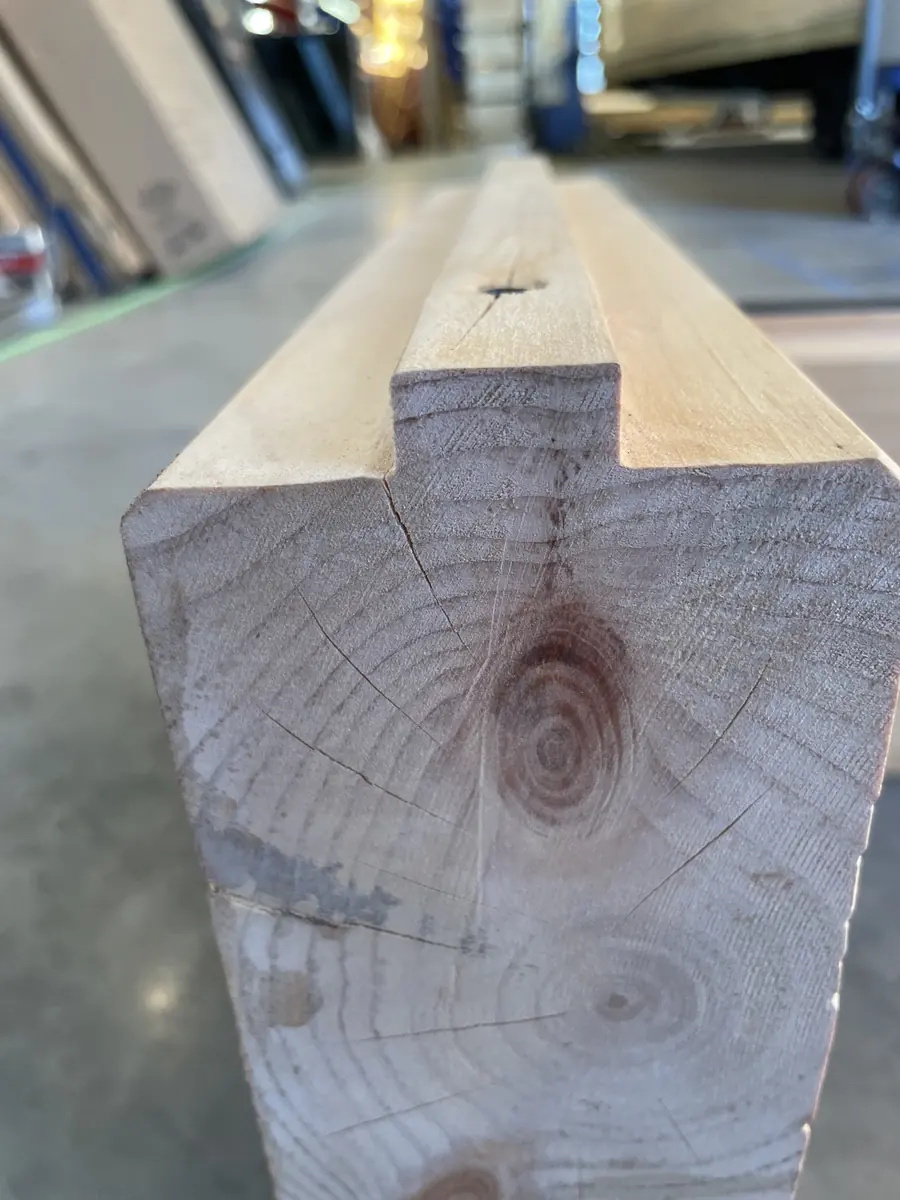
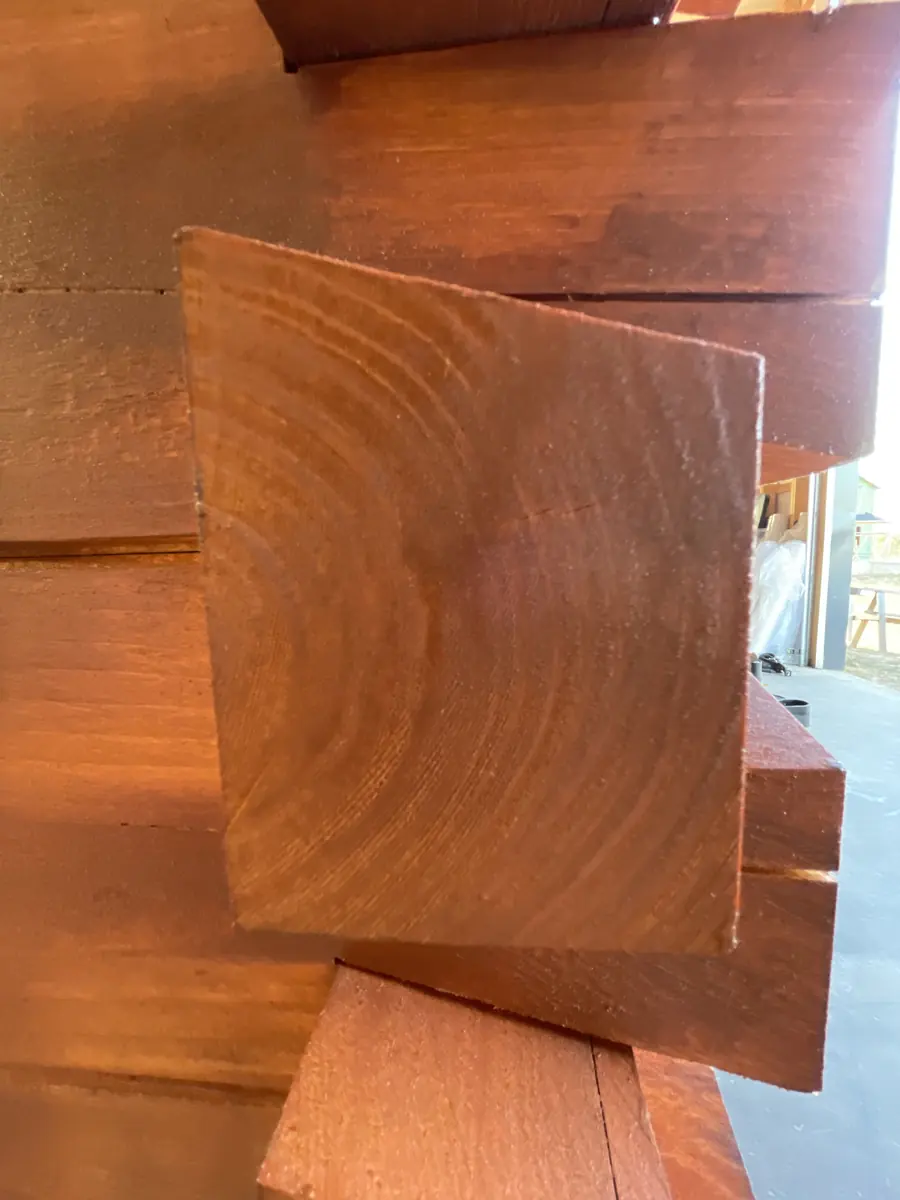
| Log joints | Tongue-and-groove with a foam gasket | Seals out air leaks |
Why doesn’t R-value tell the whole story for a log cabin?
Because solid logs store heat. A log wall soaks up warmth during the day and gives it back slowly at night, which evens out the temperature inside. That effect, called thermal mass, doesn’t show up in R-value, and in a long-term government test it made a log wall outperform its rating.
In a 28-week National Bureau of Standards test reported by the International Log Builders Association, a house with R-10 log walls used about as much energy as a matching frame house with R-12 walls. The log wall performed about 17% better than its rating, credited to its thermal mass.
The effect is strongest where days are warm and nights are cool, which describes much of Missouri and the states around it. Perma-Chink notes the benefit is greatest between roughly the 15th and 40th parallels; Fair Play sits near the 38th.
“On paper a cabin does not have good insulation value, but it has thermal mass. Basically the logs hold temperature inside very well, and log homes can be more efficient than a conventional home when it comes to heating and cooling.” — the Premium Structures team
Where does a log cabin actually lose heat?
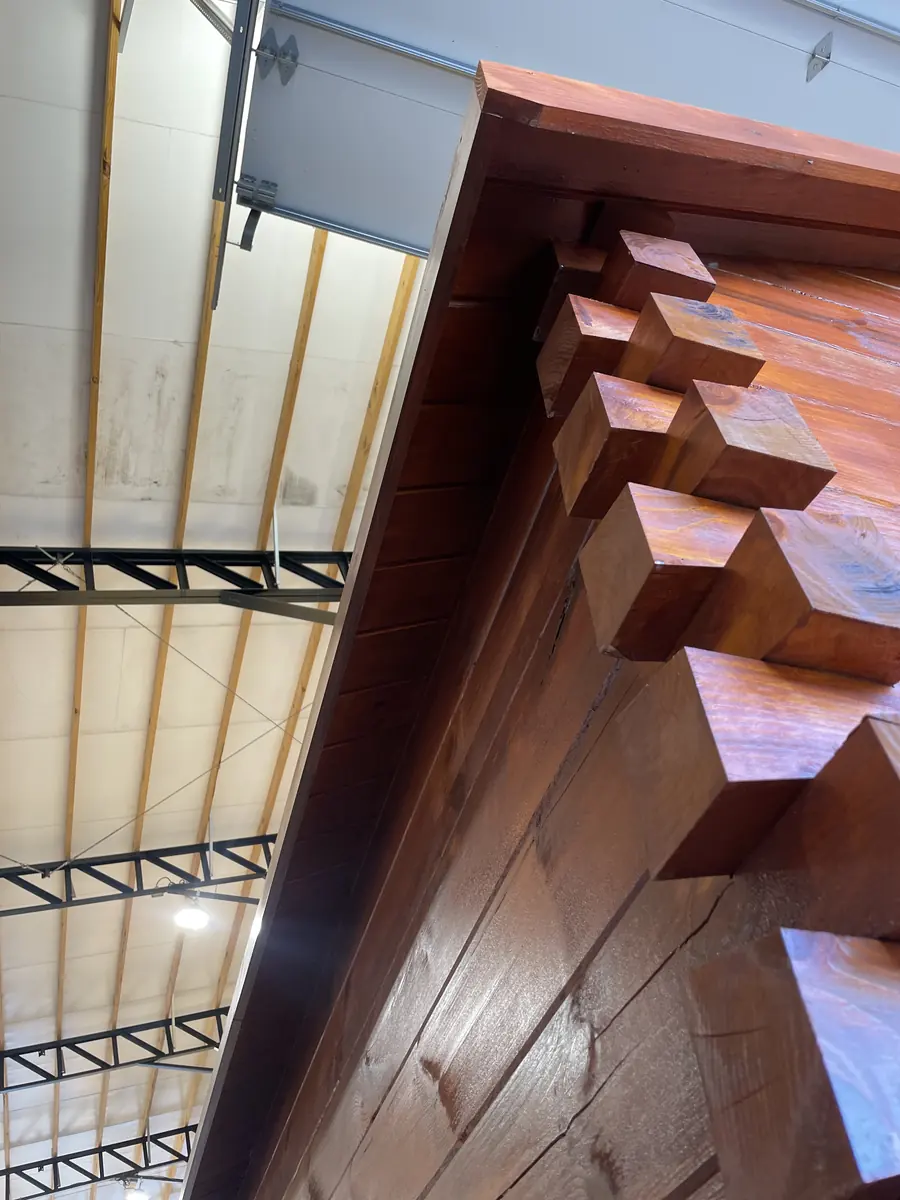
Mostly through air leaks, not through the logs. In handcrafted log homes without proper seals, air leaking through joints and gaps can account for up to half of heating losses. That is why how the logs are joined and sealed matters more than adding a little more insulation.
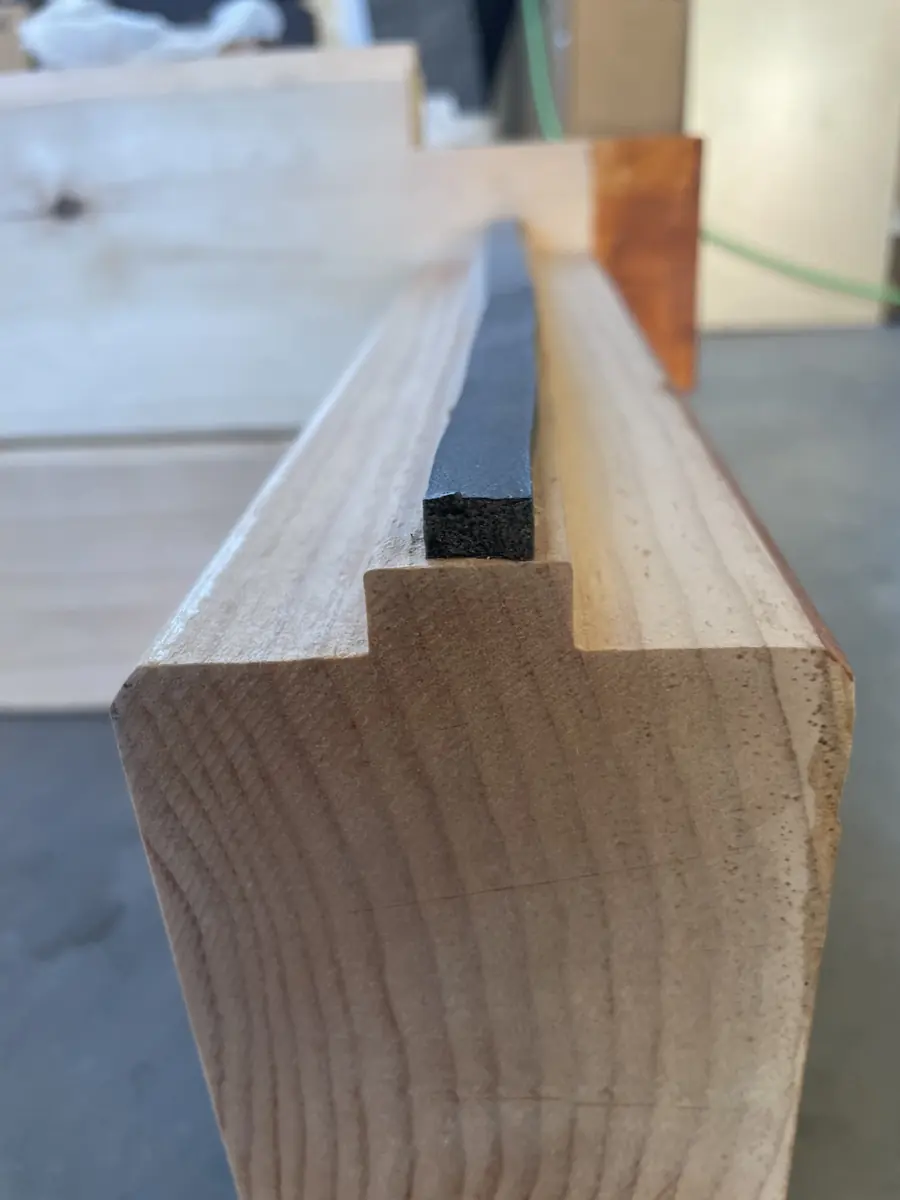
That figure is from the same ILBA report, which found the biggest leaks where the top logs meet the roof, not along the wall joints. Our logs are cut tongue-and-groove and sealed with a foam gasket between every course, so the wall stays tight as it settles.
Where does the insulation go in a log cabin?
In the floor and the ceiling, where a solid log wall can’t do the job alone. Our floors get 2-inch foam insulation board, about R-7, under the subfloor. The ceiling is solid wood with a layer of insulation above it. The walls are the 3.5-inch logs themselves, with nothing hidden inside them.
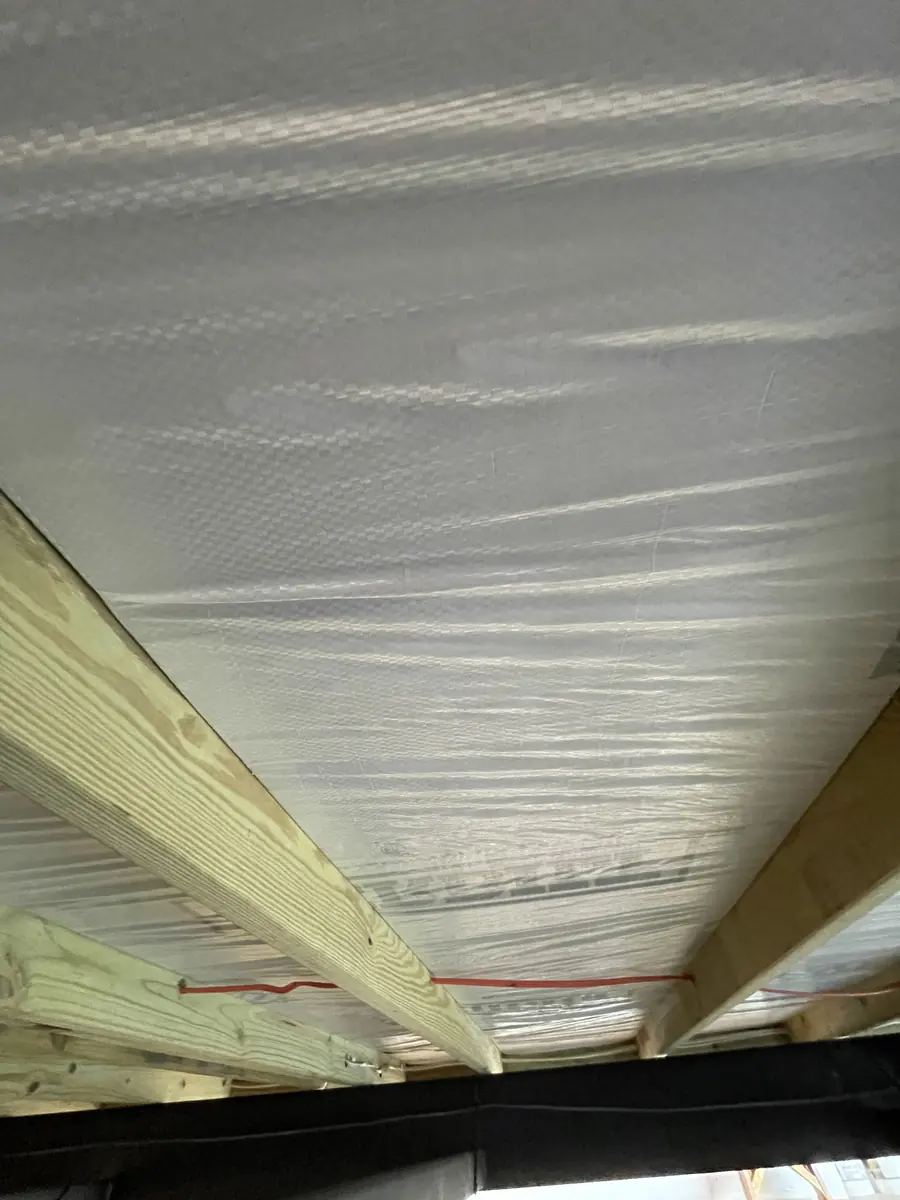
Solid walls have one more advantage: there are no hollow cavities inside them for insulation to sag in, for moisture to collect, or for mice to nest. What you see is the whole wall. Every product is listed on our cabin materials page.
How do you heat and cool a log cabin?
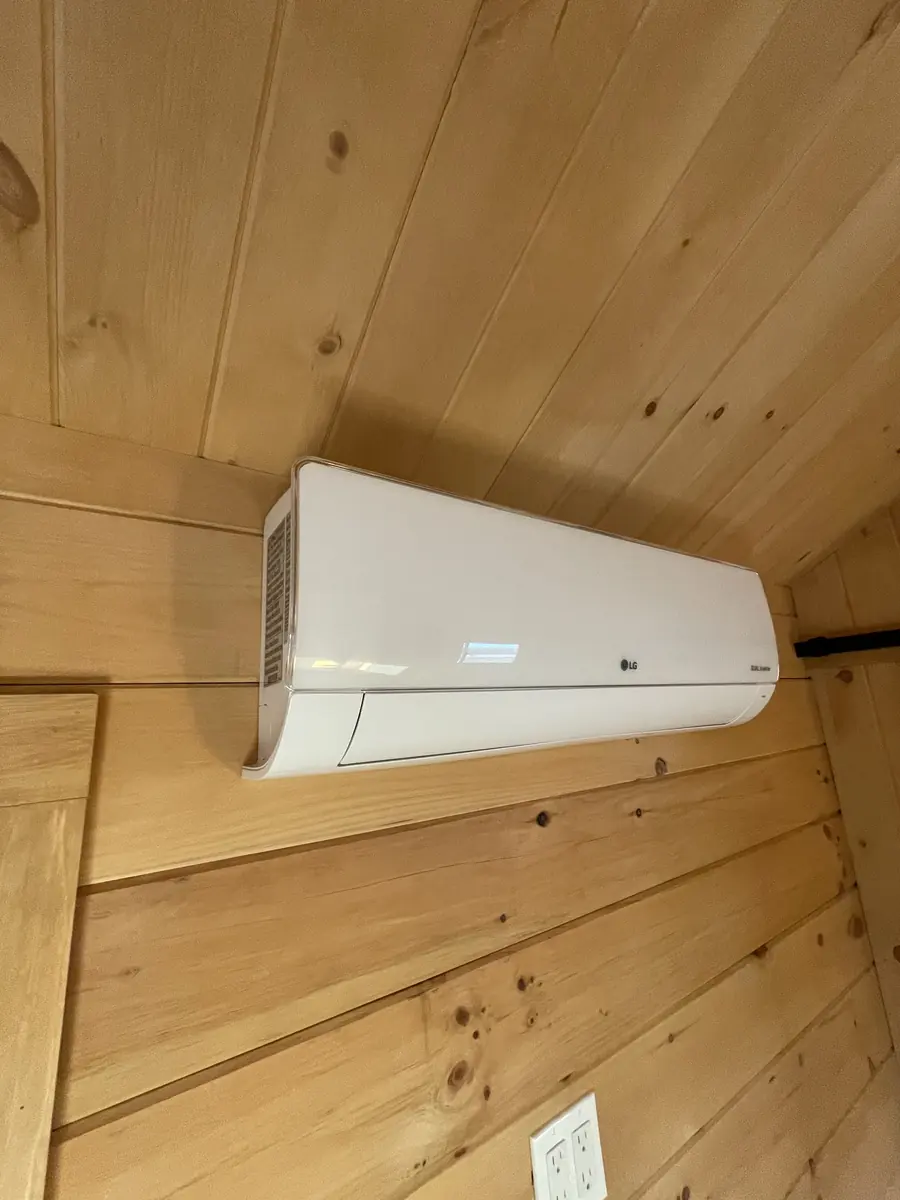
With a ductless mini-split. Each of our cabins comes with an LG mini-split that both heats and cools, and for a cabin this size it is more than enough. There are no ducts to leak heat, and the outdoor unit mounts right on the cabin wall.
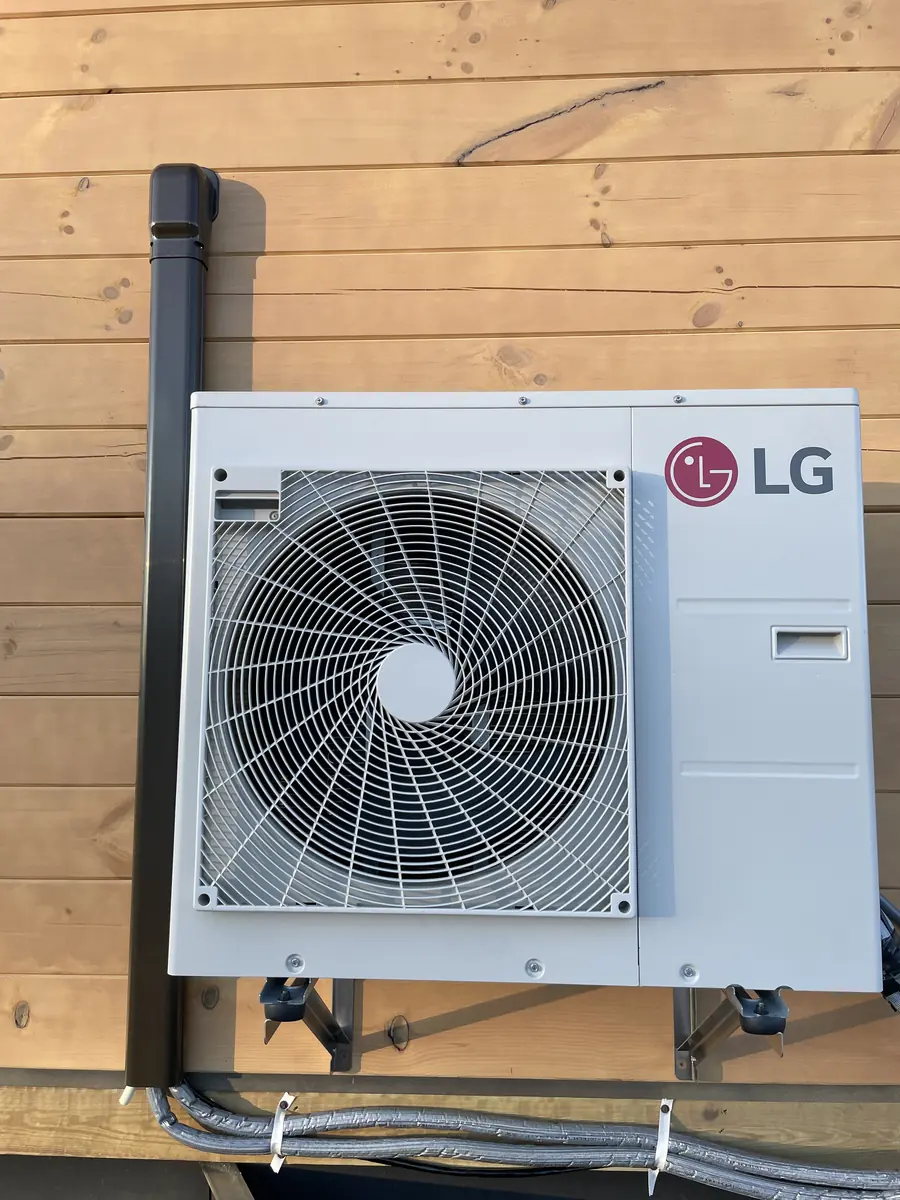
The Kodiak’s system is an LG 18,000 BTU dual-zone unit, so the main room and the bedroom side can be set separately. We don’t offer wood stoves. We’ve delivered cabins as far north as Idaho without any heating problems.
Are log cabins energy efficient? What does one cost to run?
Ours are. Our Cub in Stockton, Missouri, which we rent out on Airbnb, has been running about $120 a month in electricity. That covers the mini-split, the water heater, the kitchenette and everything else, with guests using it. Your bill will depend on your climate, your rates and how you use it.
A small, well-sealed cabin simply has less space to heat and cool than a house. See how the costs compare in log cabin vs. house cost, and what else to plan for in log cabin maintenance.
Quick summary
- A 3.5-inch log wall rates about R-4 on paper; our floors are about R-7 and the ceiling about R-4.
- Solid logs store heat, and a long-term test found a log wall beat its rating by about 17%.
- Air leaks, not the logs, are where most heat escapes; our logs are tongue-and-groove with a foam gasket.
- A ductless LG mini-split heats and cools the whole cabin.
- Our Cub in Stockton, Missouri, runs about $120 a month in electricity.