


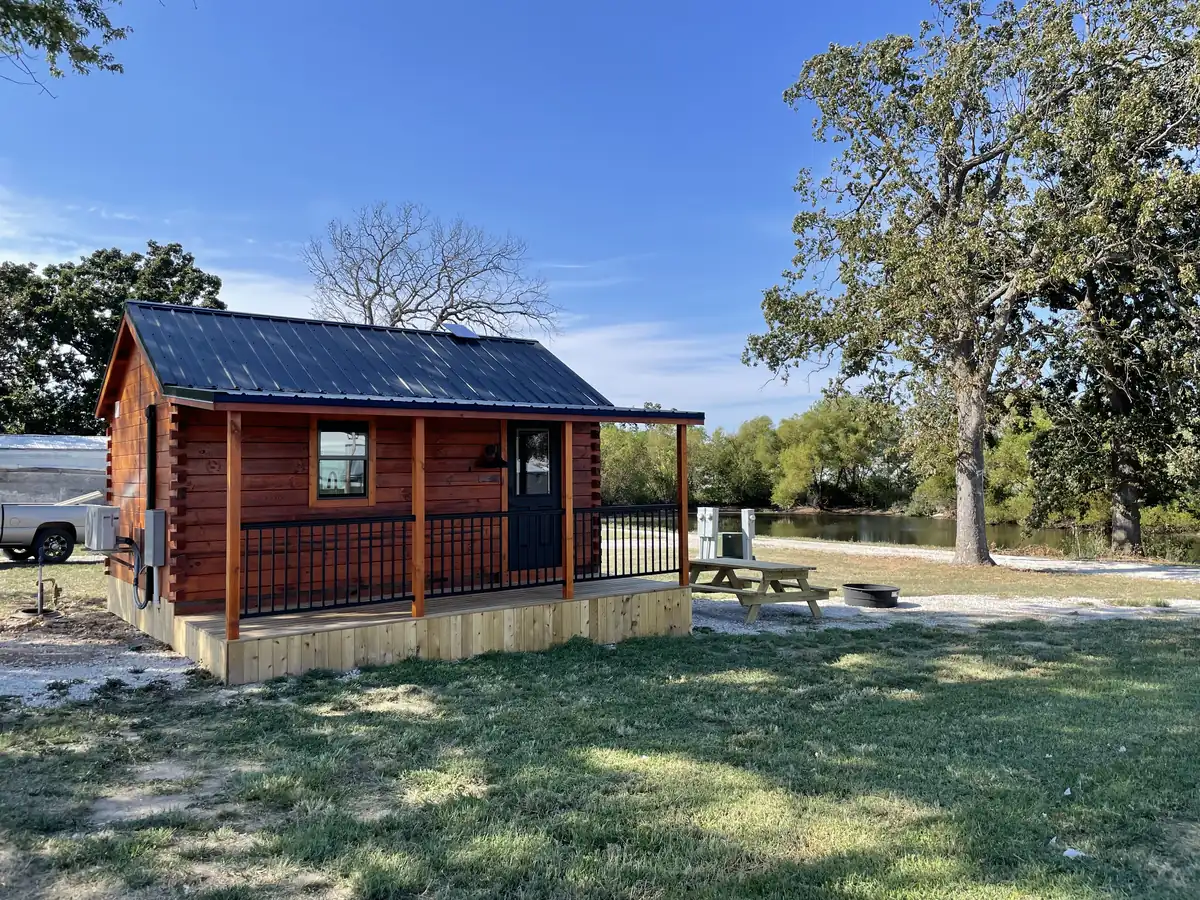
Buying a tiny home is a big decision that comes in a small package. This guide is for anyone pricing out a log cabin for weekend getaways, a guest cabin or a vacation rental. It covers the whole path, from the first price you see to the day the cabin is set on your land.
We build log cabin tiny homes in our shop in Fair Play, Missouri: The Cub and The Kodiak. Most of what follows comes from the questions buyers ask us on their first call, and from what we see on delivery day.
What should you know before buying a tiny home?
Three things decide most of it. First, what the cabin legally is: a park model RV, a recreational building or a house. Second, where it will sit and what your county allows there. Third, the total cost on your land, which is more than the cabin’s price tag.
The type sets the rules. A park model is built to a recreational vehicle standard. A small house on a foundation falls under building codes. The same-looking cabin can be treated very differently depending on which one it is.
Your land sets the plan. The cabin needs a level pad, a way in for a wide truck and hookups for power, water and sewer.
Your budget needs the whole picture. Delivery, site prep, utility connections and skirting all sit on top of the cabin price. Each one is covered below.
How much does a log cabin tiny home cost?
For one cabin, The Cub is $35,250 and The Kodiak is $78,900 at retail. That is the cabin itself. Delivery is quoted for your address, and site prep, utility connections and skirt board are separate costs you should plan for from the start.
Prices online range from a few thousand dollars to well over $100,000, because people use the words “tiny home” for everything from an empty shell to a finished house. We walk through every line item, and why the numbers vary so much, in what a tiny home really costs. Weighing a cabin against a regular house? See log cabin vs. house cost.
Buying several? Commercial pricing applies when you buy 5 or more cabins at once, such as a campground adding rental units as an investment. It brings The Cub to $33,600 and The Kodiak to $75,800 each. More in our guide to park model cabins for campgrounds.
What is a park model, and why does it matter?
A park model is a recreational vehicle built to look and live like a small cabin. The RV Industry Association limits it to 400 square feet in setup mode and builds it to the ANSI A119.5 standard. It is meant for recreational or seasonal use, which shapes where you can put it.
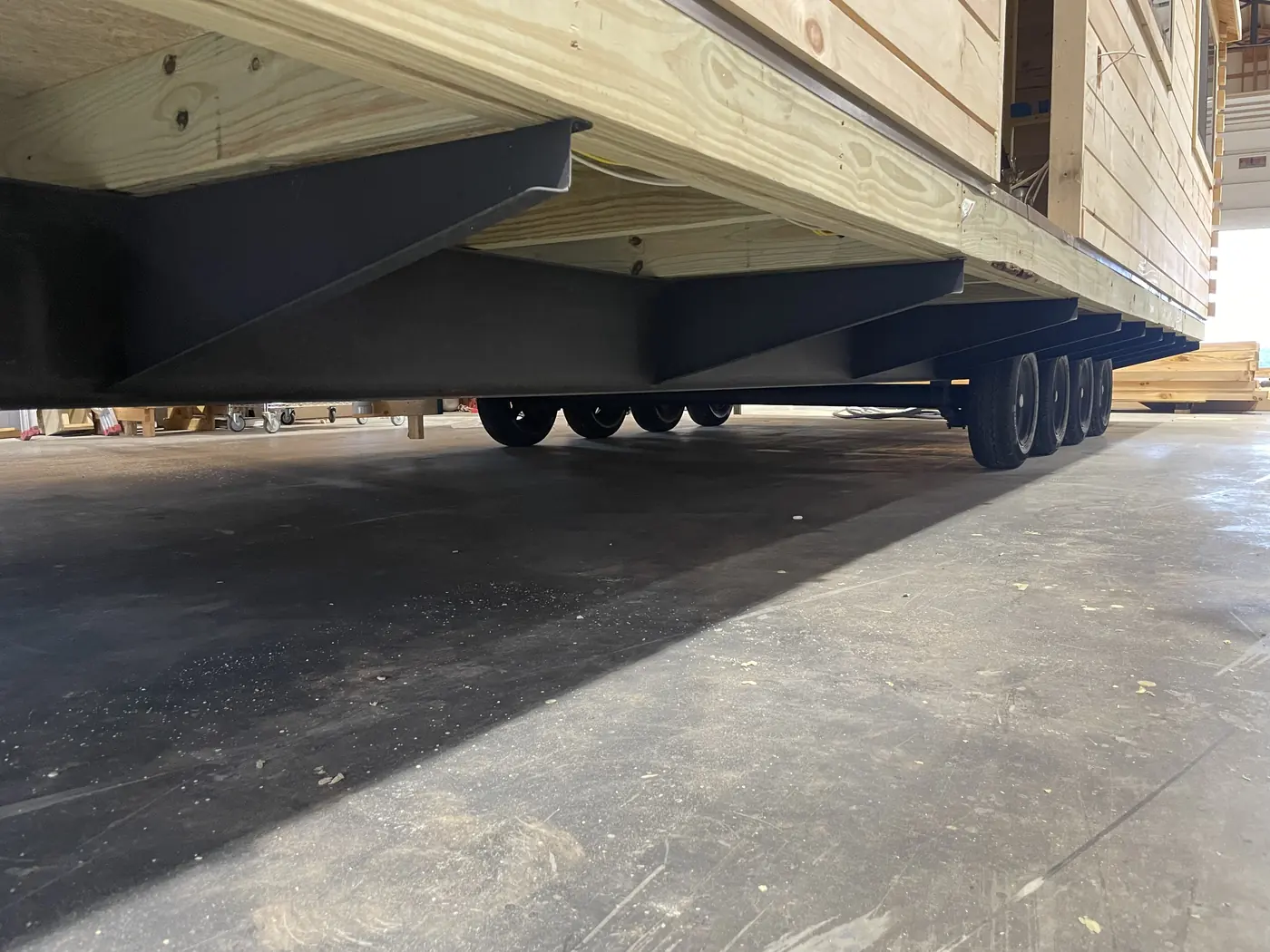
The RV Industry Association’s definition describes a park model as temporary living quarters for recreational, camping or seasonal use, built on a single chassis. Federal rules treat it as an RV, not a manufactured home.
The Kodiak is a park model: it rides on its own steel chassis, carries RVIA certification and arrives ready to hook up. The Cub can be built as a park model or as a recreational building. Learn the details, and how a park model differs from a tiny house, in what a park model home is. What the certification seal means is covered in RVIA certified tiny homes.
Can you put a tiny home on your land in Missouri?
In most of Missouri, yes. Missouri has no statewide building code, so each county and city sets its own rules. In our experience the state is easy to work with for park models, but some counties ask for more, so call your local planning office before you order.
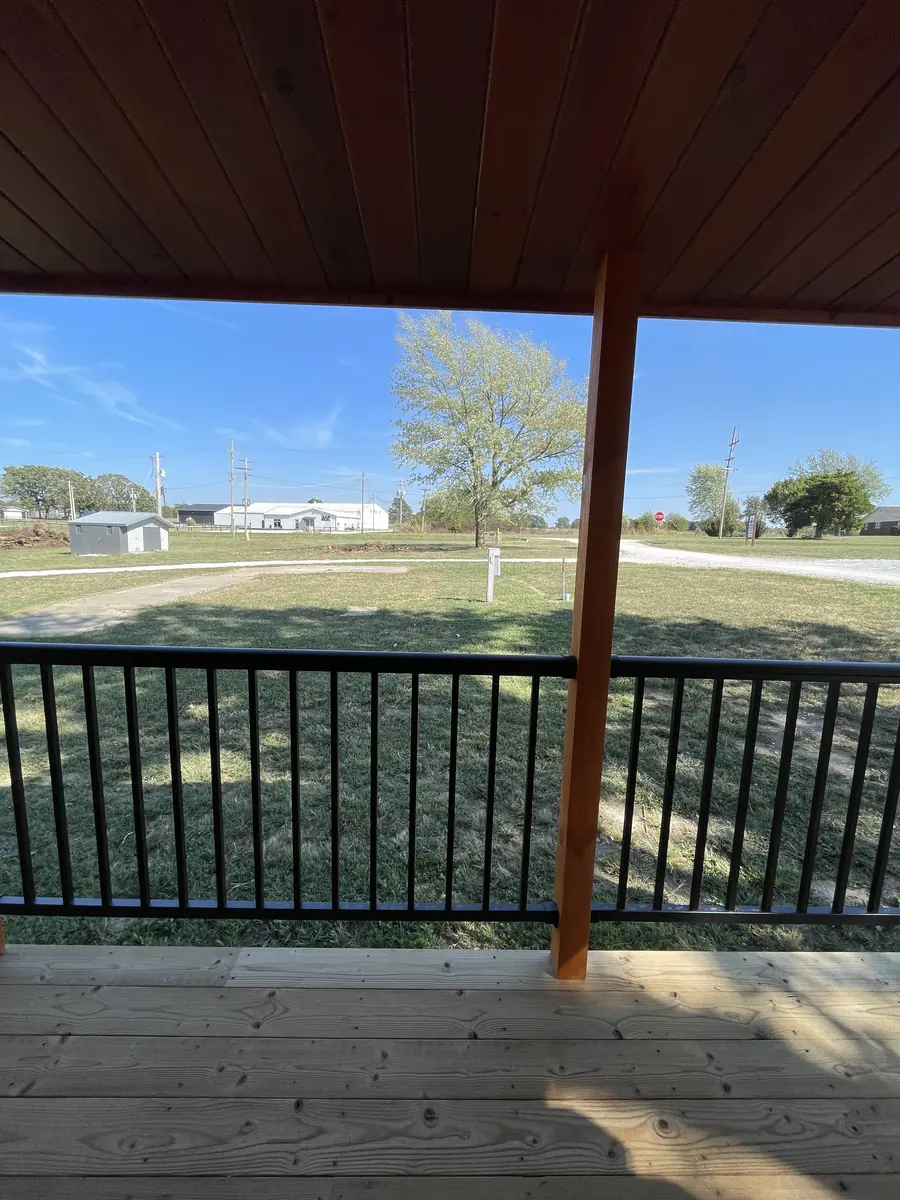
Missouri leaves building codes to local governments, as KCUR reported when a statewide code bill was filed. That means the answer depends on your county, and sometimes your city.
“Missouri is very easy to work with when it comes to park models. Greene County specifically can be a little difficult, but from what we’ve seen Missouri is great overall.” — the Premium Structures team
We list the questions to ask your county, and what changes for full-time living, in Missouri tiny home laws.
Should you buy a tiny home or build one yourself?
Building it yourself can save on labor, but it costs you months of work, tools and the risk of mistakes. A home-built cabin also won’t carry an RVIA park model seal, which can limit where it’s allowed. Buying gets you a known price, a warranty and a finished cabin.
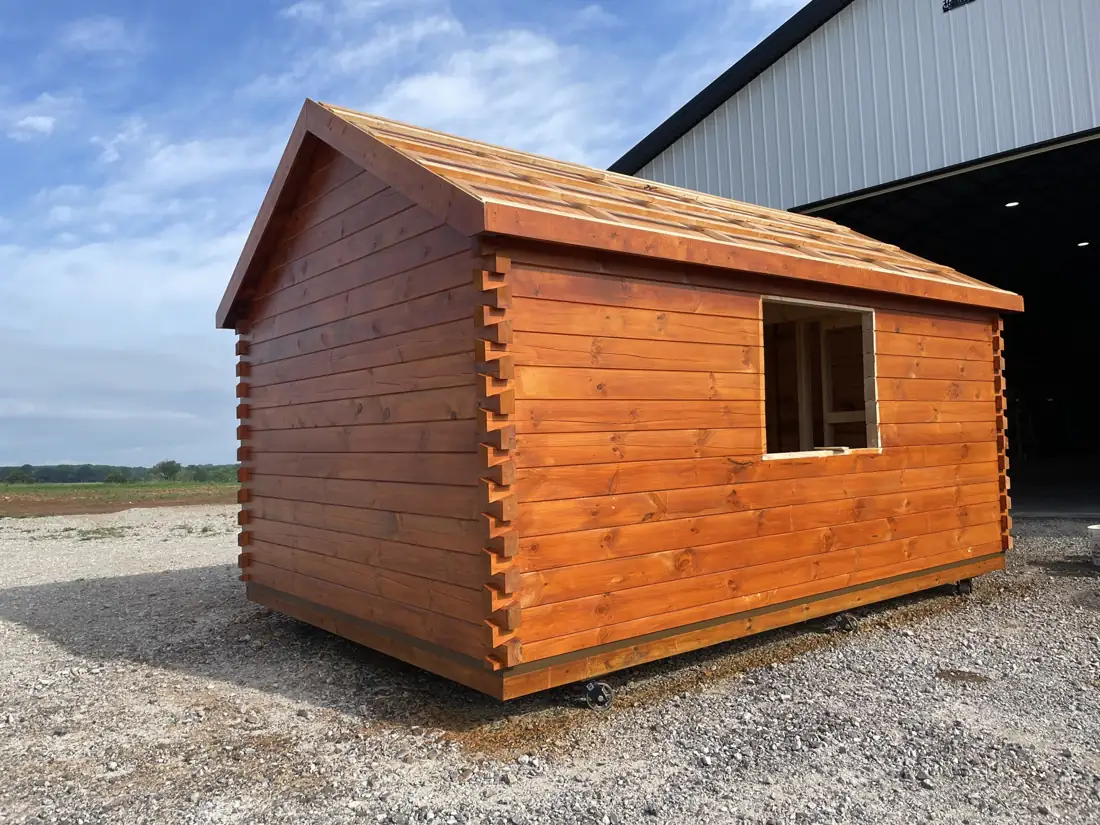
We compare time, cost and risk side by side in buy or build a tiny home.
What sizes do log cabin tiny homes come in?
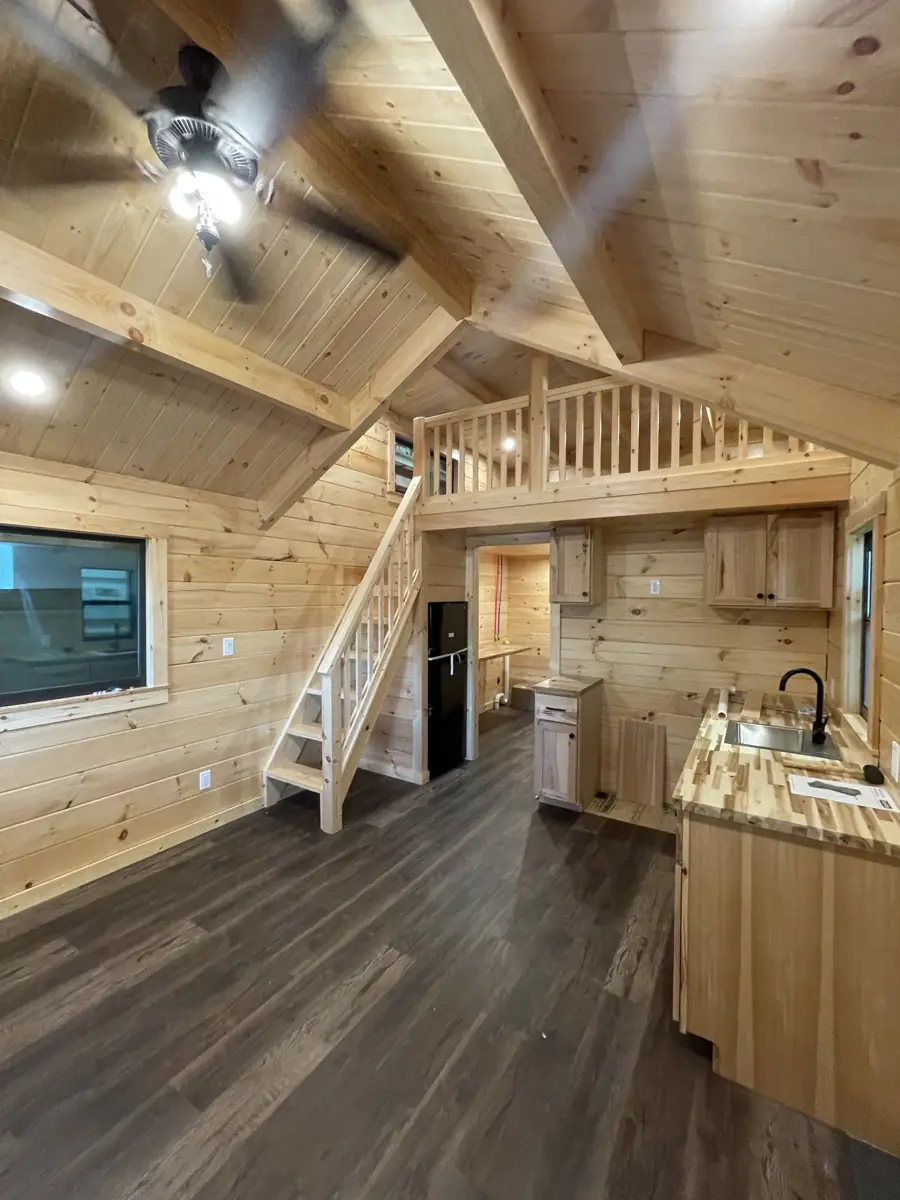
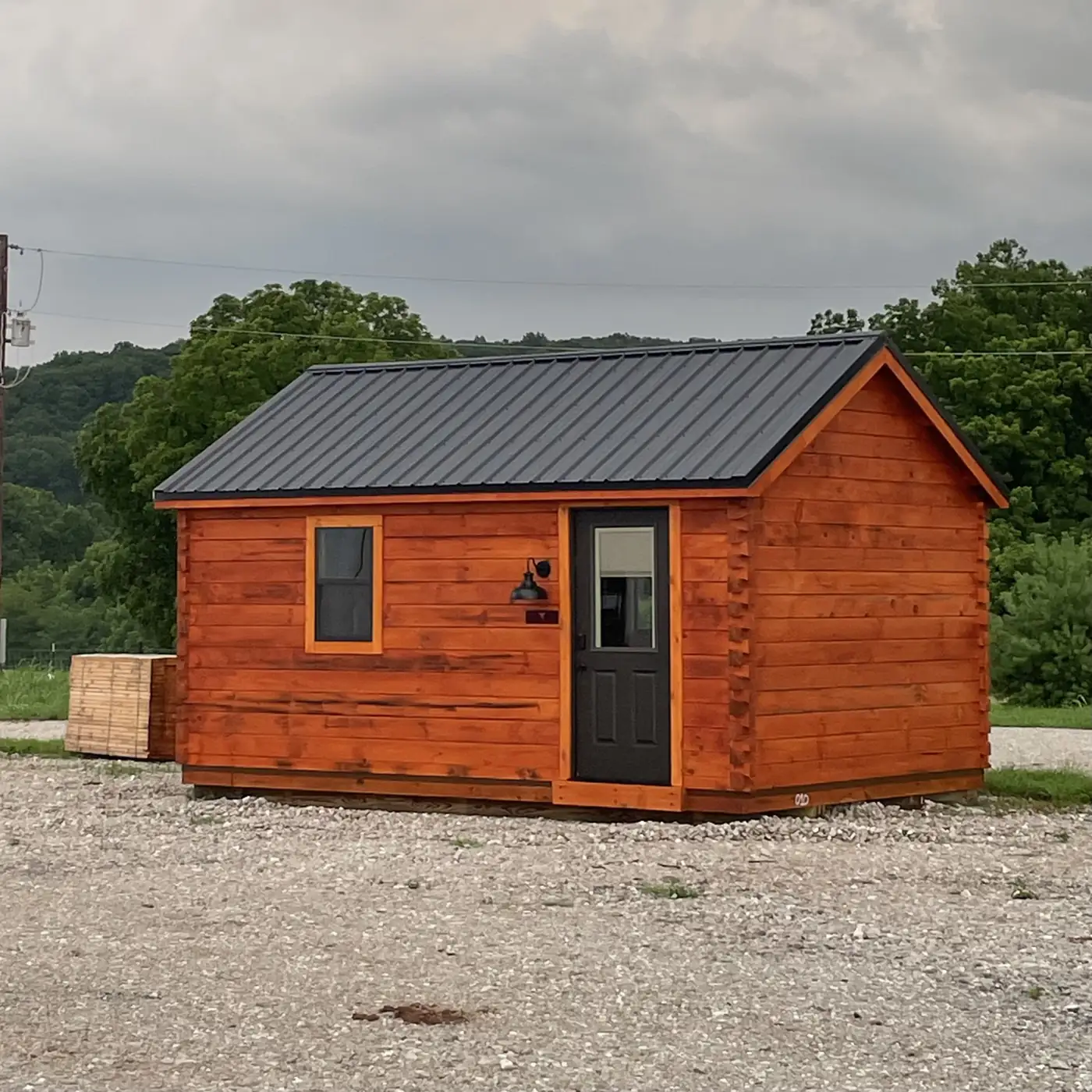
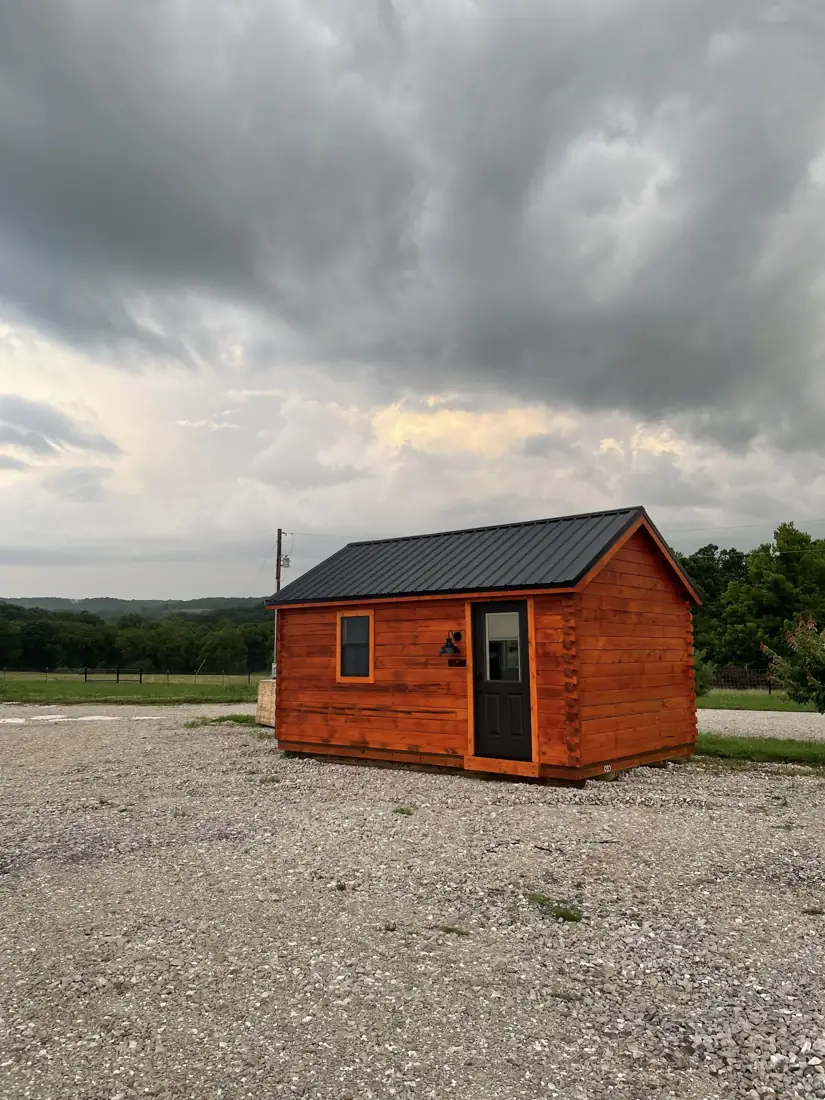
We build two set models. The Kodiak is 12 feet by 33 feet 4 inches: 400 square feet on the main floor plus a 120-square-foot loft and a 12-by-8-foot covered porch. The Cub is 12 by 18 feet to the outside of the logs, sized for a guest cabin, backyard retreat or rental.
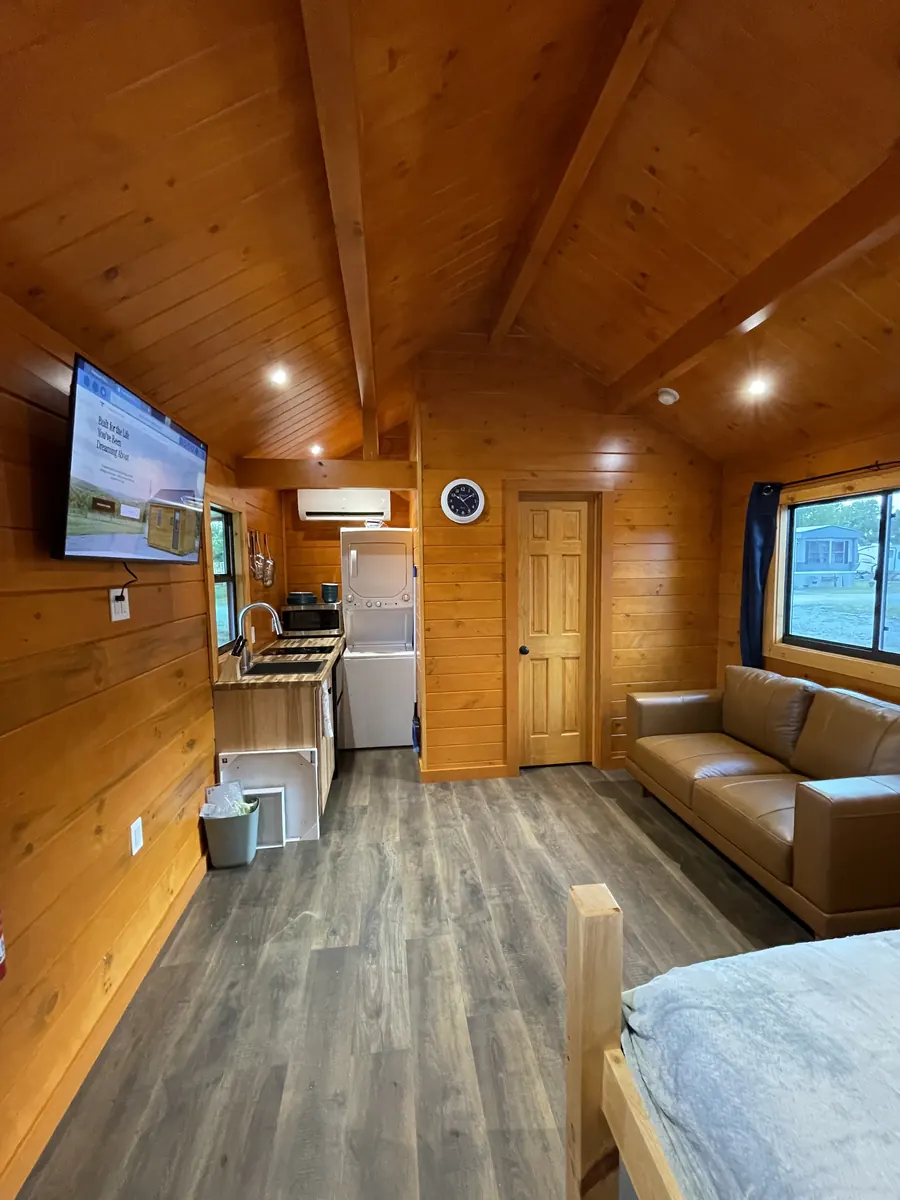
Sizes are one of the first things buyers ask about. We build a set line of models rather than custom floor plans, which keeps the price and the build time predictable.
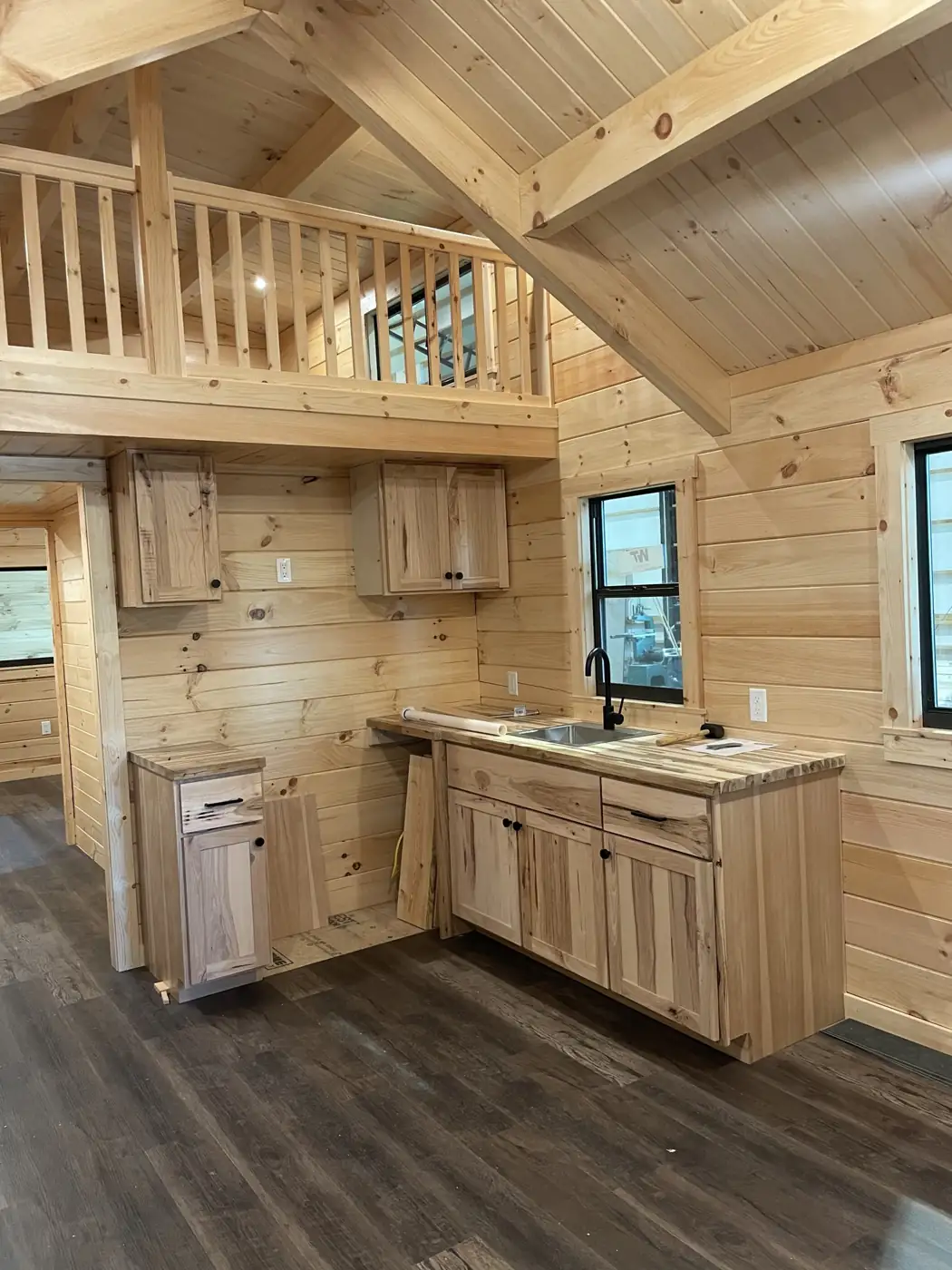
The Kodiak has a bedroom plus a sleeping loft, a full kitchen, a full bath and laundry, with a 10-foot interior ceiling. You can walk through both cabins room by room on our log cabin tiny homes page.
How is a log cabin tiny home insulated, and does it handle cold?
Yes, they handle cold very well. The walls are 3½-inch solid square pine logs with dovetailed corners, and solid wood holds heat well. The Kodiak is fully insulated, with WinTech double-pane windows. A mini-split heats and cools each cabin and is more than enough for its size.
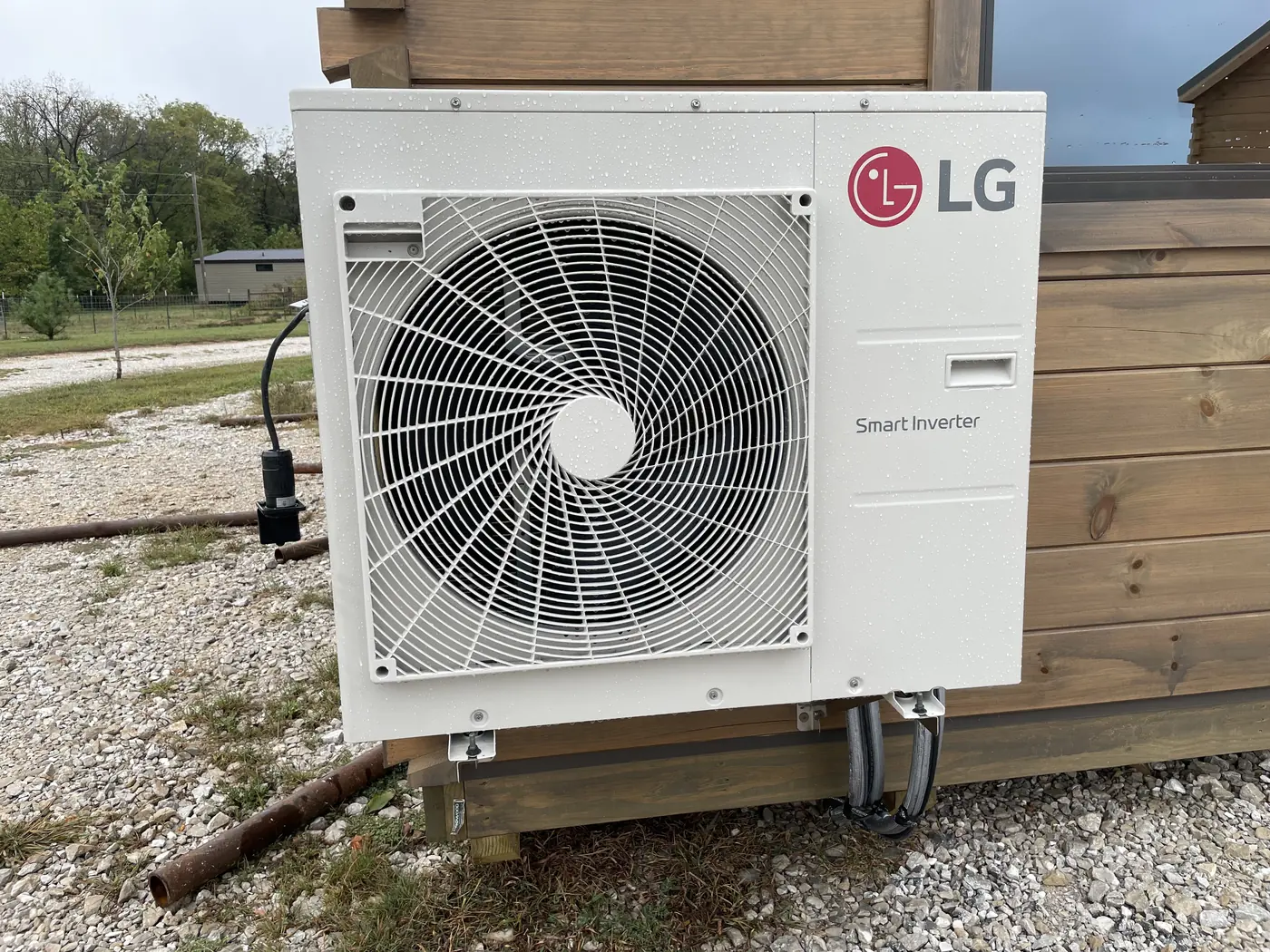
Buyers ask about insulation and cold weather on almost every call. Solid log walls are part of the insulation, which is one reason a real log cabin feels different from a shed with log siding.
“It does handle the cold very well. We use mini-split HVAC systems that are more than enough for the size, and log cabins are very efficient because of the thermal efficiency of natural solid wood.” — the Premium Structures team
The Kodiak’s system is an LG 18,000 BTU dual-zone mini-split. If a cabin will sit empty through a freeze, winterize the plumbing first.
Our warranty asks that recreational buildings be winterized whenever temperatures are expected to drop below freezing. For a full list of what goes into the walls, roof and floor, see every material in our log cabins.
What does your land need before delivery?
A level gravel or concrete pad for the cabin to sit on, and the same hookups an RV campsite uses: electric, water and sewer. The truck also needs a clear path to the pad, with trees trimmed high enough and gates wide enough for an oversize load.
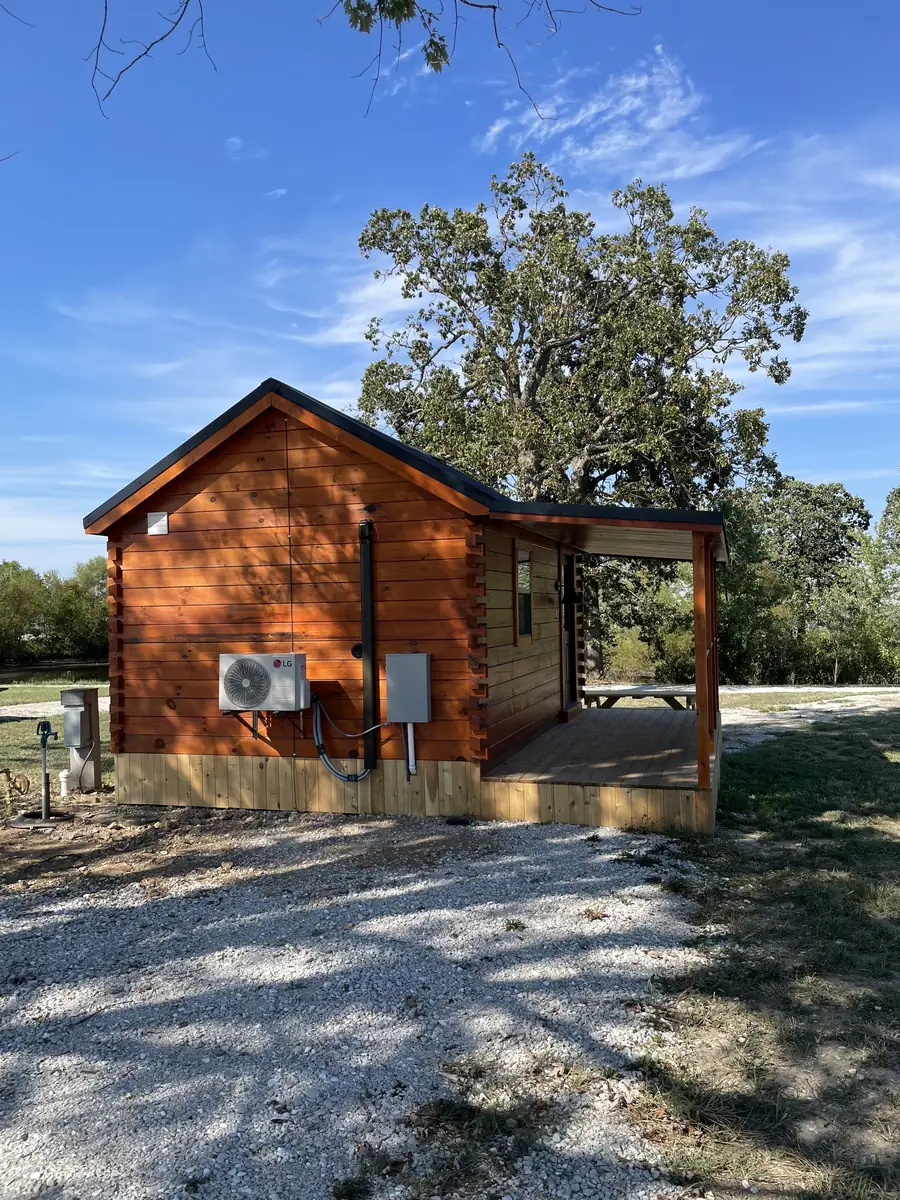
Site prep is simpler than most people expect. You don’t need a full house foundation for a park model. A pad of gravel or concrete works, and the cabin is set level on it.
Who builds the pad? We usually recommend hiring a local contractor near your land. We do have crews we trust and can connect you with them. They cost more because they travel, but we can vouch for their work.
If you want the longest warranty, plan the base with that in mind. Park models get 10 years when placed on concrete pillars or blocks and anchored. Recreational buildings get 10 years on a proper concrete foundation.
What happens on delivery day?
We haul the cabin to your land as a permitted oversize load, then set it and level it on your pad. The surprise for most buyers is how much room a cabin takes up on the road: trees need trimming higher, and gates need to be wider, than people expect.
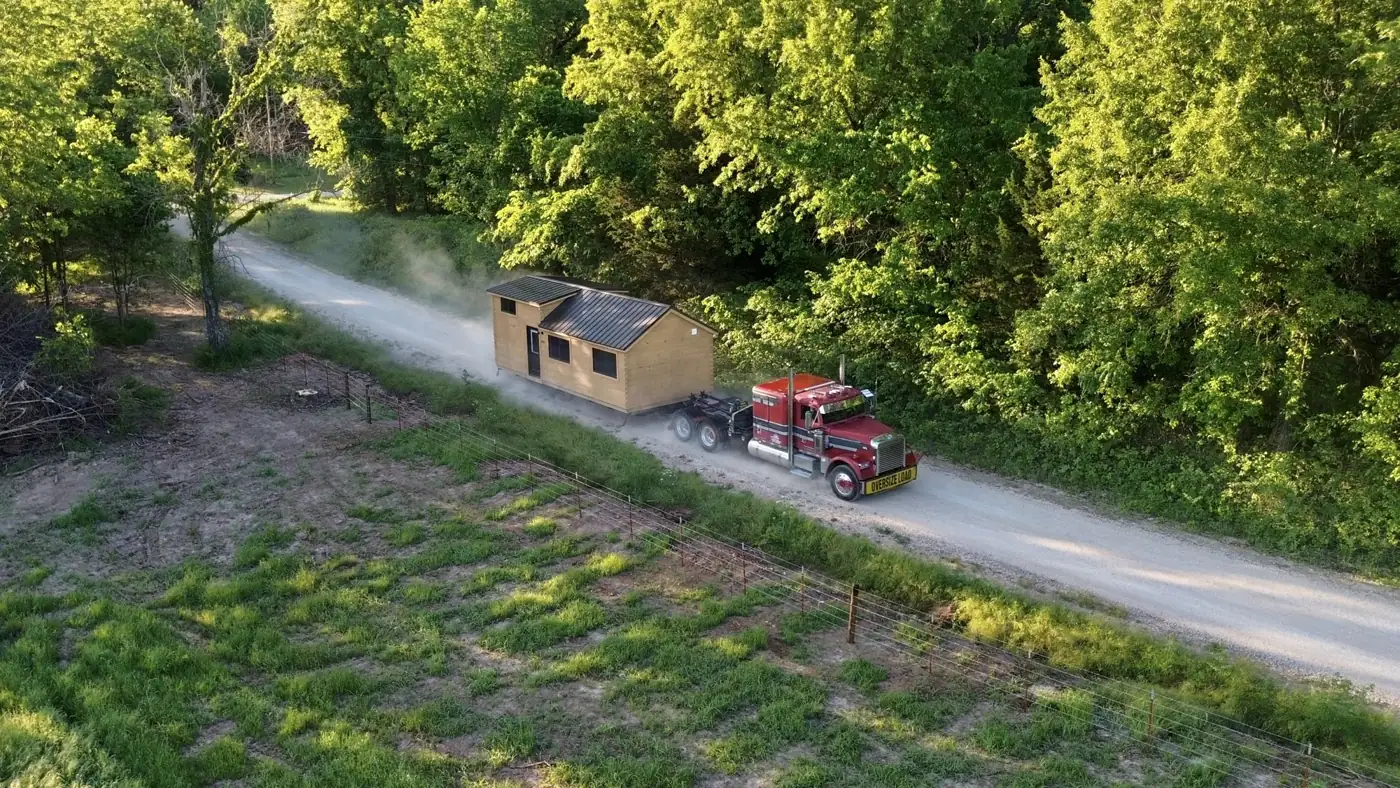
“Customers usually don’t realize how high they actually need to trim the trees and how wide gates really need to be. They’re usually pleasantly surprised at the quality and the natural beauty of the wood.” — the Premium Structures team
For scale, The Kodiak alone is 12 feet wide and 15 feet 6 inches tall, before it sits on a trailer. We check your access ahead of time and tell you what to clear.
Do you handle setup, utilities and skirting?
Yes, we handle setup: we place the cabin on your pad and level it. Connecting the utilities and adding skirt board around the base are extra costs, so ask for them in your quote if you want us to do them.
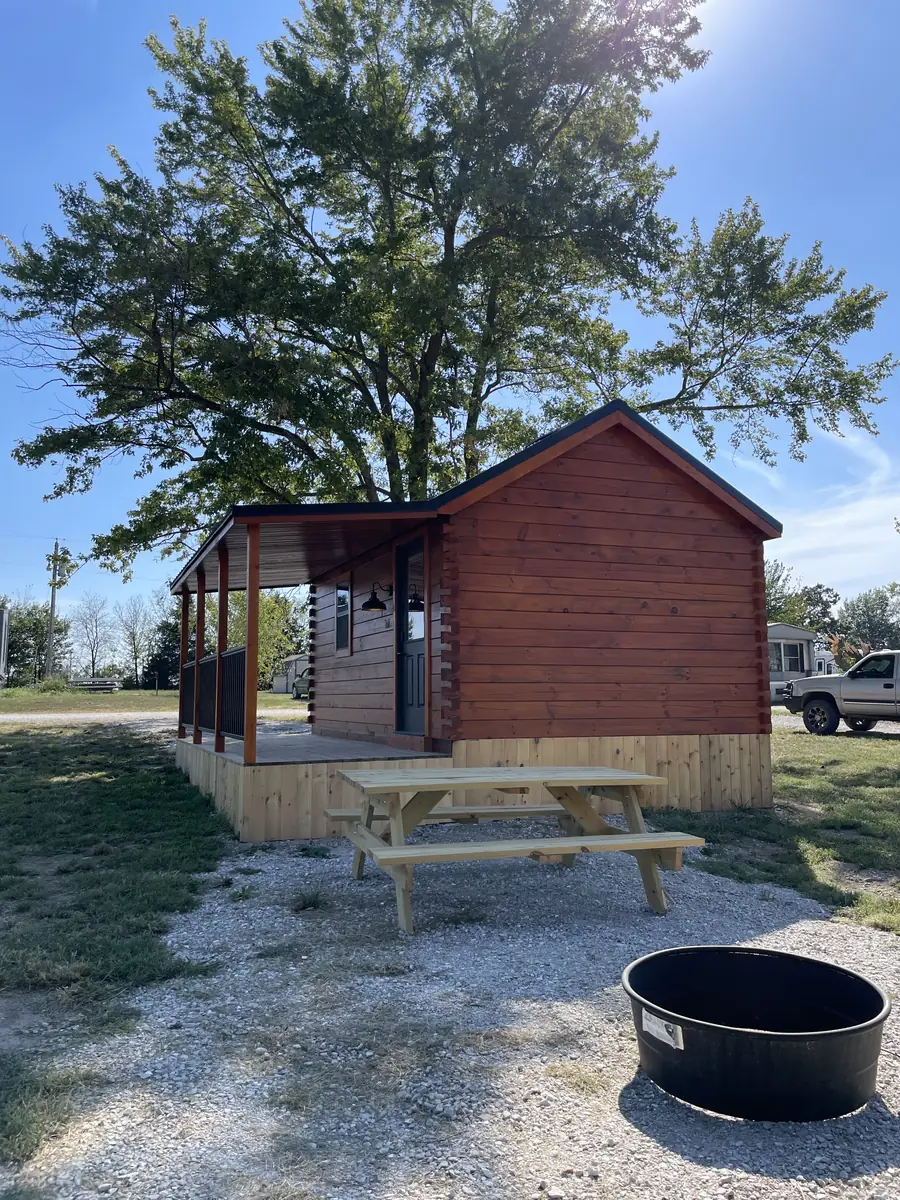
Skirt board closes in the space between the ground and the bottom of the cabin. It finishes the look and keeps animals and wind out from underneath.
Can you deliver a tiny home out of state?
Yes. We deliver anywhere in the mainland United States, the lower 48 states. Delivery is quoted for your address because the cost depends on the route and the building.
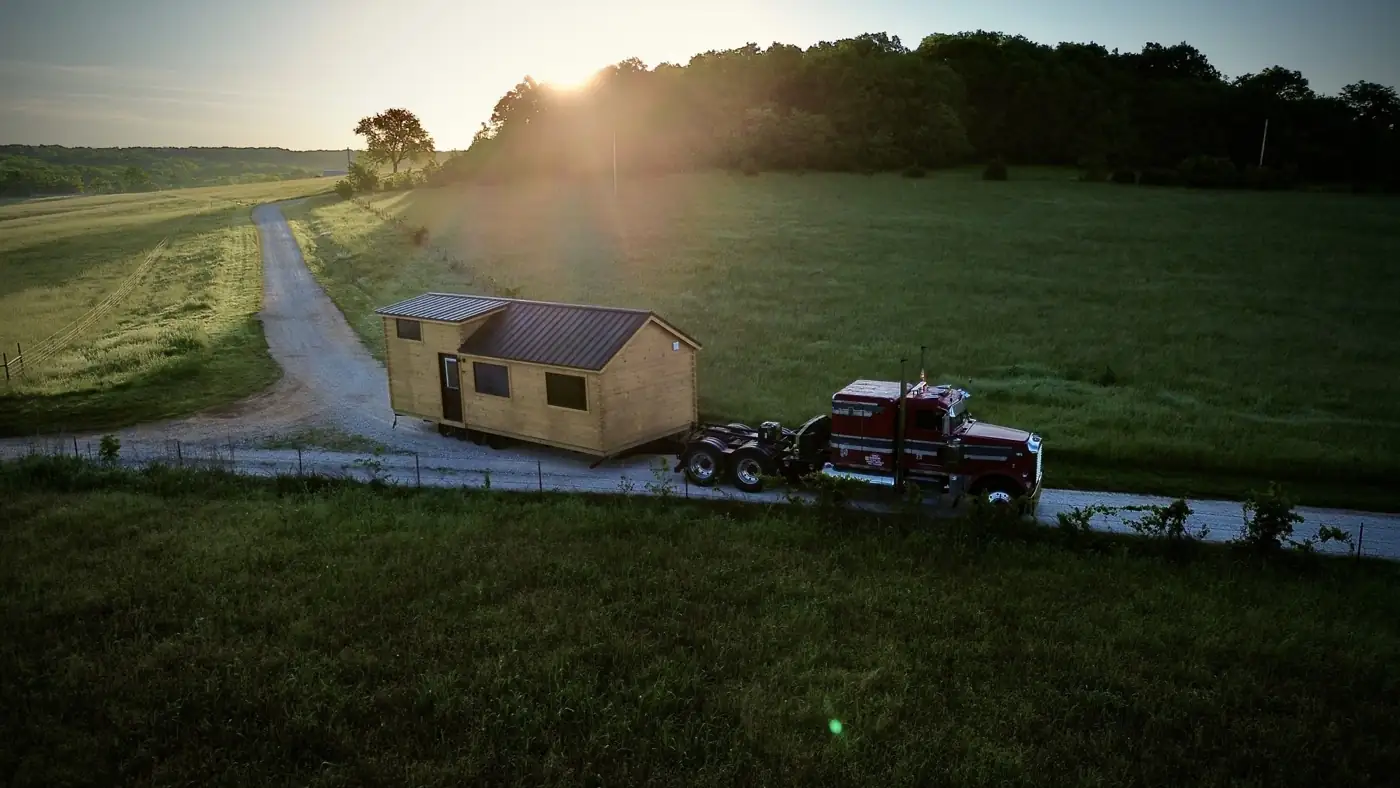
We see the most orders from Missouri and the states around it. See where we deliver, and rough road miles from our shop, on our delivery areas page.
What warranty comes with a log cabin tiny home?
Every building has a 2-year warranty on materials and workmanship from your delivery date. It extends to 10 years for park models placed on anchored concrete pillars or blocks, and for recreational buildings on a proper concrete foundation.
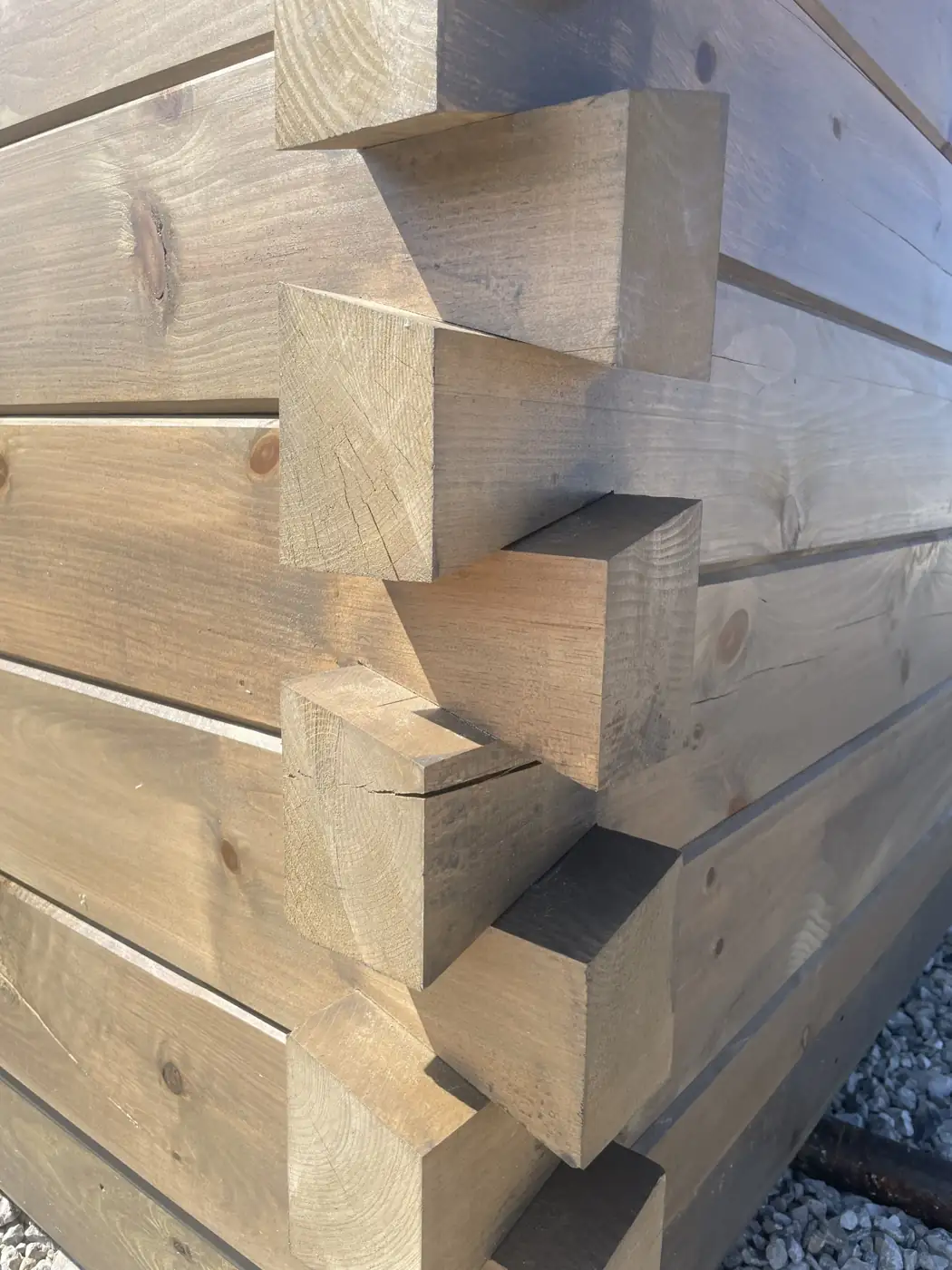
Upkeep is part of the deal: log cabins need their exterior refinished with an approved stain every 3 to 5 years. Read the full warranty for what’s covered.
How do you pay for a log cabin tiny home?
When you buy outright, we take a 50% deposit to start building and the rest is due on delivery. The deposit is non-refundable because it goes straight to materials. Ask us about financing on your call.
Our rent-to-own program runs on buildings under $25,000, so it covers sheds and garages but not our cabins.
Can you try a log cabin tiny home before you buy?
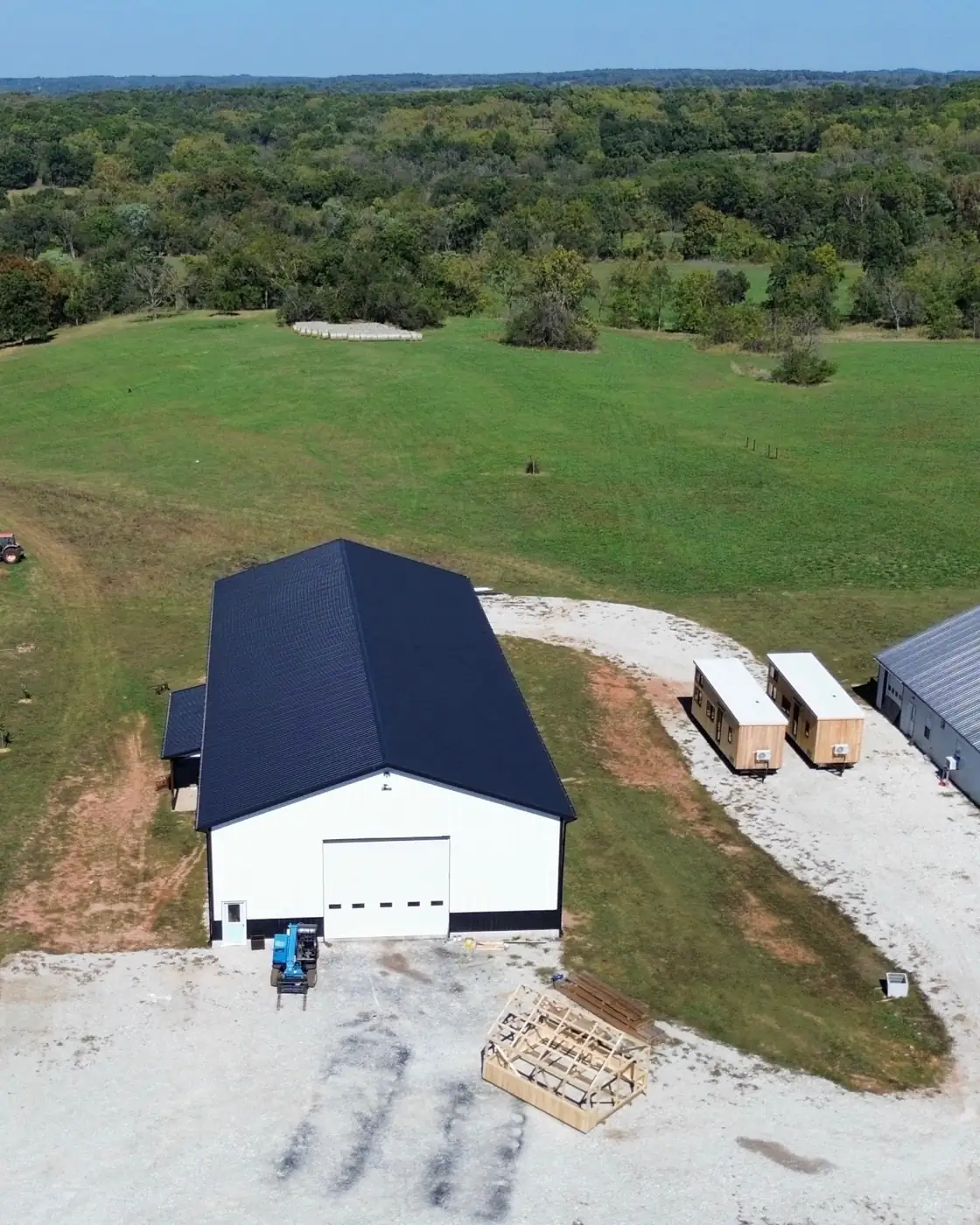
Yes. You can book a night in our Cub in Stockton, Missouri, on Airbnb and see how a tiny home really lives. You can also visit our shop and lot in Fair Play, Missouri, to see finished cabins and builds in progress.
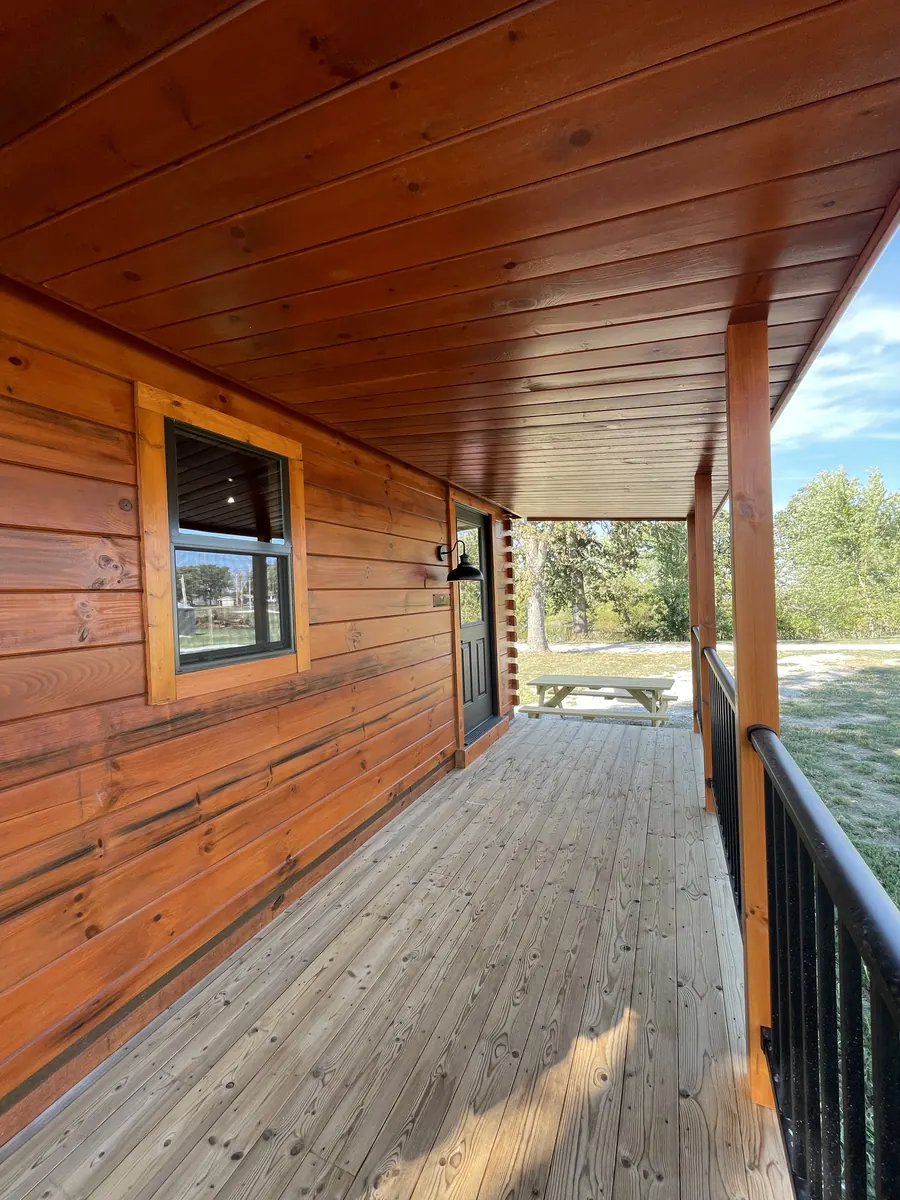
Staying a night answers questions a photo can’t: how the space feels, how quiet the log walls are and how the porch works in the evening. See our Cub on Airbnb. Thinking of renting one out yourself? Read can a tiny home be an Airbnb.
Who is a log cabin tiny home not right for?
A park model is built for recreational and seasonal use, so it may not be the answer if you need a full-time primary home where your county requires a site-built house. It is also not for anyone who can’t get a wide truck onto their land or doesn’t want to restain every few years.
- You need a permanent home in a place that only allows site-built houses. Check before you buy.
- Your land has no way in for a 12-foot-wide load. Sometimes a different spot on the property solves it.
- You want a custom floor plan. We build a set line of models.
- You want zero upkeep. Real wood needs a fresh coat of stain every 3 to 5 years.
Ready to talk about your cabin?
Book a free 20-minute call. Tell us how you plan to use the cabin and where it’s going, and we’ll help you pick a model, check your site and quote it delivered.
Rather talk now? Call Sam at (417) 399-6661.