


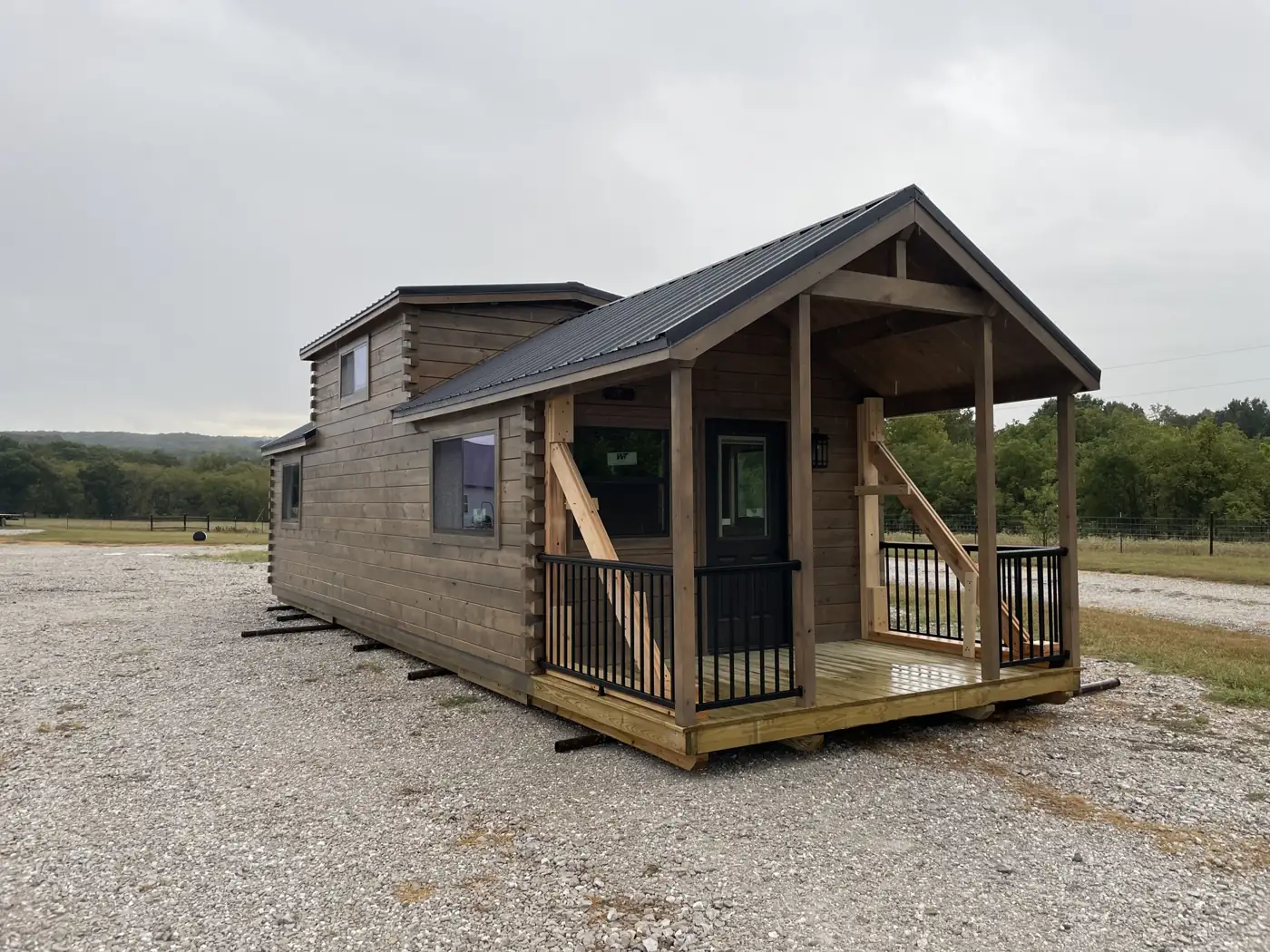
If you’ve been shopping for a cabin, you’ve probably seen the words “park model home” and wondered whether it’s a house, an RV or something in between. The short answer is that it’s an RV built to live like a cabin, and that label matters for where you can place it.
This post explains park models in plain words. It’s part of our guide to buying a tiny home, which covers cost, setup and delivery too.
What counts as a park model home?
A park model home is a recreational vehicle designed as temporary living quarters for recreational, camping or seasonal use. It sits on a single chassis, is built to the ANSI A119.5 park model standard and is certified by its manufacturer. It usually looks like a small cabin rather than a camper.
That definition comes from the RV Industry Association (RVIA), the group that inspects and certifies RV makers. A certified park model carries an RVIA seal, and its manufacturer certifies it meets the ANSI A119.5 standard for park model RVs. What the seal checks, and what it doesn’t, is in RVIA certified tiny homes.
How big can a park model home be?
No more than 400 square feet in setup mode, under RVIA’s definition. The federal rule that covers park models notes that the ANSI A119.5 standard sets that 400-square-foot maximum excluding porches. Many park models add a loft and a covered porch.
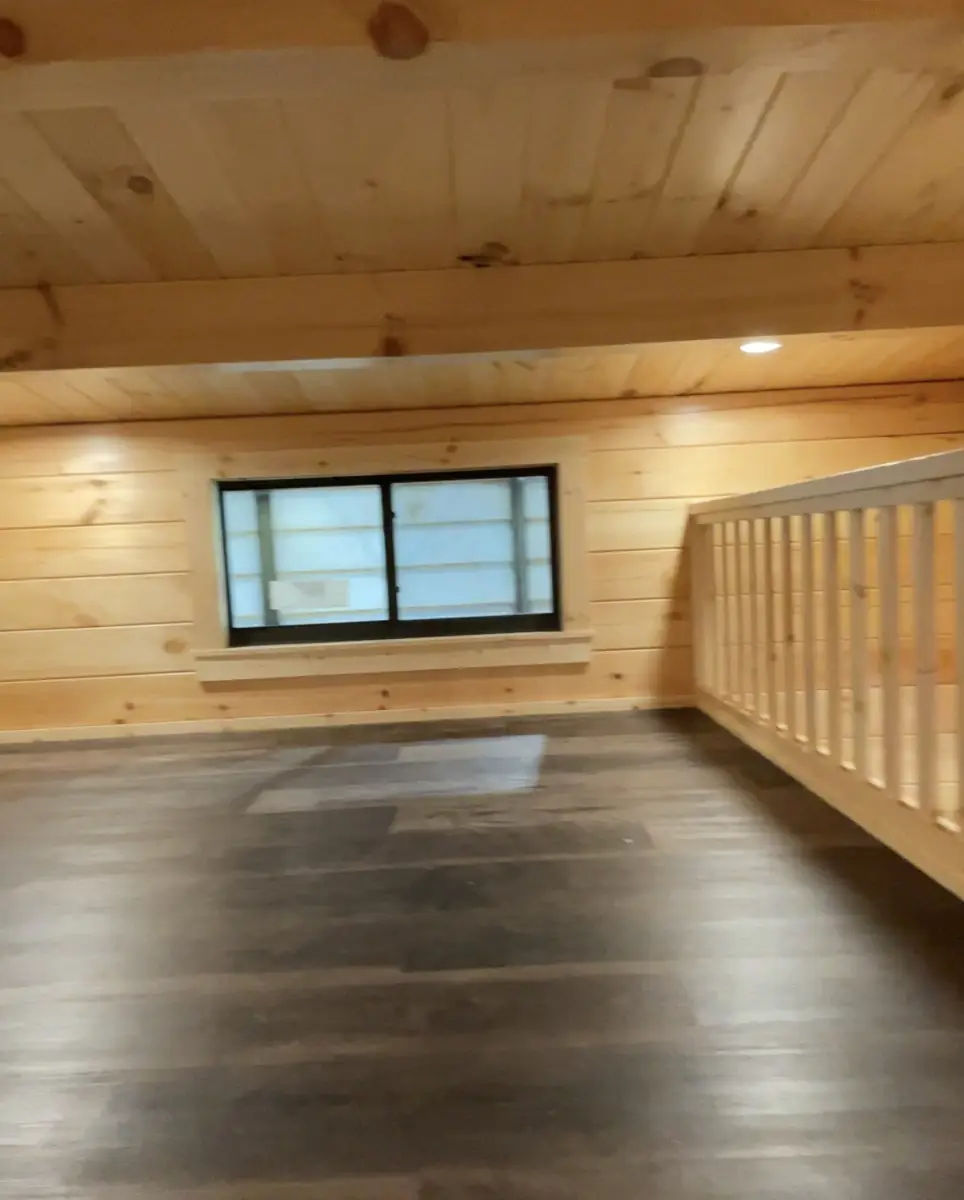
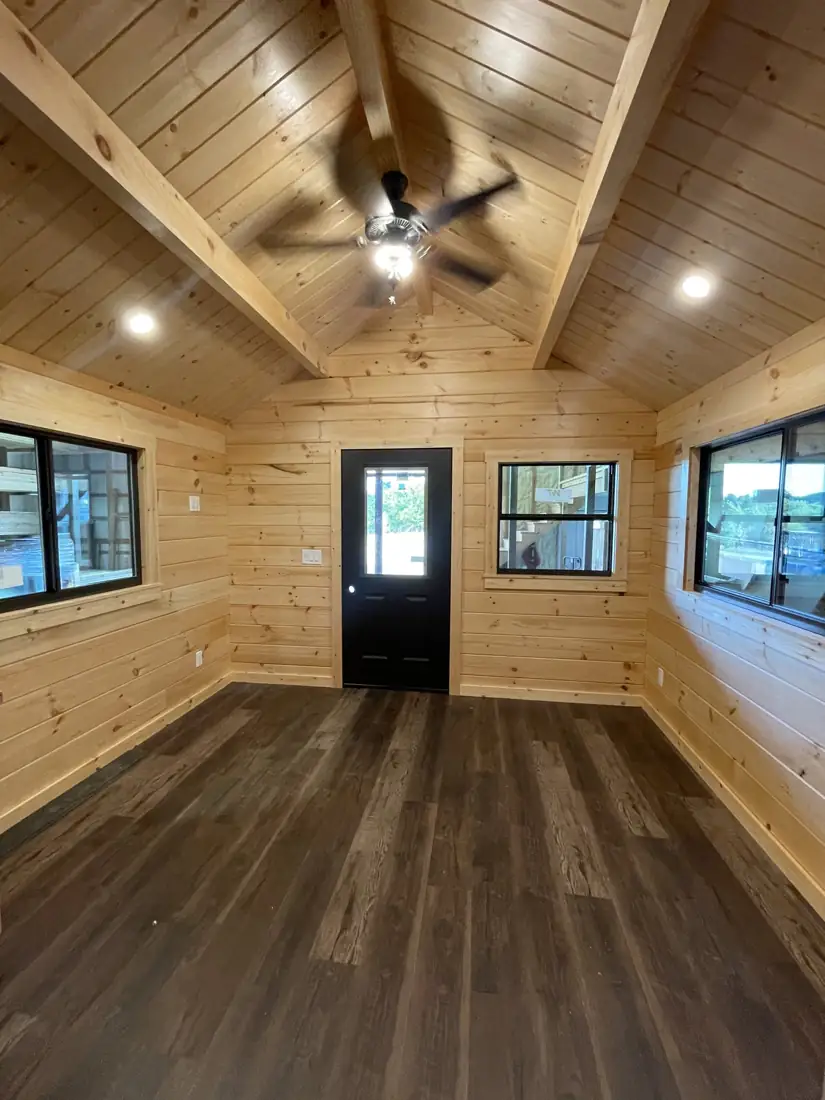
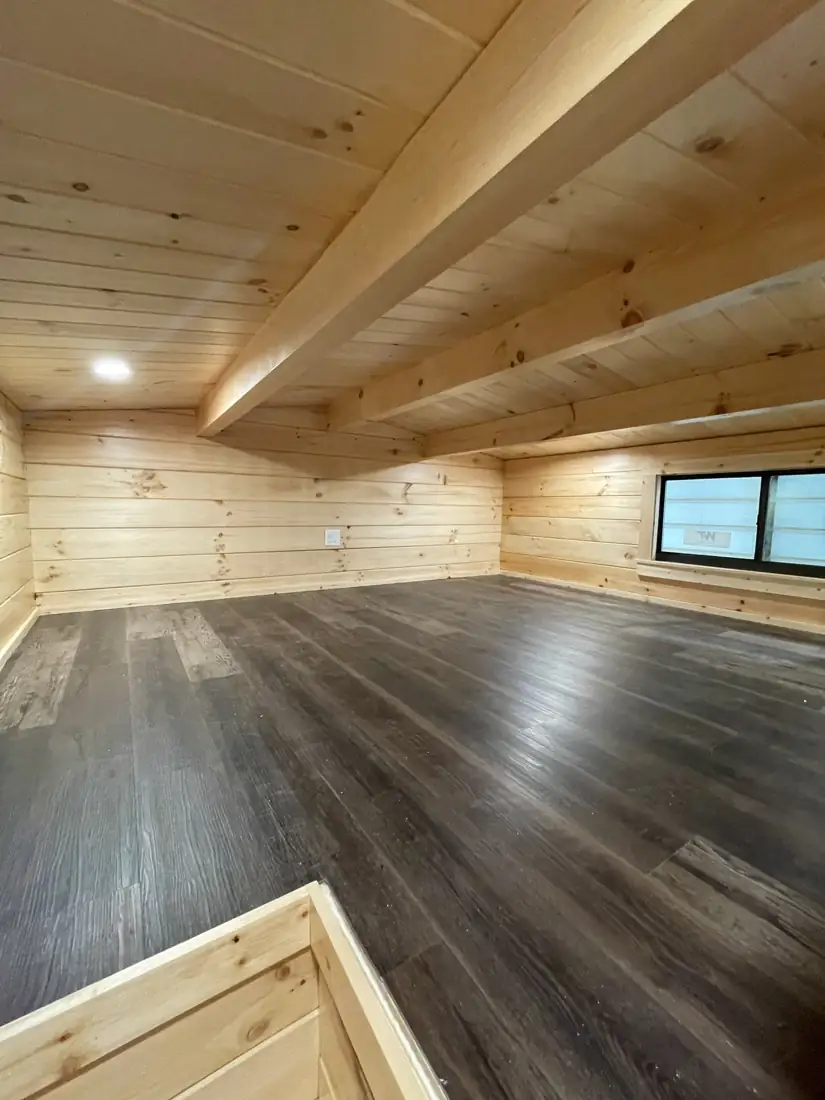
The porch exception comes from HUD’s 2018 rule on park model RVs. Our Kodiak shows how the limit works in practice: 400 square feet on the main floor, a 120-square-foot sleeping loft and a 12-by-8-foot covered front porch.
Park model home vs. tiny house: what’s the difference?
“Tiny house” is a loose term for any small home. A park model is a defined type of RV with a size limit, a build standard and a certification seal. A tiny house built on a foundation is treated as a house, and building codes for those apply only where a city or county adopts them.
The International Residential Code added an appendix for houses of 400 square feet or less, but the International Code Council points out that each jurisdiction still has to vote to adopt it. A park model sidesteps that question because it’s built and certified as an RV.
| Park model | Tiny house on a foundation | Manufactured home | |
|---|---|---|---|
| What it is | A recreational vehicle | A house | A house built in a factory |
| Built to | ANSI A119.5, RVIA certified | Local building code | Federal HUD code |
| Size | 400 sq ft max (setup mode) | Set by local code | Usually larger |
| Meant for | Recreational or seasonal use | Full-time living | Full-time living |
| Sits on | Its own chassis, on a pad or blocks | A permanent foundation | A chassis, on a foundation system |
Is a park model home an RV or a manufactured home?
An RV. Federal rules exempt recreational vehicles, including park models built to ANSI A119.5, from the HUD manufactured home code, as long as they’re designed only for recreational use and not as a primary residence. Buyers even get a written notice saying so at the time of sale.
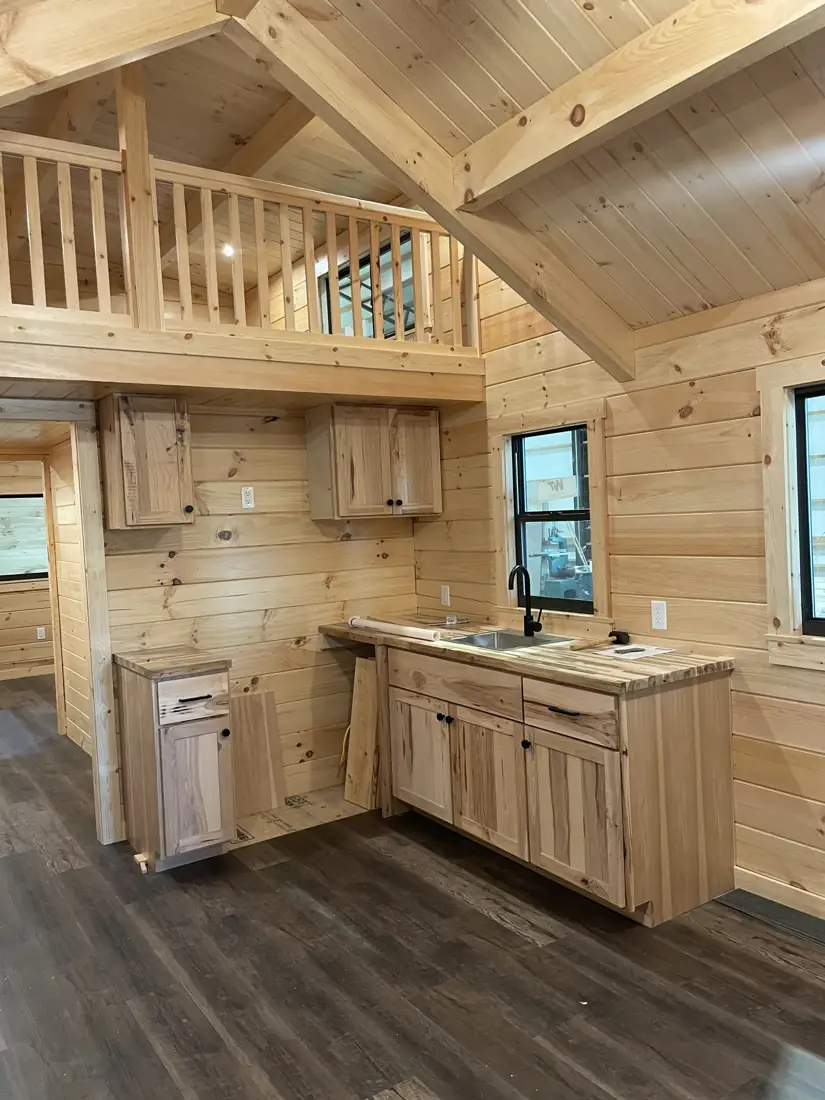
The exemption is in 24 CFR 3282.15. It requires a manufacturer’s notice, placed in the kitchen, stating the unit is a park model recreational vehicle designed only for recreational use.
What are park model homes used for?
Mostly for weekend getaways, guest cabins, backyard retreats and vacation rentals. Because a park model plugs into RV-style hookups and sits on a simple pad, it suits land you visit rather than live on: a hunting or lake property, a corner of a family farm, or a rental site.
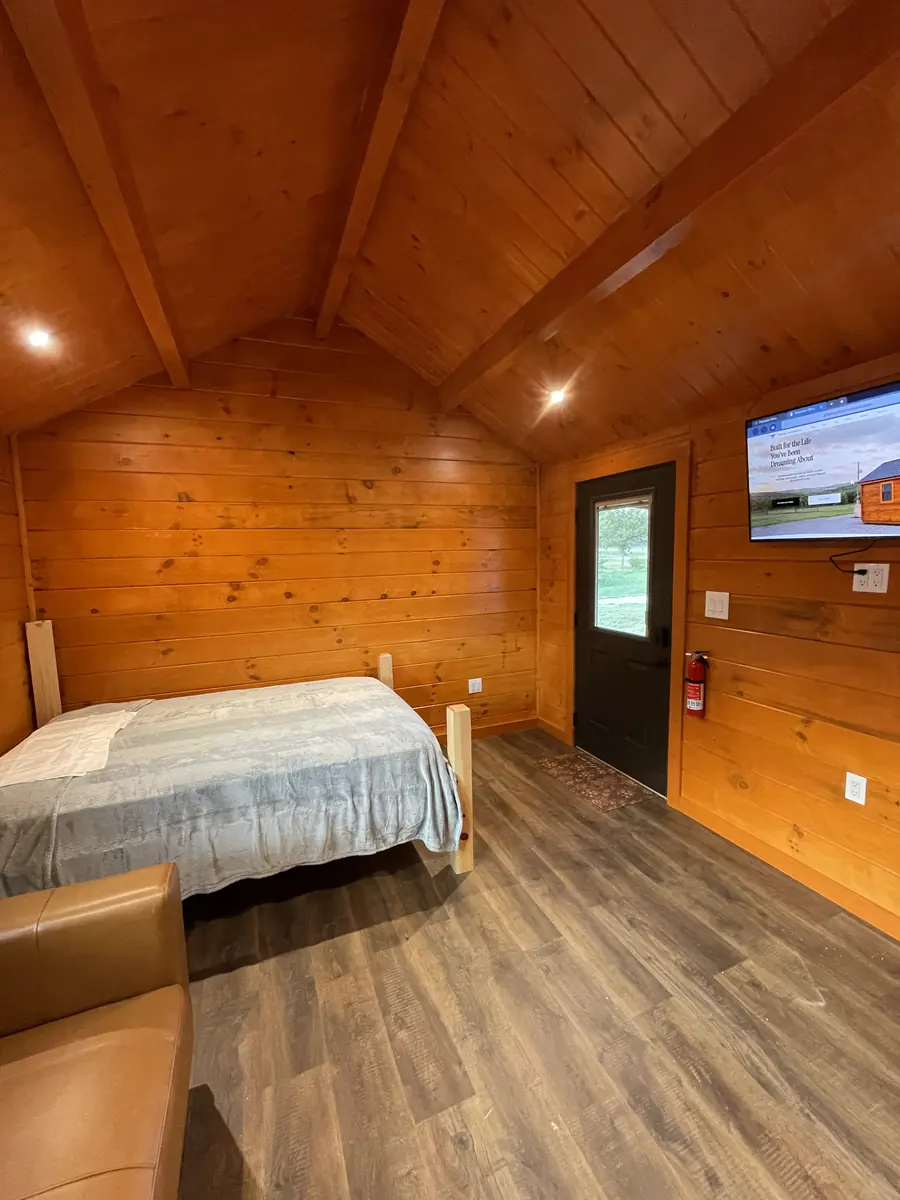
One of our own Cubs is a vacation rental on Airbnb in Stockton, Missouri. The inside shows how much fits in a small space: a bed, a sofa, a kitchenette, a bathroom and stacked laundry. Planning several for a campground? See park model cabins for campgrounds.
Can a park model home be used in winter?
Yes. Our log cabins handle cold very well: solid wood walls hold heat, the Kodiak is fully insulated with double-pane windows, and each cabin’s mini-split is more than enough for its size. If the cabin will sit empty through a freeze, winterize the plumbing. Local rules may still limit your months of use.
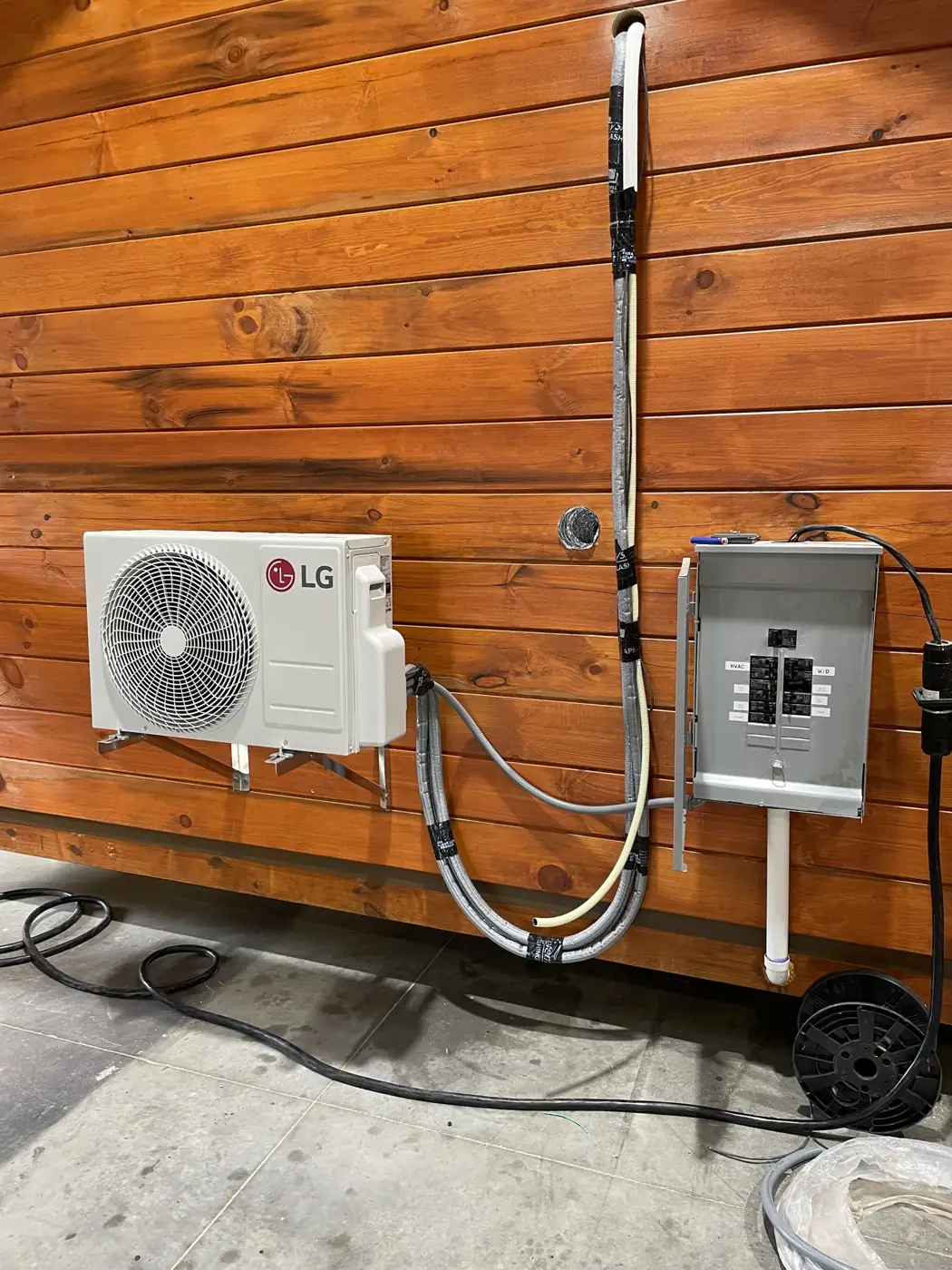
Our warranty asks that recreational buildings be winterized whenever temperatures are expected to drop below freezing. See every part of the walls, roof and systems on our cabin materials page.
Can you live in a park model home full time?
Park models are designed for recreational, camping or seasonal use, not as a primary home. Whether you may stay in one longer is set by your county or city. Some places allow long stays in RV parks or on private land; others don’t. Ask your local planning office first.
Rules differ a lot from place to place. If your land is in Missouri, read Missouri tiny home laws for the questions to ask.
What does a park model need on your land?
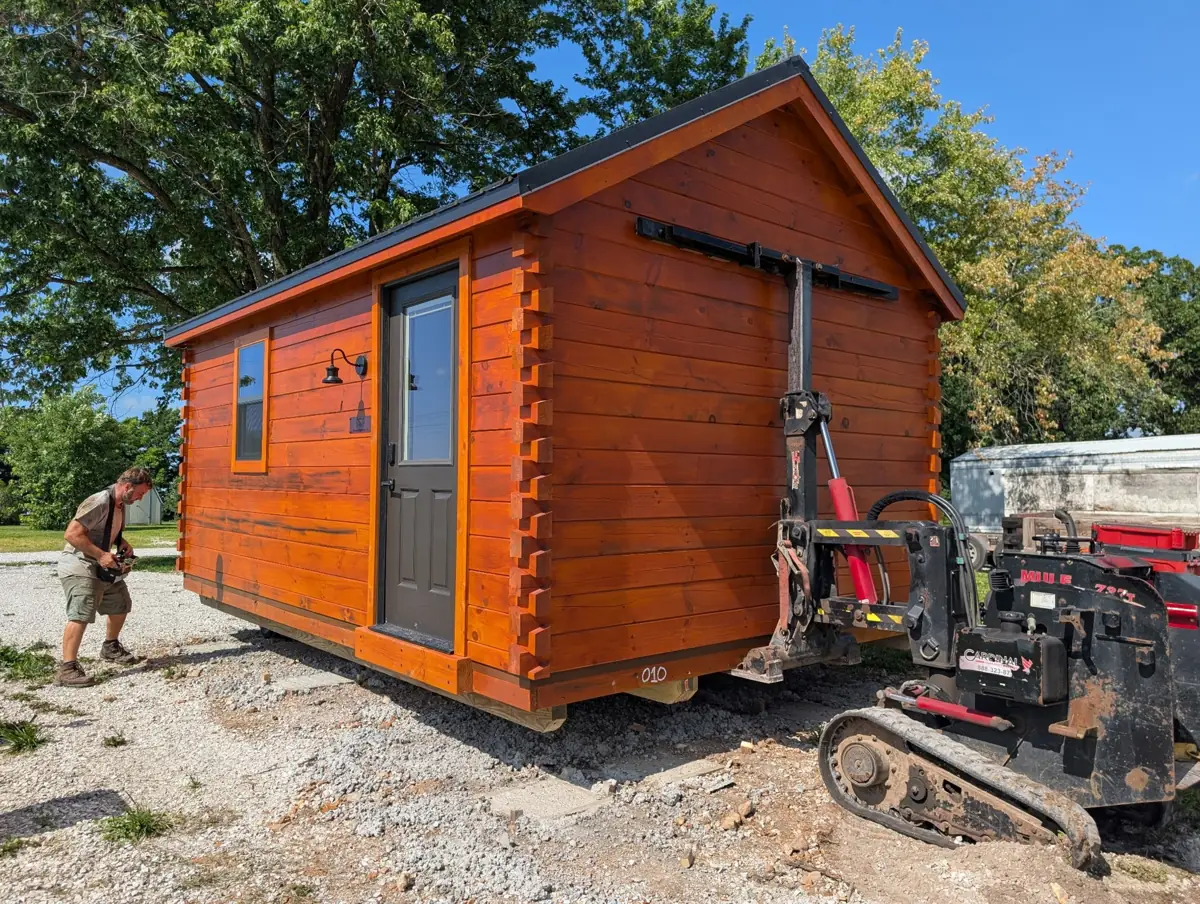
A level gravel or concrete pad and the same hookups an RV campsite has: electric, water and sewer. For our longest warranty, a park model should sit on concrete pillars or blocks and be anchored. Plan a clear route for the truck, too.
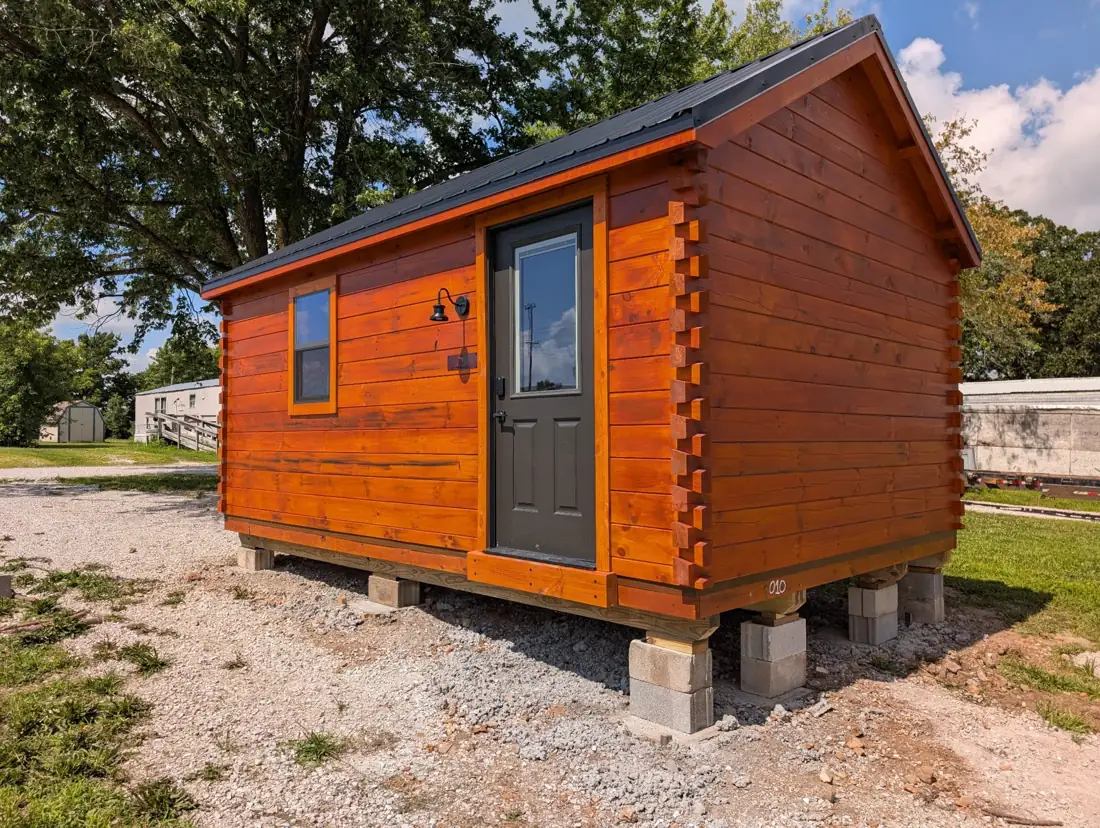
Because a park model plugs in like an RV, site prep is usually simpler than for a house. We set the cabin on your pad and level it. Connecting utilities and adding skirt board are available as extras.
Are Premium Structures cabins park models?
The Kodiak is always built as an RVIA-certified park model on its own chassis. The Cub, 12 by 18 feet, comes either way: as a park model, or as a recreational building that sits on a foundation. The warranty and your site plan follow from which one you choose.
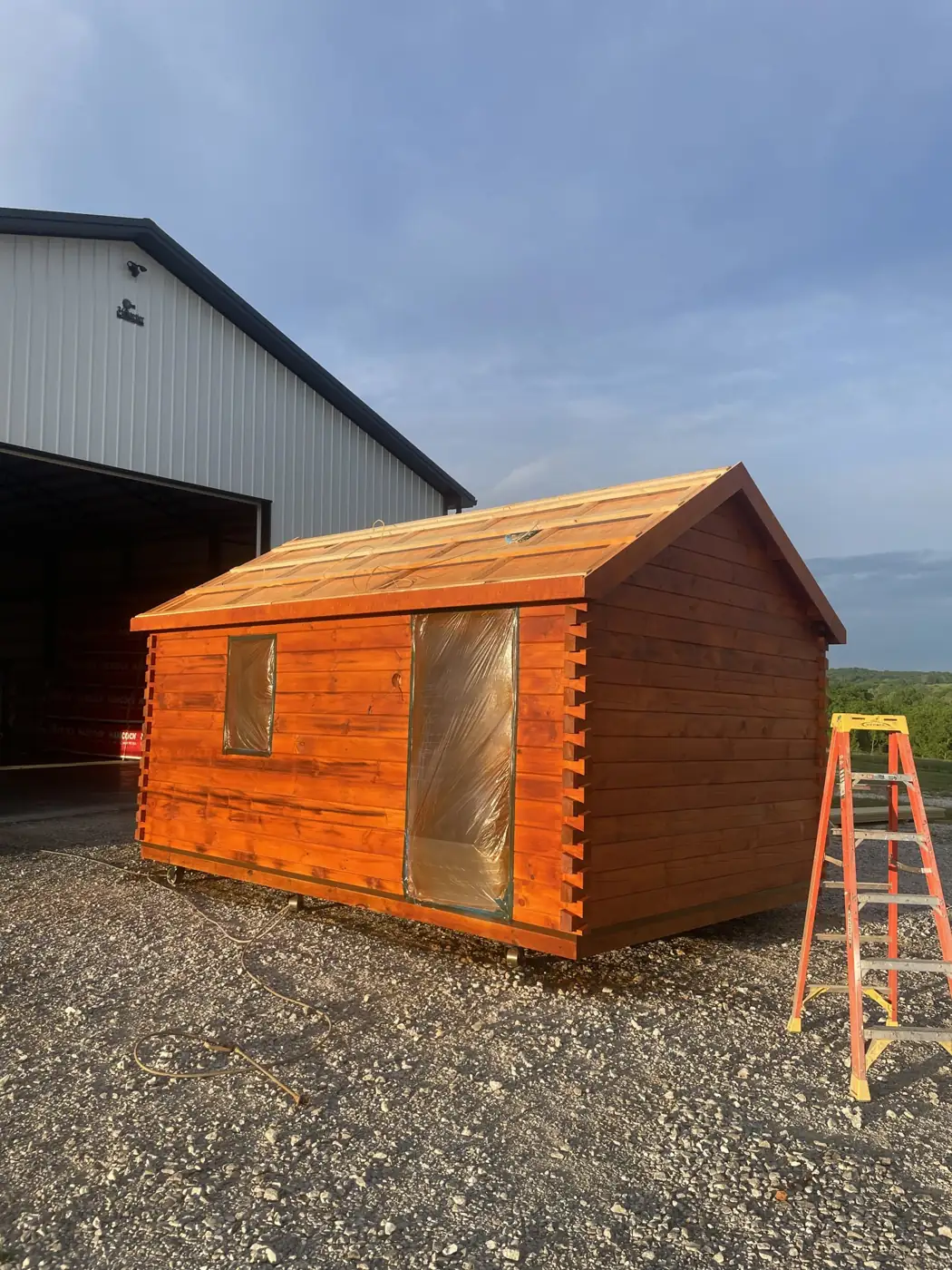
A park model Cub or Kodiak gets a 10-year warranty when placed on anchored concrete pillars or blocks. A recreational-building Cub gets 10 years on a proper concrete foundation. See both models, with prices, on our log cabin tiny homes page, and what each costs all in at how much a tiny home costs.
Quick summary
- A park model home is an RV built to look and live like a small cabin.
- RVIA limits it to 400 square feet in setup mode; the ANSI A119.5 limit excludes porches.
- It’s meant for recreational or seasonal use and is exempt from the HUD manufactured home code.
- It needs a level pad and RV-style hookups: electric, water and sewer.
- Full-time use depends on your county or city.